Slow cooker chicken stew earns its place in the dinner rotation when you want a bowl that eats like a full meal: tender chicken, soft potatoes, sweet carrots, and a gravy that coats every spoonful instead of pooling at the bottom of the bowl. The best versions taste rich without being heavy, with the vegetables still holding their shape and the chicken falling apart cleanly after a long, gentle cook.
This version leans on bone-in chicken thighs for flavor and moisture, which matters in a slow cooker where lean meat can turn stringy before the vegetables are done. Cream of chicken soup and tomato paste do different jobs here: one gives body, the other deepens the broth so the finished stew tastes cooked, not flat. The cornstarch slurry goes in at the end, after the meat is shredded, so the gravy thickens without turning gluey over hours of heat.
Below you’ll find the small details that keep the stew from getting watery, plus a few smart ways to adapt it if you want to swap ingredients around or stretch it for another meal.
The gravy thickened up beautifully at the end, and the chicken thighs were fall-apart tender without getting dry. I added a little extra thyme and served it with crusty bread, and there wasn’t a spoonful left.
Love a cozy bowl of slow cooker chicken stew with tender thighs and thick gravy? Save this one for the nights when you want dinner to cook itself.
The Trick to Thick Stew in a Slow Cooker Without a Pasty Texture
Slow cookers are great at softening meat and vegetables, but they’re not great at reducing liquid. That means stew can taste thin and slightly bland unless you build depth early and thicken it at the end. The tomato paste and cream of chicken soup help with body, while the cornstarch slurry gives you control over the final texture instead of leaving it up to evaporation.
The other thing that trips people up is overcooking the vegetables into mush. Cutting the carrots thick and using baby potatoes, rather than diced potatoes, helps them hold their shape through the long cook. If your stew has turned loose before serving, it usually means the lid stayed on too much and the liquid never had a chance to concentrate — the end-of-cook slurry fixes that cleanly.
What Each Ingredient Is Actually Doing in This Stew
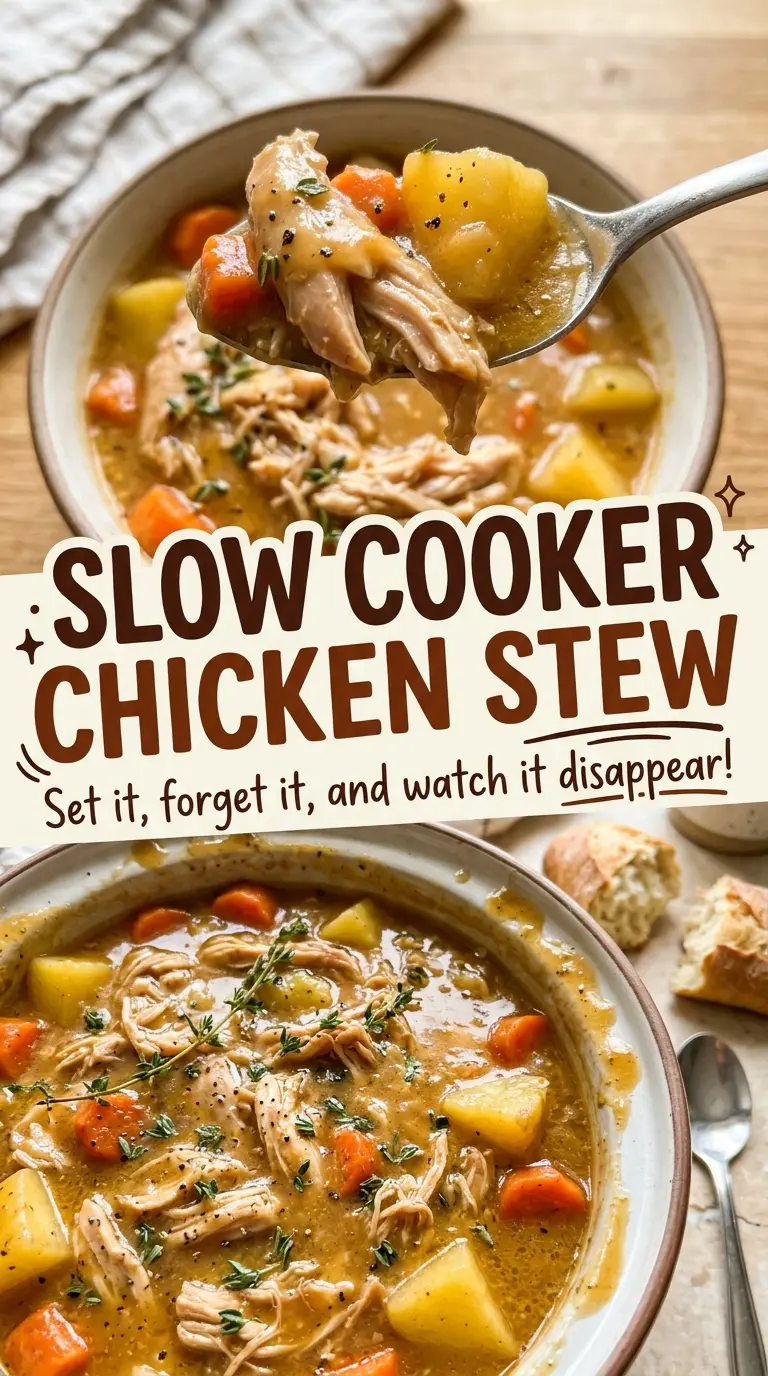
- Bone-in chicken thighs — These bring the deepest chicken flavor and stay juicy through a long cook. Boneless thighs work in a pinch, but they won’t give the broth the same richness, so the stew tastes a little flatter.
- Baby potatoes — Halved baby potatoes hold their shape better than peeled cubes, which can turn chalky or break apart before the chicken is done. Yukon Golds are the best swap if you don’t have baby potatoes; cut them into large chunks so they don’t disappear.
- Carrots, celery, and onion — This is the backbone of the stew. The onion melts into the broth, the celery adds a clean savory note, and the carrots bring sweetness that balances the creamy base.
- Cream of chicken soup — This gives the stew instant body without needing a flour roux. If you use a lower-sodium version, the stew may need a little more salt at the end because the soup is doing more than just adding creaminess.
- Tomato paste — It doesn’t make the stew taste like tomato. It deepens the color and adds a subtle cooked richness that keeps the broth from tasting one-note.
- Thyme, rosemary, and bay leaf — These herbs stand up to long cooking better than delicate herbs would. Dried herbs are the right choice here because fresh thyme can lose some of its punch over six hours, and rosemary needs that time to soften.
- Cornstarch slurry — This is the cleanest way to thicken the stew at the end. If you add cornstarch straight into the slow cooker, it can clump; mixing it with cold water first keeps the gravy smooth.
How to Layer the Pot So the Stew Cooks Evenly
Start with the vegetables on the bottom
Put the potatoes, carrots, celery, and onion in the slow cooker first so they sit closest to the heat. That placement helps them soften without overcooking the chicken into strings. If you pile the chicken underneath, it can end up sitting in a hotter, wetter pocket and lose texture before the vegetables catch up.
Build the broth before the lid goes on
Pour the broth, soup, tomato paste, herbs, and garlic over the chicken and vegetables, then stir just enough to distribute the tomato paste and soup. You don’t need a perfectly blended mixture at this stage; the slow cooker will do the work. What matters is that the tomato paste doesn’t stay in a thick clump on top, where it can cook unevenly.
Cook until the chicken pulls apart without effort
Low for 6 to 8 hours gives the best texture, with the chicken tender enough to shred but not dried out. If you’re using High, expect a narrower window, and check early because the difference between done and overdone can be small in a slow cooker. The chicken is ready when it falls apart with a fork and the carrots yield easily but still hold their shape.
Thicken at the end, not halfway through
Remove the chicken, shred it, and stir the cornstarch slurry into the hot stew before returning the meat. This last 20 minutes on High is where the sauce turns from broth into gravy. If you thicken too early, the stew can tighten up and cook into a heavy, starchy texture instead of a silky one.
How to Adapt This for Different Diets and Leftover Plans
Dairy-Free Version
Swap the cream of chicken soup for a dairy-free condensed-style soup or a thickened broth made with a little cornstarch and extra seasoning. The stew will still be hearty, but it will taste a touch less rich, so a little extra thyme or a spoonful of Dijon can help round it out.
Make It Thicker and More Rustic
For a stew that clings more heavily to the spoon, mash a few of the potatoes against the side of the cooker before you add the slurry. That gives the broth a naturally starchy body and a more rustic texture without adding extra thickeners.
Using Boneless Chicken Thighs
Boneless thighs work well if that’s what you have, but shorten the cook slightly and check for tenderness earlier. They won’t enrich the broth quite as much as bone-in thighs, so the finished stew may need a little extra salt and black pepper at the end.
Storage and Reheating
- Refrigerator: Store in an airtight container for up to 4 days. The gravy will thicken as it chills, and the potatoes will soften a bit more.
- Freezer: It freezes well for up to 3 months, though the potatoes can turn a little softer after thawing. Cool it completely first and freeze in portions for the easiest reheating.
- Reheating: Warm gently on the stove over medium-low or in the microwave in short bursts, stirring between rounds. Add a splash of broth if the gravy has tightened up too much; boiling it hard can break the texture and turn the chicken stringy.
Questions I Get Asked About This Recipe
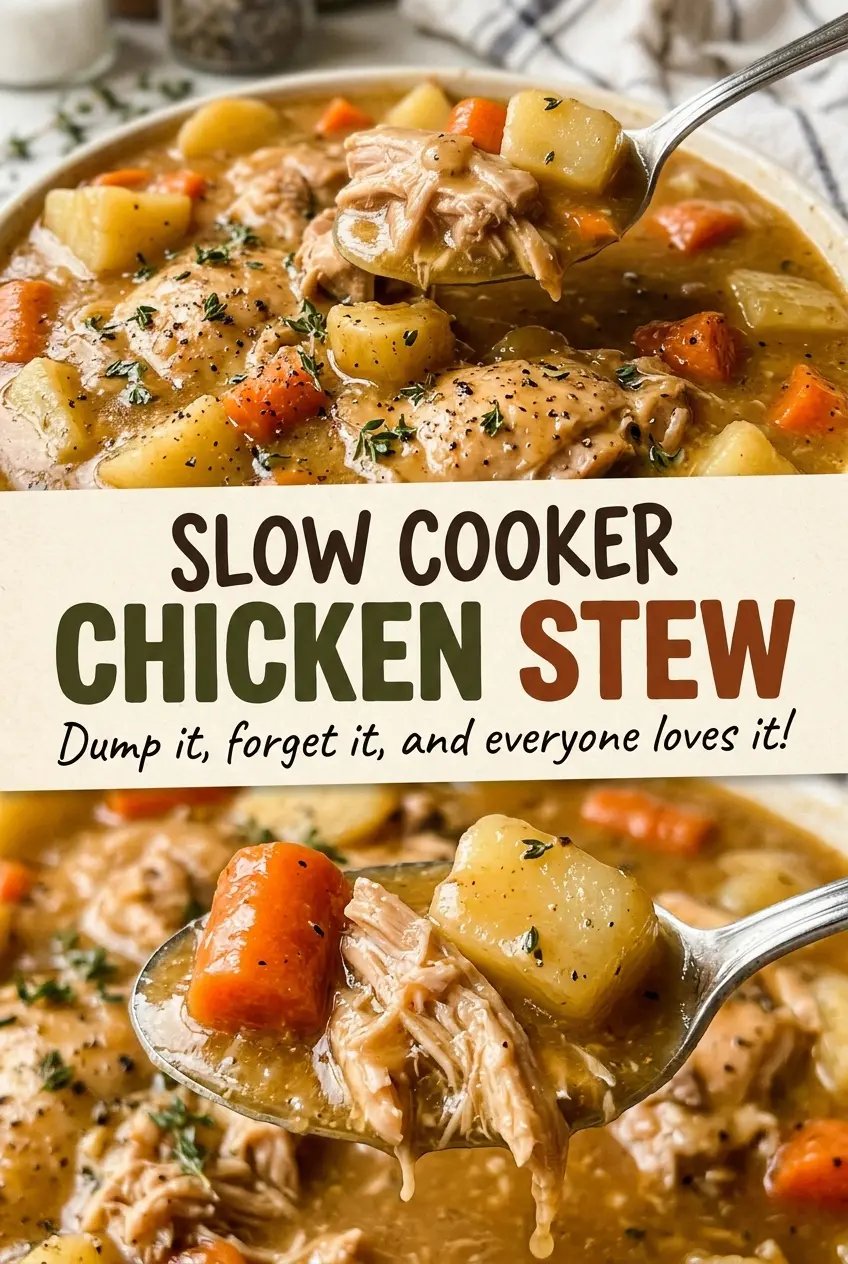
Slow Cooker Chicken Stew
Ingredients
Equipment
Method
- Add baby potatoes, carrots, celery, and onion to the bottom of the slow cooker in an even layer.
- Nestle bone-in chicken thighs on top of the vegetables so the pieces sit mostly in the center.
- Add garlic, chicken broth, cream of chicken soup, and tomato paste over everything so the chicken is partially coated.
- Sprinkle dried thyme, dried rosemary, and bay leaf across the top for even seasoning coverage.
- Cook on Low for 6-8 hours until the chicken is very tender and the vegetables are easily pierced with a fork.
- Cook on High for 3-4 hours until the chicken is very tender and the vegetables are easily pierced with a fork.
- Remove the chicken thighs, then discard the skin and bones and shred the meat into bite-size pieces.
- Remove the bay leaf from the stew and stir it out so it doesn’t get served.
- Whisk cornstarch and water together, then stir the slurry into the stew.
- Cook on High for 20 minutes until the gravy looks glossy and thick enough to coat a spoon.
- Return the shredded chicken to the slow cooker and stir to distribute it through the thickened stew.
- Season with salt and pepper to taste, then garnish with fresh parsley right before serving.