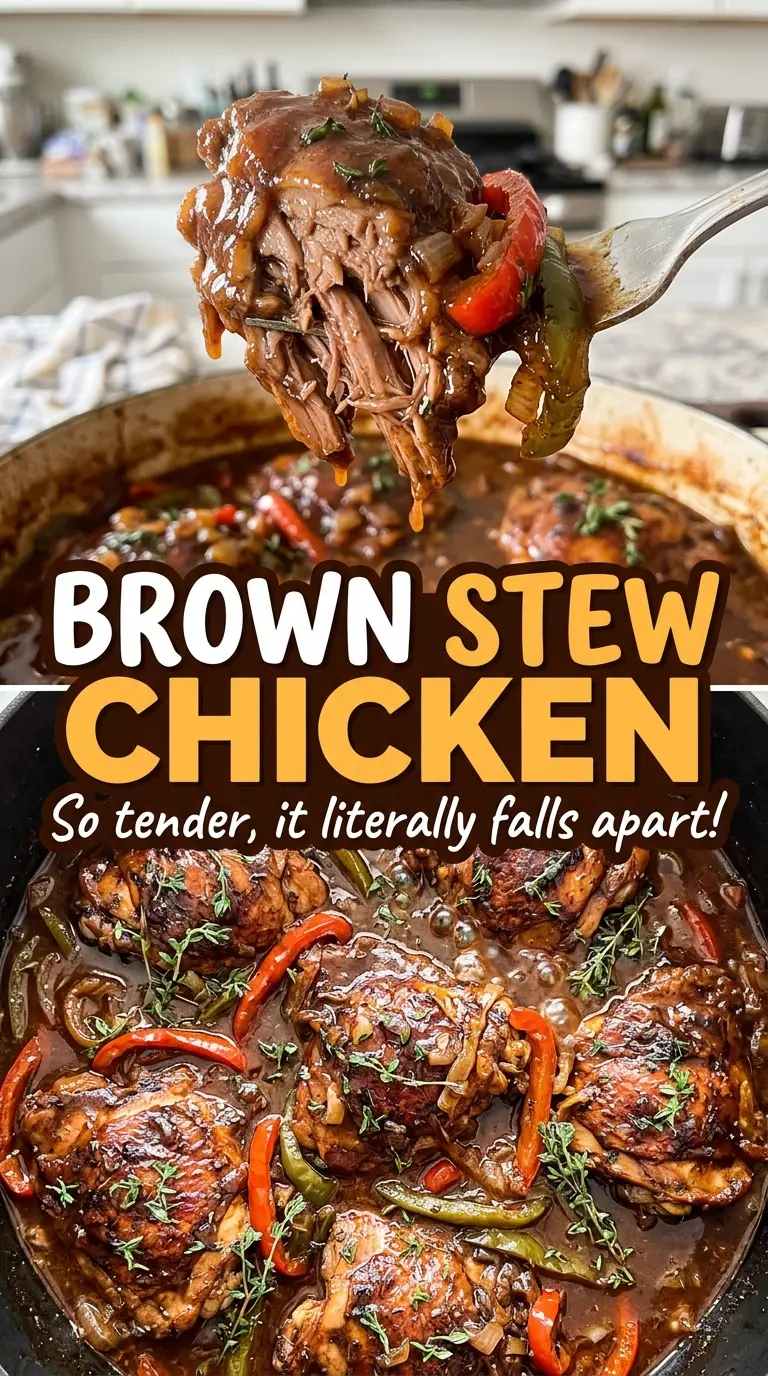
Brown stew chicken hits the table with that deep mahogany gravy clinging to the chicken in a way that feels rich before you even take the first bite. The skinless simmered version can turn flat fast, but this one keeps the flavor bold from the marinade, then builds even more depth when the sugar darkens in the pan and the chicken browns right in that caramel. The result is tender, saucy, and layered with the kind of savory sweetness that makes a bowl of rice disappear quickly.
What makes this version work is the sequence. The chicken gets seasoned ahead of time so the spices have a chance to settle in, then the sugar is caramelized just far enough to bring color without turning bitter. After that, the vegetables pick up all the browned bits left behind, and that is where the gravy gets its backbone. If you rush the browning or skip the simmer, the dish still tastes fine, but it won’t have that deep stew flavor that makes brown stew chicken worth cooking again.
Below you’ll find the one part people usually get nervous about, which is the caramel stage, plus a few practical swaps if you need to work with what you’ve got in the kitchen.
The chicken came out so tender and the gravy thickened up beautifully without getting greasy. I followed the caramel step exactly and it gave the stew that deep color and flavor I always miss when I rush it.
Save this brown stew chicken for the night you want deep Jamaican gravy, tender chicken thighs, and rice that soaks up every bit of the sauce.
The Caramel Step Is Where Brown Stew Chicken Gets Its Color
Most people think the gravy gets dark from the seasoning alone, but the color starts with the sugar. If it only gets lightly amber, the stew stays pale and tastes a little thin. Let it turn a deep golden brown, then move fast once the chicken hits the pan, because the line between caramel and burnt is short.
The other place people lose flavor is in the fond. Those brown bits on the bottom are not a cleanup problem; they’re the base of the sauce. Once the onion and peppers go in, they loosen everything up and carry that caramel into the broth, which is how the final gravy ends up tasting cooked all the way through instead of just seasoned on the surface.
- Bone-in chicken thighs and drumsticks — Dark meat stays juicy through the long simmer and gives the gravy more body than boneless breast meat would. If you use boneless chicken, cut the simmer time down or it will dry out before the sauce finishes.
- Browning sauce — This adds the dark color and a little bitter-sweet depth that helps the stew taste like it simmered longer than it did. You can skip it in a pinch, but the gravy will be lighter and less layered.
- Scotch bonnet or habanero — This is where the heat comes from, but you don’t need to make the dish painfully spicy. Mince it finely for more heat throughout, or leave it out entirely and serve hot sauce at the table.
- Fresh thyme — Dried thyme seasons the marinade, but fresh thyme on top gives the finished bowl a cleaner, brighter aroma. It matters most right at the end, when the gravy is thick and needs something fresh to cut through it.
- Chicken broth — Use a broth with actual chicken flavor, not something too salty and thin. The liquid becomes the sauce, so weak broth gives you weak stew.
What Each Ingredient Is Actually Doing in This Recipe
- Primary ingredient (the star) — Quality matters most. Choose the best you can find.
- Cooking medium (oil, butter, or broth) — This carries flavors and prevents dryness.
- Seasonings (salt, pepper, spices, herbs) — Layer flavors so nothing overpowers. Build depth gradually.
- Aromatics (garlic, onion, herbs) — Cook with fat to bloom flavors. Become the foundation.
- Supporting ingredients — Complement the main ingredient without overpowering it.
- Sauce or liquid (if applicable) — Brings flavors together. Balance richness with acid.
- Acid (lemon, vinegar, wine, or other) — Brightens and prevents flat-tasting results.
- Final finish (garnish, glaze, or sauce) — Prevents one-dimensional taste and adds visual appeal.
Building the Stew So the Sauce Turns Thick, Not Watery
Let the Chicken Marinate Long Enough to Matter
Mix the chicken with the browning sauce, all-purpose seasoning, garlic powder, onion powder, thyme, salt, and pepper, then let it sit for at least 2 hours. Overnight gives you the best payoff because the seasoning gets into the meat instead of just sitting on the surface. If you skip this rest, the stew still works, but the chicken tastes more like it was sauced at the end than cooked from within.
Caramelize the Sugar Before Anything Else Goes In
Heat the oil, add the sugar, and let it melt until it turns a deep golden brown. Watch the color, not the clock. If it goes too dark, the stew can taste scorched, so pull the pan off the heat as soon as it reaches that rich amber tone and start browning the chicken right away.
Brown the Chicken in the Caramel Oil
Lay the chicken pieces in the pan and let them sear until they pick up a dark, lacquered crust. Don’t crowd the pan or the pieces will steam and the sauce will never get that roasted flavor underneath it. You want color on the outside before the braise starts, because that’s what gives the finished stew its depth.
Let the Vegetables Scrape Up the Flavor
Add the onion, bell peppers, garlic, green onions, and Scotch bonnet, then cook until the onions soften and the pan smells sweet and savory at the same time. Stir while scraping the bottom so the caramel and chicken drippings dissolve into the vegetables. That step is where the gravy starts to come together, and if the pan looks dry at this point, the finished sauce usually ends up flat.
Simmer Until the Meat Pulls Cleanly from the Bone
Return the chicken to the pan, add the broth, and bring it to a boil before lowering the heat to a steady simmer. Cover the pot and cook until the meat is tender enough to pull apart with a fork and the gravy has thickened around the edges of the pan. If the sauce looks thin at the end, uncover it for the last few minutes so it can reduce instead of diluting the flavor any further.
How to Adapt This for a Milder Bowl or a Bigger Batch
Make It Less Spicy Without Losing the Jamaican Flavor
Leave out the Scotch bonnet and keep the thyme, green onion, browning sauce, and garlic exactly as written. You’ll still get the savory-sweet stew flavor, just without the heat that can overwhelm kids or spice-shy eaters. If you want a little warmth without the burn, add a tiny piece of Scotch bonnet to the simmer and remove it before serving.
Use Boneless Chicken Thighs When That’s What You Have
Boneless thighs work well, but cut the simmer time back because they finish faster and can go stringy if they cook too long. You’ll lose a little flavor from the bones, so lean on the browning sauce and broth for extra depth. This is the easiest swap if you want a faster weeknight version.
Make It Dairy-Free and Gluten-Free Without Changing the Stew
This recipe is naturally dairy-free, and it can stay gluten-free as long as your browning sauce and all-purpose seasoning are certified gluten-free. That matters because some seasoning blends hide wheat or malt-based ingredients. The texture and flavor stay the same when you keep the labels clean.
Storage and Reheating
- Refrigerator: Store in an airtight container for up to 4 days. The gravy thickens as it chills, and the flavor gets even deeper by day two.
- Freezer: It freezes well for up to 3 months. Cool it completely first, then freeze the chicken and gravy together in a sealed container so the sauce doesn’t separate.
- Reheating: Warm it gently on the stove over low heat with a splash of broth or water to loosen the gravy. High heat can dry out the chicken and make the sauce look greasy before it loosens again.
Questions I Get Asked About This Recipe

Brown Stew Chicken
Ingredients
Equipment
Method
- Combine the chicken with the browning sauce, all-purpose seasoning, garlic powder, onion powder, dried thyme, salt, and pepper, then mix to coat thoroughly. Cover and marinate for at least 2 hours or overnight.
- Heat the vegetable oil in a large skillet or Dutch oven over medium-high heat, then stir in the sugar and cook until caramelized and golden brown, about 2-4 minutes. Look for a deep golden amber color before adding the chicken.
- Add the marinated chicken pieces to the caramel oil and cook until deeply golden on all sides, turning as needed, about 8-10 minutes total. Remove to a plate when browned.
- Sauté the onion, bell peppers, garlic, green onions, and scotch bonnet for 4 minutes. Keep stirring so the peppers soften and the garlic releases aroma without burning.
- Return the browned chicken to the pot, add the chicken broth, and bring everything to a boil. Scrape up any browned bits from the bottom for extra flavor.
- Reduce heat to low, cover, and simmer for 35-40 minutes until the chicken is fall-apart tender and the gravy is thick. Uncover for the last 5 minutes if the gravy needs to reduce further.
- Serve the brown stew chicken with rice and finish with fresh thyme garnish. Let it sit 5 minutes so the gravy clings to the chicken.