Golden broth, tender noodles, and shredded rotisserie chicken turn into the kind of soup that fixes a slow evening without asking much from you. The chicken brings instant depth, the vegetables soften just enough to sweeten the pot, and the lemon at the end keeps the whole bowl tasting fresh instead of flat. It’s the sort of dinner that feels like you planned ahead, even when you didn’t.
The trick here is using the rotisserie chicken for what it’s best at: flavor and tenderness at the finish, not long simmering. Since the meat is already cooked, the broth and vegetables get time to build the base first, then the chicken only needs a few minutes to warm through. That keeps it juicy instead of stringy. A small squeeze of lemon matters more than you might expect, because it wakes up store-bought broth and gives the soup the brightness homemade stock usually has.
Below, I’ll walk through the one timing point that matters most so the noodles stay pleasant, not mushy, plus a few swaps if your fridge is missing one of the vegetables or you want to stretch the pot a little further.
The broth tasted like it had been simmering all afternoon, and the rotisserie chicken stayed tender instead of getting dried out. My kids ate the carrots and celery without complaining, which never happens with soup at my house.
Save this rotisserie chicken noodle soup for the nights when you need a fast, brothy dinner that still tastes homemade.
The Secret to Keeping the Noodles from Going Soft
The biggest mistake in chicken noodle soup is letting the noodles sit in the pot too long. They keep drinking broth even after the heat is off, and by the time you come back for a second bowl, they’ve turned bloated and tired. Here, the noodles go in near the end and the chicken follows shortly after, which gives you tender pasta without losing the clear, light broth that makes this soup worth making.
There’s also a timing reason to add the rotisserie chicken late. It’s already cooked, so all it needs is enough heat to take the chill off and let the flavor settle into the broth. If you simmer it hard, the meat falls apart into dry shreds. Gentle heat keeps the pieces supple and lets the soup stay clean-tasting instead of cloudy and overcooked.
What Each Ingredient Is Actually Doing in This Bowl
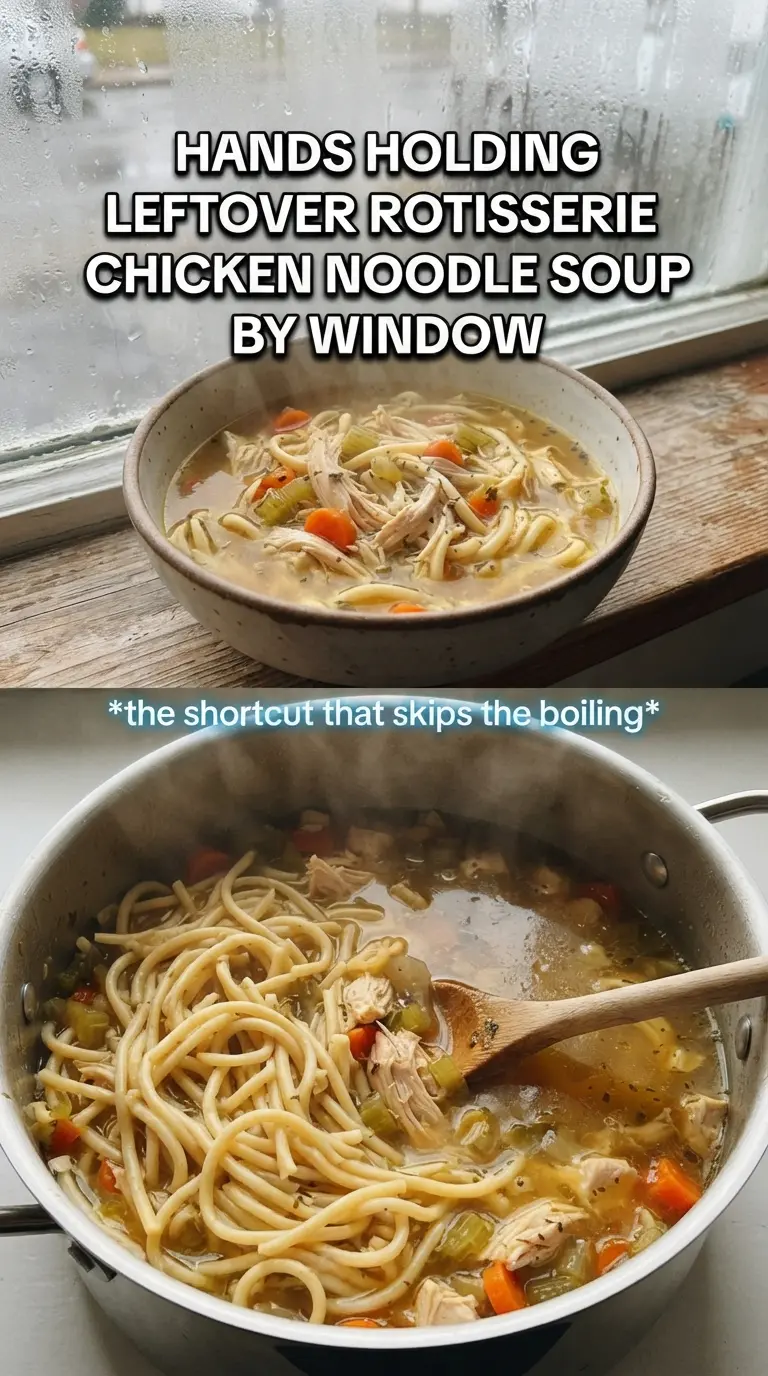
- Rotisserie chicken — This is the whole reason the soup comes together so fast. Pull the meat into bite-size shreds and add it at the end so it stays moist. Dark meat gives you a little more richness, but any mix of white and dark works.
- Chicken broth — Use a broth you’d actually drink on its own, because it sets the tone for everything else. If yours tastes thin, a pinch of extra salt and the lemon finish will help, but a weak broth can’t be fully rescued. Low-sodium broth is the best choice if you like control over seasoning.
- Carrots, celery, and onion — This is the classic base for a reason. They soften into the broth and give the soup body without making it heavy. Dice the onion small so it disappears into the background, and slice the carrots and celery thin enough that they cook through in the short simmer.
- Egg noodles — These thicken the soup slightly and make it feel like a full meal. Add them while the broth is boiling so they cook evenly, but stop when they’re still just a little firm. They’ll finish in the hot broth after you turn off the heat.
- Lemon juice — Don’t skip it. A little acid makes the broth taste brighter and more savory at the same time. If you don’t have lemon, a tiny splash of apple cider vinegar works in a pinch, though it’s sharper and less clean.
The Fast Simmer That Builds the Soup Without Wasting Time
Softening the Vegetables
Melt the butter or warm the oil in a large pot, then add the onion, carrots, and celery. Cook them until the onion turns translucent and the edges of the carrots start to lose their raw crunch, about 4 to 5 minutes. If you rush this step, the soup tastes like broth with vegetables floating in it instead of a real base.
Adding the Broth and Seasonings
Stir in the garlic for just a minute, then pour in the broth and add the thyme, parsley, and garlic powder. You want the pot at a steady simmer, not a hard boil, so the garlic stays mellow and the dried herbs have time to open up. If the broth reduces too much before the noodles go in, lower the heat and keep the lid nearby.
Cooking the Noodles to the Right Point
Add the egg noodles once the broth is boiling and cook them until they’re almost tender. They should still have a little bite in the center when you test one, because they’ll keep softening from residual heat. This is the point where people usually overcook the pot, and once noodles go too far, there’s no getting that texture back.
Finishing with the Chicken and Lemon
Stir in the shredded rotisserie chicken and simmer just until it’s heated through, then turn off the heat and add the lemon juice. Taste before you add much salt, because rotisserie chicken and broth can already be seasoned. A final sprinkle of parsley gives the bowl a fresh look and keeps the finish from feeling heavy.
How to Change This Soup When the Fridge Is Missing Something
Make it dairy-free without losing body
Use olive oil instead of butter. The soup still tastes rich because the rotisserie chicken and broth do most of the work, and the lemon at the end keeps it bright. You won’t lose texture, just the faint buttery finish.
Swap the noodles for a gluten-free bowl
Use a gluten-free egg noodle or small rice noodle, but cook it separately if the brand tends to get soft fast. Some gluten-free noodles cloud the broth and collapse if they sit too long, so keeping them out of the main pot gives you a cleaner texture.
Stretch it into a bigger batch
Add another cup or two of broth plus a little extra carrot and celery if you want more servings. You may need a pinch more salt and an extra squeeze of lemon to keep the flavor balanced, because a larger pot dilutes the seasoning faster than you expect.
Storage and Reheating
- Refrigerator: 3 to 4 days. The noodles will keep soaking up broth, so expect the soup to thicken as it sits.
- Freezer: It freezes, but the noodles soften after thawing. For the best texture, freeze the soup without noodles and cook fresh noodles when you reheat it.
- Reheating: Warm it gently on the stove over medium-low heat until steaming, not boiling. If it looks too thick, add a splash of broth or water before heating so the noodles don’t turn gummy.
Questions I Get Asked About This Soup
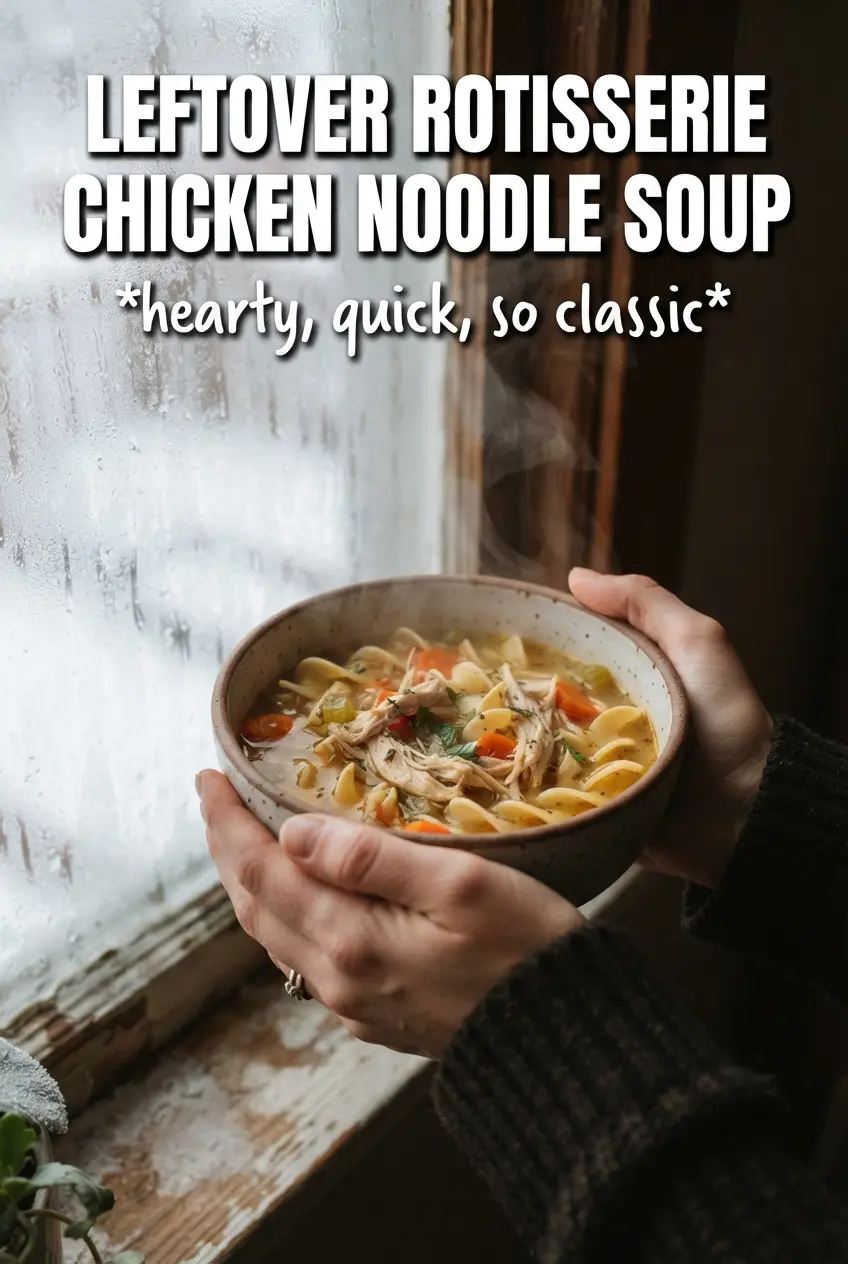
Leftover Rotisserie Chicken Noodle Soup
Ingredients
Equipment
Method
- Melt butter in a large pot over medium heat, then sauté onion, carrots, and celery for 4-5 minutes until softened and fragrant. Keep the vegetables moving so they don’t brown too much.
- Add garlic and cook for 1 minute until fragrant, then pour in chicken broth and stir in thyme, dried parsley, and garlic powder. Bring the mixture to a steady boil.
- Add egg noodles and cook for 5-6 minutes until almost tender, stirring occasionally so they don’t stick. The broth should remain at a bubbling boil.
- Add the leftover rotisserie chicken and simmer for 3-4 minutes until heated through. Reduce to a gentle simmer after adding the chicken.
- Squeeze in lemon juice, then season with salt and pepper to taste. Simmer 1 more minute to let the flavors blend.
- Turn off the heat, garnish with fresh parsley, and serve hot. The soup should look bright with a light herb finish.