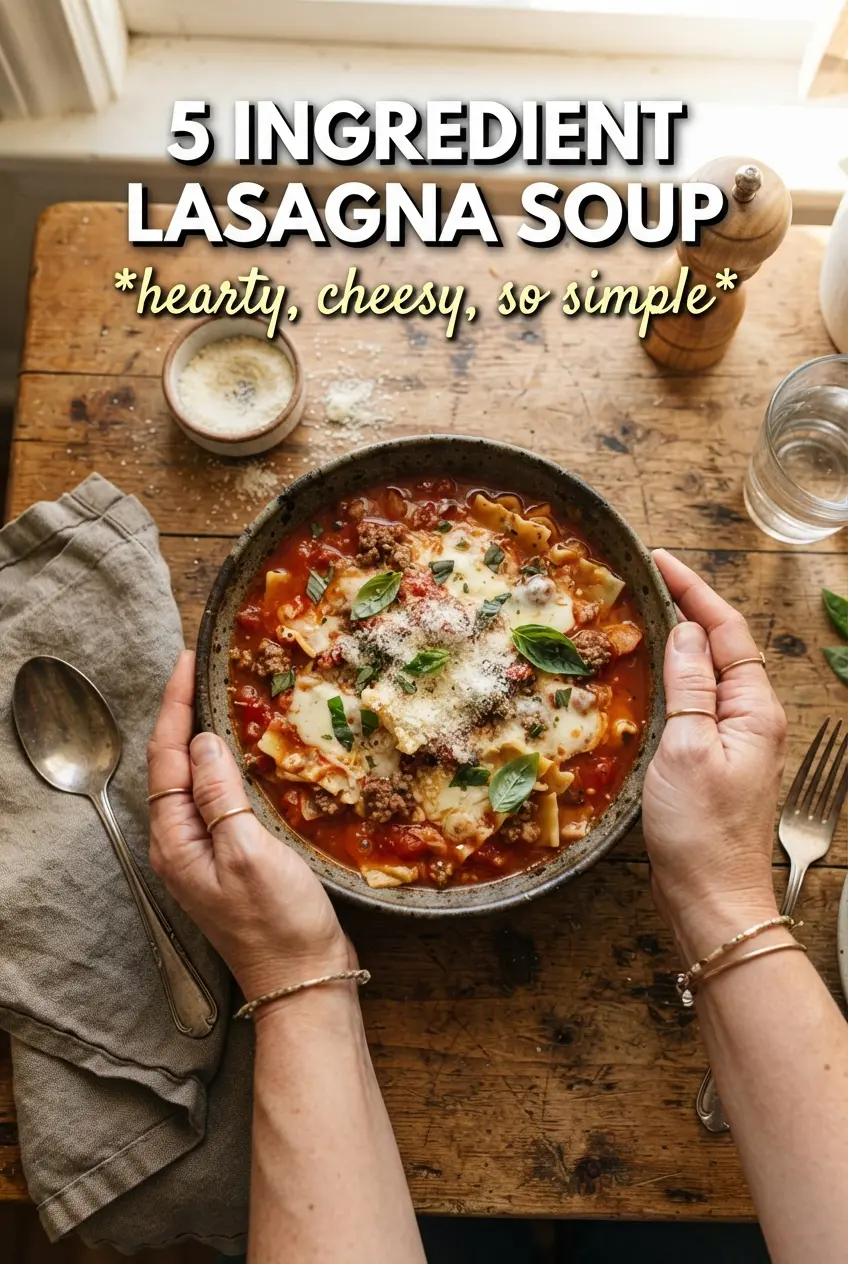
Lasagna soup hits that same deep, tomato-rich comfort as a baked pan of lasagna, but it lands in a bowl faster and with a lot less work. The noodles turn tender in the broth, the sausage gives the soup a sturdy savory base, and the ricotta on top melts into little creamy pockets that make every spoonful taste finished.
What makes this version work is the short ingredient list. Jarred marinara carries the tomato, garlic, and herb flavor that would normally take a longer simmer, while chicken broth loosens it into a true soup instead of a thick pasta sauce. Browning the sausage first matters too, because those browned bits add depth right before the broth goes in.
If you’ve ever wanted lasagna flavor without layering, baking, or waiting around for a casserole dish to set, this is the version to keep on hand. Below, I’ll show you how to keep the noodles from going mushy and how to make the ricotta topping taste like part of the soup, not just something dropped on top at the end.
The noodles stayed tender but not mushy, and the ricotta on top melted into the broth just enough to make it taste like real lasagna in a bowl. My husband asked if there was more left for lunch the next day.
Save this 5 Ingredient Lasagna Soup for the nights when you want that baked-lasagna comfort without the layering, waiting, or extra dishes.
The Shortcut That Keeps This Soup from Tasting Thin
The biggest mistake with lasagna soup is treating it like watered-down pasta sauce. If you add too much broth or underbrown the sausage, the whole pot tastes flat. This version stays satisfying because the marinara does the heavy lifting while the sausage adds fat and seasoning right at the start.
Broken lasagna noodles are another place people go wrong. They need enough liquid to cook through, but not so much time that they turn gummy. Once they’re tender, the soup is done enough to serve. Letting them sit in the hot broth for much longer than that is how you lose the texture.
- Italian sausage — This is the main source of flavor, so use a brand you like. Mild or hot both work. If you use a leaner sausage, keep a little of the rendered fat in the pot for flavor.
- Marinara sauce — A good jarred sauce saves time and still gives you garlic, tomato, and herb flavor in one step. If your sauce is already heavily seasoned, taste before adding extra salt.
- Chicken broth — This turns the marinara into soup without making it bland. If you only have low-sodium broth, it’s easier to control the final seasoning.
- Lasagna noodles — Break them into rough pieces so they feel rustic and spoonable. Don’t swap in a tiny pasta shape unless you want a different result; the wide noodle pieces are what make this read as lasagna soup.
- Ricotta — This is the creamy finish, and it matters. Part-skim ricotta works fine, but whole-milk ricotta gives a smoother, richer topping. If you want it looser, stir it with a spoonful of hot soup before dolloping.
What Each Ingredient Is Actually Doing in This Recipe

- Primary ingredient (the star) — Quality matters most. Choose the best you can find.
- Cooking medium (oil, butter, or broth) — This carries flavors and prevents dryness.
- Seasonings (salt, pepper, spices, herbs) — Layer flavors so nothing overpowers. Build depth gradually.
- Aromatics (garlic, onion, herbs) — Cook with fat to bloom flavors. Become the foundation.
- Supporting ingredients — Complement the main ingredient without overpowering it.
- Sauce or liquid (if applicable) — Brings flavors together. Balance richness with acid.
- Acid (lemon, vinegar, wine, or other) — Brightens and prevents flat-tasting results.
- Final finish (garnish, glaze, or sauce) — Prevents one-dimensional taste and adds visual appeal.
Building the Bowl in the Right Order
Brown the sausage first
Set a large pot over medium-high heat and cook the sausage until it’s deeply browned and broken into small crumbles. Those browned edges are where the flavor is, so don’t rush this part. If the sausage releases a lot of fat, drain the excess, but leave enough behind to coat the pot.
Turn the sauce into soup
Pour in the marinara and broth, then stir until the bottom of the pot is clean and the sausage is evenly distributed. Bring it to a boil before the noodles go in. If you add the pasta too early, it starts absorbing liquid before the soup has enough heat to cook properly.
Cook the noodles just until tender
Add the broken lasagna noodles and stir occasionally so they don’t stick together. You’re looking for noodles that are flexible and cooked through but still have a little bite in the center. Once they go soft and lose their shape, they’ve gone too far and the soup will thicken more than you probably want.
Finish with ricotta at the table
Ladle the soup into bowls and top each one with a generous spoonful of ricotta. That final hit of creaminess keeps the soup from tasting one-note and gives you the closest thing to lasagna filling without baking a casserole. A little mozzarella or basil on top works best right before serving so the cheese melts lightly instead of disappearing into the pot.
How to Adapt This for a Smaller Pot, a Lighter Bowl, or a Meatless Night
Make it lighter without losing the lasagna feel
Use turkey Italian sausage instead of pork sausage. You’ll lose some richness, but the marinara and ricotta still carry the dish. If the broth tastes a little leaner, finish with a pinch more salt and a shower of parmesan.
Make it gluten-free
Swap in gluten-free lasagna noodles and cook them just until tender. Gluten-free pasta can soften faster and break apart sooner, so start checking a minute or two early. The soup still tastes like lasagna, but the texture is a little more delicate.
Make it vegetarian
Use a plant-based Italian sausage and vegetable broth. Since the sausage is such a big part of the flavor here, brown the replacement well and don’t skip the simmer with the marinara before adding the noodles. That gives the broth a deeper, more savory base.
Stretch it for a bigger crowd
Add another cup of broth and an extra handful of noodles if you need more servings, but keep the ratio close. Too much extra liquid without more tomato or sausage makes the soup taste diluted. Add the noodles only after the soup is already boiling so they cook evenly in the larger batch.
Storage and Reheating
- Refrigerator: Store leftovers in an airtight container for up to 4 days. The noodles keep soaking up broth, so expect the soup to thicken.
- Freezer: It freezes, but the noodles soften after thawing. For the best texture, freeze the soup before adding pasta, then cook fresh noodles when you reheat it.
- Reheating: Warm it gently on the stove over medium-low heat with a splash of broth or water. High heat can make the noodles break apart and push the soup from hearty to mushy fast.
Questions I Get Asked About This Recipe
5 Ingredient Lasagna Soup
Ingredients
Equipment
Method
- Heat a large pot over medium-high heat and brown the Italian sausage, breaking it up as it cooks, until fully cooked. Drain excess fat so the soup stays balanced.
- Stir the marinara sauce and chicken broth into the pot with the browned sausage until combined and smooth. Keep the heat on high so it comes back quickly.
- Bring the mixture to a boil over high heat, maintaining a steady bubbling surface. This helps the noodles cook evenly.
- Add the broken lasagna noodles and stir to distribute them. Cook for 10-12 minutes until tender, stirring occasionally to prevent sticking.
- Taste and season with salt and pepper if needed, adjusting to your preference. Stir for 30 seconds to evenly distribute seasoning.
- Ladle the soup into bowls. Top each bowl with a generous spoonful of ricotta while the soup is hot so it softens slightly.
- Optionally top with shredded mozzarella and fresh basil, then add parmesan if you like. Serve immediately for the creamiest, most melted finish.