Cheesy ground beef lasagna soup gives you all the comfort of a baked lasagna without the layering, oven time, or cleanup. The broth turns rich and savory, the broken noodles cook right in the pot, and the melted cheese on top finishes it with that familiar lasagna pull in every spoonful. It’s the kind of dinner that eats like something slow-cooked, even though it’s on the table in under an hour.
What makes this version work is the order. The tomato paste gets cooked with the onion and garlic so it loses that raw edge and deepens the base, then the noodles simmer directly in the broth and tomatoes so they absorb flavor instead of tasting plain. The cheese goes in at the end over low heat, which keeps it silky instead of grainy, and the ricotta dollop adds the creamy, tangy finish that makes each bowl taste complete.
Below, I’ve included the small details that matter most: how to keep the noodles from overcooking, which cheese swap changes the texture the most, and the best way to reheat leftovers without turning the soup thick and starchy.
The noodles stayed tender but didn’t turn mushy, and the ricotta on top made it taste like baked lasagna in soup form. I used the cheddar version and the broth still came out creamy and rich.
Save this cheesy ground beef lasagna soup for nights when you want lasagna flavor, creamy ricotta, and a one-pot dinner.
The Trick Is Keeping the Noodles Tender Without Turning the Pot Starchy
Lasagna soup goes wrong when the noodles stay in the broth too long or the pot boils hard after they’re added. Broken lasagna noodles release starch fast, and if the soup keeps bubbling, that starch thickens the broth in a heavy, gluey way instead of giving you a silky spoonful. The answer is a steady simmer, not a rolling boil, and pulling the pot off the heat as soon as the noodles are tender.
The other failure point is cheese. If the mozzarella goes in over high heat, it can clump and turn stringy in the wrong way. Low heat lets it melt into the soup instead of sitting on top of it, and the ricotta dollop gives you a clean creamy contrast instead of making the whole pot taste flat.
- Ground beef 80/20 — The extra fat gives the soup body and flavor. If you use a leaner beef, the broth will taste a little thinner, so leave a small amount of fat in the pot instead of draining it completely.
- Tomato paste — This is what gives the broth that slow-cooked depth. Let it cook with the onion and garlic long enough to darken slightly; that step takes away the raw, tinny taste.
- Lasagna noodles — Break them into uneven pieces so the bowl eats like actual lasagna, not pasta salad. Regular lasagna noodles work best here; no-boil noodles can turn soft faster than you want.
- Ricotta, parmesan, and basil — This topping is the lasagna part that makes the soup feel finished. Whole-milk ricotta gives the creamiest result, but part-skim works if that’s what you have.
- Mozzarella and cheddar or American cheese — Mozzarella brings the stretch, while cheddar or American melts into the broth and gives it a richer, creamier texture. If you swap in only mozzarella, the soup will taste lighter and less velvety.
What Each Ingredient Is Actually Doing in This Recipe

- Primary ingredient (the star) — Quality matters most. Choose the best you can find.
- Cooking medium (oil, butter, or broth) — This carries flavors and prevents dryness.
- Seasonings (salt, pepper, spices, herbs) — Layer flavors so nothing overpowers. Build depth gradually.
- Aromatics (garlic, onion, herbs) — Cook with fat to bloom flavors. Become the foundation.
- Supporting ingredients — Complement the main ingredient without overpowering it.
- Sauce or liquid (if applicable) — Brings flavors together. Balance richness with acid.
- Acid (lemon, vinegar, wine, or other) — Brightens and prevents flat-tasting results.
- Final finish (garnish, glaze, or sauce) — Prevents one-dimensional taste and adds visual appeal.
What Each Stage Does to Build the Bowl
Browning the Beef Properly
Cook the beef in a large pot until it loses the pink color and picks up browned bits on the bottom. Those browned bits matter more than most people think; they’re the base of the savory flavor in the finished soup. If the pan looks crowded, let the meat sit long enough to brown instead of stirring constantly, or you’ll steam it.
Cooking Down the Onion, Garlic, and Tomato Paste
Add the onion and cook it until it softens and turns translucent at the edges. Then add the garlic and tomato paste and cook for about 2 minutes, stirring often, until the paste darkens a shade and smells sweet instead of sharp. If the garlic starts to brown hard, the heat is too high and the whole pot will taste bitter.
Building the Broth
Pour in the crushed tomatoes, diced tomatoes, broth, and seasonings, then bring everything to a boil before dropping it to a steady simmer. That first boil wakes up the dried herbs and pulls the cooked tomato flavor into the broth. Keep the simmer gentle once the noodles go in; a hard boil is what breaks down the pasta too fast.
Finishing With Cheese and Ricotta
Stir in the mozzarella and cheddar over low heat until the cheese disappears into the soup and the broth looks glossy. Then ladle it into bowls and top each serving with a generous ricotta mixture. The ricotta should sit in soft clouds on top, not melt away immediately, so add it at the table or just before serving.
Three Ways to Work With What’s in Your Kitchen
Make it gluten-free with one noodle swap
Use a gluten-free lasagna noodle that holds its shape well, and check it a minute or two early because some versions soften fast. The broth and cheese base are naturally gluten-free, so the noodle is the only part that needs changing. If your noodles tend to break apart, cook them separately and add them to each bowl at serving time.
Use all mozzarella for a lighter melt
You can replace the cheddar or American with extra mozzarella, and the soup will taste a little cleaner and more tomato-forward. You’ll lose some of the creamy body that cheddar adds, so the broth will feel looser and more like classic lasagna broth. It’s a good swap if you want a milder, less rich finish.
Make it milder for kids or heat-shy eaters
Leave out the red pepper flakes and use the full amount of cheese for a smoother, softer bowl. The soup still tastes layered because of the tomato paste, beef, and ricotta topping, so you won’t miss the heat. If you want a little warmth without obvious spice, add a pinch instead of the full half teaspoon.
Storage and Reheating
- Refrigerator: Store in an airtight container for up to 4 days. The noodles will keep absorbing broth, so expect the soup to thicken.
- Freezer: It freezes best without the noodles. If you want to freeze it, set aside a portion of the broth and beef base, then cook fresh noodles when you reheat.
- Reheating: Warm it gently on the stove over low heat with a splash of broth or water. The common mistake is boiling it again, which makes the noodles mushy and the cheese separate.
Answers to the Questions Worth Asking
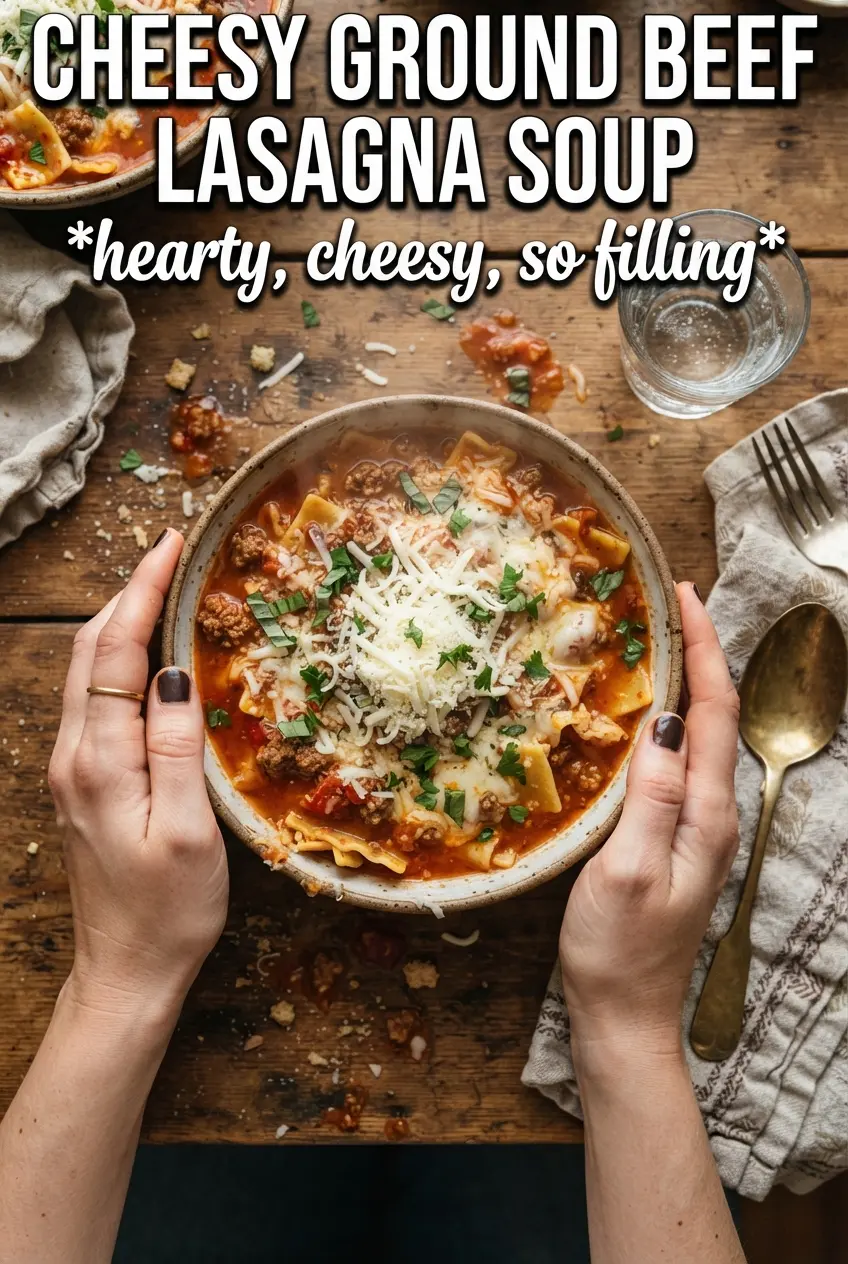
Cheesy Ground Beef Lasagna Soup
Ingredients
Equipment
Method
- Brown ground beef in a large pot, stirring, until cooked through; drain excess fat.
- Add the diced onion and sauté for 4 minutes, stirring, until softened.
- Add the minced garlic and tomato paste, then cook for 2 minutes, stirring, until fragrant.
- Add the crushed tomatoes, diced tomatoes, beef broth, Italian seasoning, dried basil, dried oregano, and red pepper flakes, then bring the mixture to a boil with steady bubbling.
- Stir in the broken lasagna noodles and simmer for 10-12 minutes, until tender, keeping the liquid at a gentle simmer.
- Reduce heat to low and stir in the shredded mozzarella and shredded cheddar (or American cheese) until fully melted and glossy.
- Season with salt and pepper to taste.
- Serve each bowl with a generous ricotta dollop on top (ricotta mixed with parmesan and basil).