Vegetarian taco soup is the kind of dinner that tastes like it simmered all afternoon, even though it comes together in one pot in about 35 minutes. The broth turns rich and savory, the beans stay hearty, and the fire-roasted tomatoes give the whole pot a deeper, almost smoky base that keeps it from tasting flat. It’s filling enough to stand on its own, but still light enough that you don’t end up feeling weighed down after a bowl.
What makes this version work is the layering. The onion and bell pepper soften first, then the taco seasoning and spices hit the hot pot so they can bloom instead of tasting dusty. After that, the canned tomatoes, beans, corn, and broth simmer together just long enough for the broth to pick up body without turning the beans mushy. The toppings matter here too. A squeeze of lime wakes everything up, and avocado or sour cream smooths out the spice in the best way.
Below you’ll find the small details that keep this soup from tasting like bean soup with taco seasoning dumped in. A few ingredient notes, a simple process that builds flavor fast, and the easiest ways to stretch it for leftovers or adapt it to what you’ve got on hand.
The broth came together fast, and after 20 minutes it had that thick, cozy texture where the beans and tomatoes still held their shape. I used vegan sour cream on top and my husband went back for a second bowl right away.
Save this vegetarian taco soup for a fast, one-pot dinner with smoky broth, hearty beans, and the freshest lime-and-avocado finish.
The Trick Is Letting the Spices Hit the Hot Pan First
A lot of taco soups taste thin because everything goes into the pot at once. That works for feeding people, but it doesn’t give the spices a chance to wake up. Here, the onion and bell pepper soften first, then the garlic and seasoning go in while the pot is still hot. That brief moment in the oil changes the whole soup. The cumin gets warmer, the chili powder loses its raw edge, and the taco seasoning blends into the vegetables instead of floating around the broth.
The other thing that matters is how long you simmer. You’re not trying to cook the beans from scratch. You’re giving the tomatoes time to lose their sharpness and letting the broth pick up all the flavor that’s already in the pot. If the soup tastes flat at the end, it usually needs salt, lime, or both — not more seasoning packets.
What Each Ingredient Is Actually Doing in This Pot
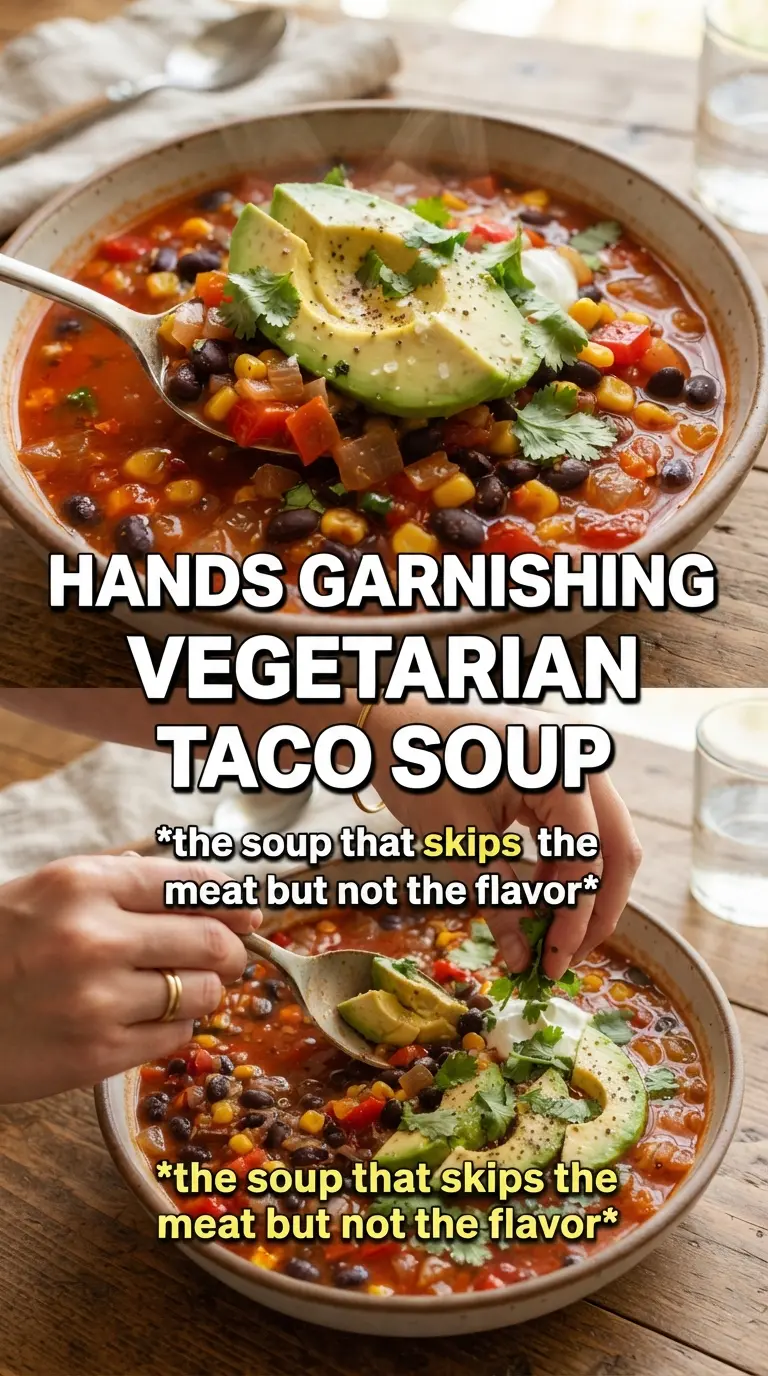
- Black, pinto, and kidney beans — The mix gives the soup better texture than using one bean alone. Black beans stay a little firm, pinto beans help thicken the broth, and kidney beans add a meaty bite. If you only have two kinds, that’s fine, but don’t skip draining them or the soup turns muddy.
- Rotel, diced tomatoes, and fire-roasted tomatoes — This is where the broth gets its body and depth. Rotel brings a little heat and acidity, diced tomatoes keep the soup bright, and fire-roasted tomatoes add the smoky note that makes the pot taste like it cooked longer than it did. If you don’t want much spice, use mild Rotel.
- Vegetable broth — Use one with some actual flavor. A weak broth leaves you leaning too hard on the taco seasoning. If yours is low-sodium, that’s an advantage here because you can season the soup at the end instead of overshooting too early.
- Taco seasoning, cumin, chili powder, and smoked paprika — The packet handles the familiar taco flavor, while the extra spices give the soup a deeper base. Smoked paprika is subtle, but it’s what keeps the broth from tasting one-note. If you’re using a salt-heavy taco packet, hold back on extra salt until the end.
Building the Soup So the Beans Stay Hearty and the Broth Stays Rich
Softening the Vegetables
Heat the oil, then cook the onion and bell pepper until the onion goes translucent and the pepper loses its raw crunch. You’re not looking for browning here. You want the vegetables softened enough that they melt into the soup instead of staying sharply separate in every spoonful. If the pan starts to dry out, lower the heat instead of rushing it, because browned garlic tastes bitter in a quick soup like this.
Blooming the Seasonings
Add the garlic, taco seasoning, cumin, chili powder, and smoked paprika and stir for about a minute. The pot should smell warm and fragrant, not scorched. This is the point where the spices need contact with the oil, so don’t dump in the broth too early. If the garlic starts to turn dark, it’s already gone too far.
Simmering Everything Together
Add the beans, corn, tomatoes, and broth, then bring the pot to a boil before dropping it to a steady simmer. You want small bubbles around the edges, not a hard boil that pounds the beans apart. Fifteen to twenty minutes is enough for the broth to thicken slightly and the flavors to settle into each other. Taste at the end and adjust with salt, pepper, or a squeeze of lime, because that last hit of acid often makes the soup taste finished.
How to Make It Work With What You Have
Make it dairy-free without losing the creamy finish
Use vegan sour cream or skip the dairy topping and lean on avocado, lime, and cilantro instead. The soup itself is already dairy-free, so this swap changes the finish more than the base. You still get that cool, rich contrast on top without changing the body of the soup.
Use what beans you actually have
Any combination of black beans, pinto beans, kidney beans, or even cannellini beans will work. The soup is forgiving, but keep the total amount about the same so the broth-to-bean ratio stays balanced. If you use all black beans, the texture gets a little softer and less varied.
Turn it into a thicker, heartier bowl
Let the soup simmer uncovered for the last few minutes, or mash a small scoop of beans against the side of the pot. That natural starch thickens the broth without flour or cream. It also makes leftovers even better because the soup thickens a little more as it sits.
Add extra heat without changing the base recipe
Use hot Rotel, add a diced jalapeño with the onion, or finish with hot sauce at the table. The cleanest heat comes from the toppings because it lets everyone control their bowl. If you add too much heat to the pot itself, it can flatten the sweetness from the corn and tomatoes.
Storage and Reheating
- Refrigerator: Store in an airtight container for up to 4 days. The broth thickens a little and the flavors get even deeper.
- Freezer: This soup freezes well for up to 3 months. Cool it completely first, then freeze in portions so it thaws evenly.
- Reheating: Warm it gently on the stove over medium-low heat or in the microwave in short bursts, stirring between rounds. If it looks too thick, add a splash of broth or water before heating. Don’t boil it hard after reheating or the beans can turn soft and the tomatoes can taste dull.
Answers to the Questions Worth Asking
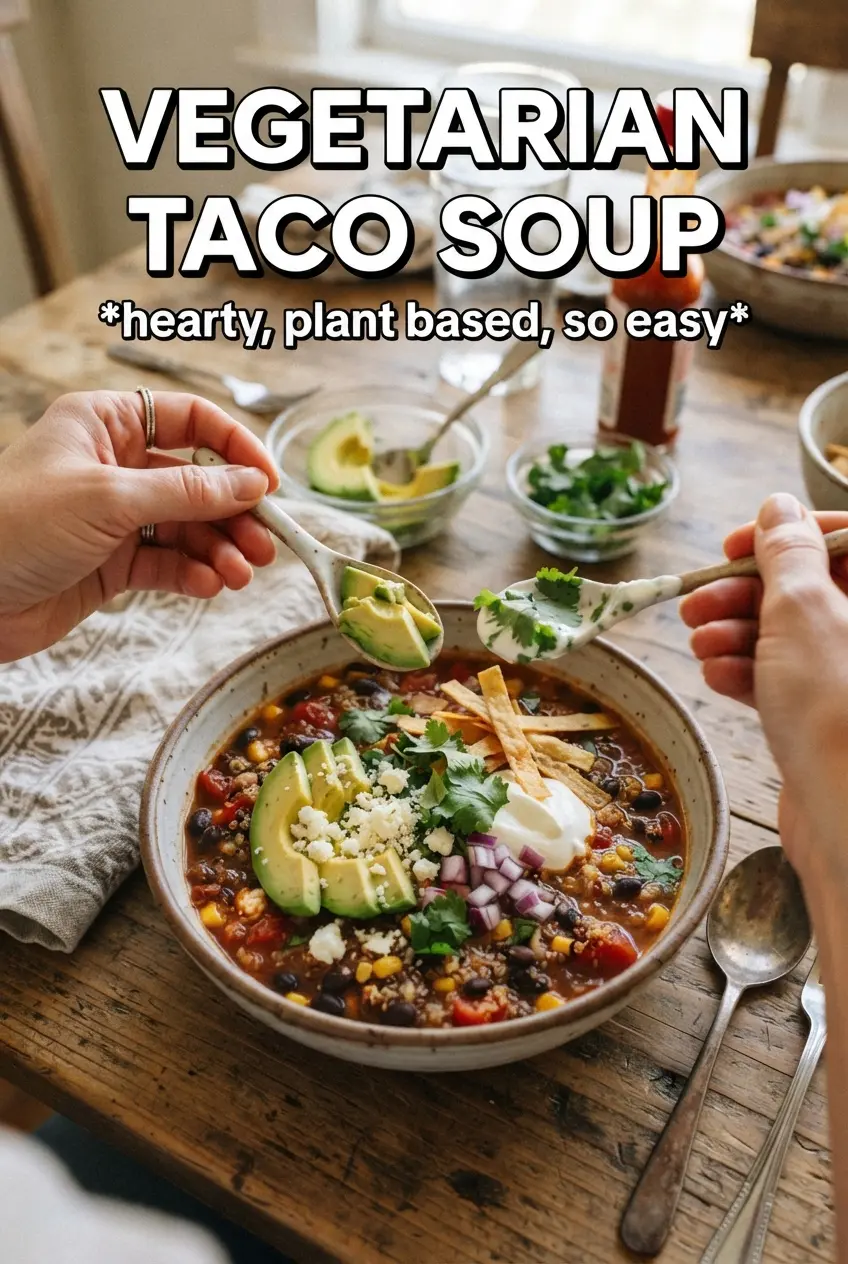
Vegetarian Taco Soup
Ingredients
Equipment
Method
- Heat 1 tablespoon olive oil in a large pot over medium heat, then sauté the onion and bell pepper for 4-5 minutes until softened and fragrant.
- Add the garlic and cook for 1 minute, stirring constantly so it doesn’t brown.
- Stir in the taco seasoning, cumin, chili powder, and smoked paprika and cook for 30 seconds to bloom the spices.
- Add all canned ingredients and the vegetable broth, then bring the mixture to a boil, stirring to combine.
- Simmer for 15-20 minutes until the flavors meld, stirring occasionally and keeping a gentle bubbling.
- Season to taste with salt and pepper, then serve immediately topped with avocado, cilantro, lime wedges, sour cream (or vegan sour cream), and tortilla chips.