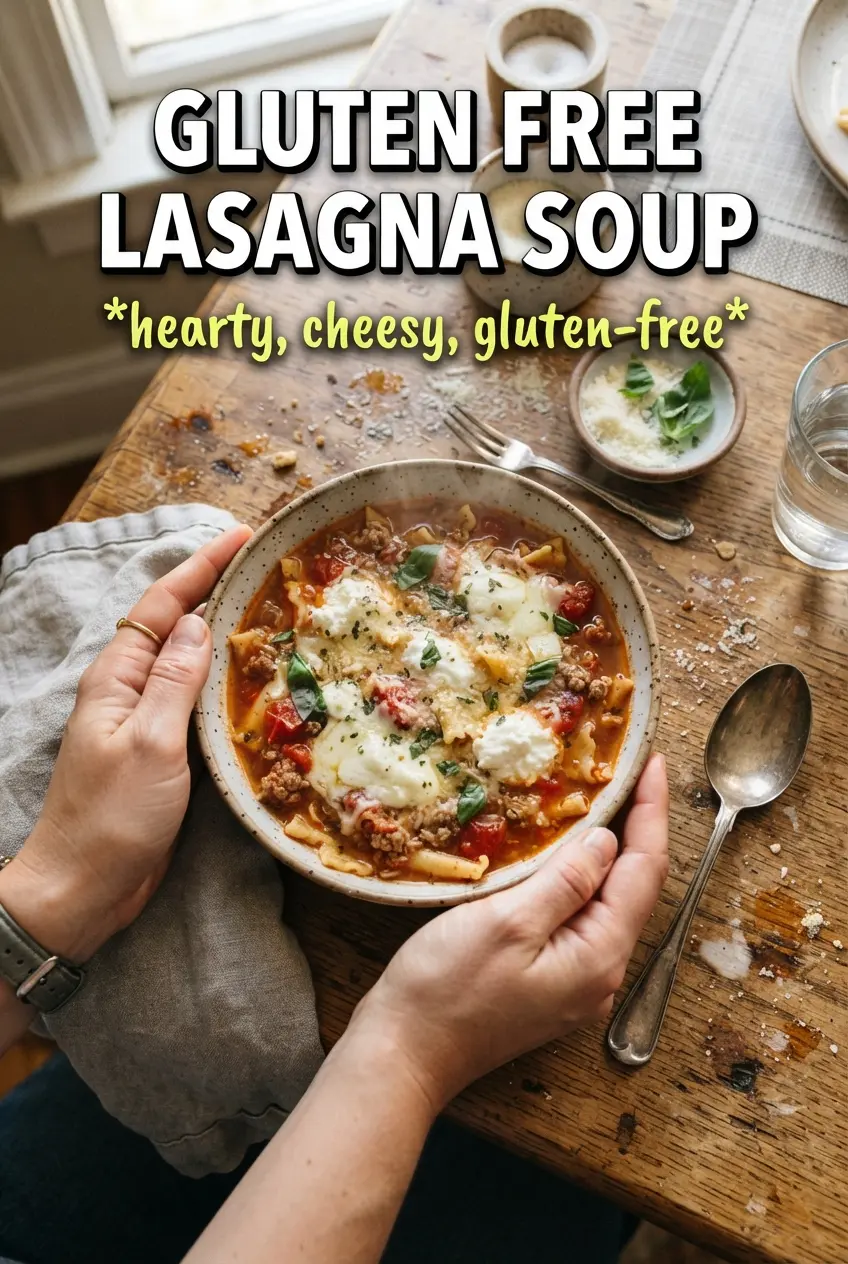
Gluten free lasagna soup gives you the comfort of a baked pasta dinner without the layering, waiting, or oven time. The broth turns rich and savory from Italian sausage, tomato paste, and two kinds of tomatoes, while the gluten-free pasta cooks right in the pot and soaks up all that flavor. The finish is the best part: a spoonful of ricotta, mozzarella, and parmesan melting into the center of the bowl and turning the broth creamy without making it heavy.
The trick with this soup is keeping the pasta tender instead of bloated and the broth bold instead of thin. Tomato paste needs a minute or two in the hot pot before the liquid goes in; that quick toast deepens the flavor and takes away the raw edge. I also like to add the pasta near the end and simmer just until it’s done, because gluten-free noodles can go from perfect to mushy faster than regular pasta. If you’ve had lasagna soup turn gluey before, this version fixes the most common mistakes.
Below you’ll find the small details that matter, from the best pasta shape to use to the easiest way to keep the cheese topping creamy. It’s the kind of soup that tastes even better when you know exactly why each step is there.
The broth was rich and the gluten-free noodles held their texture better than I expected. I added the cheese dollop at the table and it melted into the soup just like real lasagna.
Save this gluten free lasagna soup for a cozy bowl with rich tomato broth, sausage, and that melty ricotta topping.
The Reason Gluten-Free Noodles Need a Different Strategy
Gluten-free pasta doesn’t forgive overcooking the way wheat pasta does. Once it crosses the line, it softens fast and starts to break apart in the broth. That’s why the pasta goes in near the end, after the broth is already seasoned and the sausage is back in the pot, so it has a short, controlled simmer instead of a long soak.
The other place people lose this soup is with the tomato base. Crushed tomatoes and tomato paste need enough heat to taste round and savory, not sharp. Cooking the paste first and then simmering the soup with the lid off for a few minutes gives you a broth that tastes like it cooked longer than it did.
What Each Ingredient Is Actually Doing in This Soup

- Italian sausage — This is the backbone of the soup. It brings fat, seasoning, and a meaty base that keeps the broth from tasting flat. Mild sausage works fine, but if you want more heat, use hot Italian sausage or add a pinch more red pepper flakes.
- Tomato paste — Don’t skip the step where it cooks for a minute or two. That short sauté removes the raw tomato bite and makes the broth taste deeper and more concentrated.
- Crushed tomatoes plus diced tomatoes — The crushed tomatoes build the body of the broth, while the diced tomatoes leave a few soft chunks behind so the soup still feels hearty. If you only have one or the other, it’ll still work, but the texture won’t be quite as balanced.
- Gluten-free pasta — Brown rice lasagna noodles or GF penne both work. Brown rice noodles hold up a little better than many gluten-free blends, but the real key is cooking them just until tender and serving right away. If the soup sits too long, the noodles keep drinking broth.
- Ricotta, mozzarella, and parmesan — This topping is what makes it taste like lasagna instead of plain tomato soup. Ricotta gives the creamy middle, mozzarella melts into long strands, and parmesan adds salt and sharpness.
- Fresh basil — Stir a little into the cheese dollop or sprinkle it on top right before serving. It cuts through the richness and keeps the bowl tasting fresh.
Building the Broth Before the Pasta Goes In
Brown the sausage first
Cook the sausage until it’s deeply browned, not just no longer pink. Those browned bits on the bottom of the pot are part of the flavor, so don’t drain and wipe the pot clean. If there’s a lot of grease, spoon off the excess, but leave enough to cook the onion in.
Cook the tomato paste until it darkens
Stir the tomato paste into the onions and garlic and let it cook for a minute or two. It should smell sweeter and a little richer, not sharp or metallic. If you rush this part, the broth can taste thin even after simmering.
Simmer the soup before the noodles go in
Add the tomatoes, broth, herbs, and red pepper flakes, then bring everything to a boil before lowering it to a steady simmer. This is the point where the base should taste bold on its own. If it tastes muted here, the finished soup will taste muted too.
Finish with the pasta at the end
Stir in the gluten-free pasta and the sausage, then simmer only until the noodles are tender. Check a minute early, because gluten-free pasta can go soft fast. Pull the pot from the heat as soon as the pasta is done and season with salt and pepper while the broth is still hot.
How to Adapt This for Different Diets and Busy Kitchens
Make it dairy-free
Skip the ricotta, mozzarella, and parmesan topping and finish each bowl with a drizzle of good olive oil and a handful of basil. You’ll lose the creamy lasagna effect, but the soup itself still tastes full and savory because the sausage and tomatoes carry the base.
Use a different gluten-free pasta shape
GF penne is often easier to manage than broken lasagna sheets, especially if you want more consistent bite in the bowl. Broken lasagna noodles give the soup a more classic lasagna feel, but they can cook unevenly if the pieces are too small.
Make it vegetarian
Use plant-based sausage and swap in vegetable broth. Since the sausage provides most of the body, choose a vegetarian version with some browning potential so the soup still has a hearty, savory base instead of tasting like tomato broth with pasta in it.
Stretch it for a bigger crowd
Add an extra can of broth and another handful of pasta if you need more servings, but keep the pasta amount modest. Too much pasta makes the soup thick and starchy as it sits, which is the fastest way to lose that silky broth.
Storage and Reheating
- Refrigerator: Store for up to 4 days. The pasta will keep soaking up broth, so expect the soup to thicken.
- Freezer: Freeze the soup without the pasta for best texture. Cook fresh pasta when you reheat, then add the cheese topping at serving time.
- Reheating: Warm gently on the stove over medium-low heat with a splash of broth or water. High heat can make the pasta turn too soft and can cause the dairy topping to separate if you’ve already mixed it in.
Answers to the Questions Worth Asking
Gluten Free Lasagna Soup
Ingredients
Equipment
Method
- In a large pot, brown the Italian sausage over medium-high heat until cooked through. Drain excess fat and set the sausage aside.
- Add the diced onion to the same pot and sauté for 4 minutes until softened. Add the minced garlic and cook for 1 minute, stirring so it doesn’t brown.
- Stir in the tomato paste and cook for 1-2 minutes to deepen the flavor.
- Add the crushed tomatoes, diced tomatoes, chicken broth, Italian seasoning, dried basil, and red pepper flakes, then bring to a boil.
- Add the gluten-free pasta and return the browned sausage to the pot. Simmer according to the pasta package instructions (usually 8-12 minutes) until the pasta is tender.
- Season the soup with salt and pepper to taste. Stir well and check the seasoning before serving.
- Mix the ricotta, shredded mozzarella, and parmesan together until evenly combined.
- Ladle the soup into bowls and top each one with a generous spoonful of the cheese dollop. Let it sit briefly so the cheese melts into the center, then finish with fresh basil.