Chicken lasagna soup gives you all the comfort of a baked pan of lasagna without waiting on layers, oven time, or a mountain of dishes. The broth turns rich and tomato-forward, the chicken stays tender, and those broken noodles soak up just enough flavor to taste like they belonged there from the start. What you get in the bowl is hearty, creamy, and deeply satisfying, with the ricotta-mozzarella topping melting into the hot soup in the best possible way.
What makes this version work is the order. Browning the chicken first leaves behind flavor in the pot, and that fond gets picked up when the onion and tomato paste go in. The cheese topping is kept separate instead of stirred through the whole pot, which gives you that lasagna-style finish in each serving instead of a heavy, muddy broth.
Below, I’ll walk through the little choices that keep the noodles from going soft, why the tomato paste matters, and how to adjust the soup if you want it a little thicker, a little lighter, or even easier to reheat later in the week.
The tomato broth was rich without being heavy, and the noodles stayed perfectly tender instead of falling apart. I loved that the cheese dollop melted into the bowl like real lasagna.
Save this Chicken Lasagna Soup for a cozy bowl with rich tomato broth, tender noodles, and that melty ricotta topping.
The Trick to Keeping Lasagna Soup Brothy, Not Mushy
The biggest failure with lasagna soup is letting the noodles take over. Once they sit too long in the pot, they keep drinking broth and turn the whole thing thick, soft, and a little tired. Breaking the noodles into shorter pieces helps them cook evenly, but the real fix is timing: they go in after the broth is already seasoned and the chicken is almost done, then they simmer just until tender.
Tomato paste is the other piece that matters here. It needs a minute or two in the hot pot so it loses that raw edge and starts to darken slightly, which gives the soup a deeper, rounder base. If you rush that part, the broth can taste flat even when the seasoning is right.
- Chicken thighs stay a little juicier than breast meat, especially if the soup sits on low heat for a few extra minutes. Breast works fine, but pull it as soon as it’s cooked through so it doesn’t turn stringy.
- Crushed tomatoes give the soup body, while diced tomatoes add little pops of texture. Using both keeps the broth from feeling too smooth or too thin.
- Ricotta, mozzarella, and parmesan make the topping taste like lasagna instead of just melted cheese. Don’t stir it into the pot; the contrast between hot soup and cool, creamy dollop is what makes the bowl work.
- Lasagna noodles are best broken by hand into rough pieces. Clean cuts look neat, but the uneven edges hold onto broth better and eat more like actual lasagna layers.
What Each Ingredient Is Doing in the Pot

- Chicken breast or thighs — This is the protein and the main source of substance in the soup. Thighs are more forgiving and a little richer, while breast gives a leaner result. Either way, dice it small so it cooks quickly and doesn’t pull the soup off a gentle simmer.
- Onion and garlic — These build the base. The onion softens into the broth, and the garlic gives the tomato a little edge. If the garlic browns hard, it turns bitter, so add it after the onion has had a few minutes to soften.
- Tomato paste — This is concentration, not just color. It deepens the broth and gives the soup that slow-cooked taste. A minute or two in the hot pot is enough to wake it up.
- Crushed and diced tomatoes — Crushed tomatoes make the broth rich and smooth; diced tomatoes leave a little texture behind. If all you have is one or the other, the soup still works, but the combination gives the best balance.
- Ricotta, mozzarella, parmesan, and basil — This topping is the lasagna part. Ricotta brings creaminess, mozzarella gives the melt, parmesan adds salt and depth, and basil lifts the whole bowl at the end. Use whole-milk ricotta if you can; it tastes fuller and holds its shape better.
Building the Broth and Adding the Noodles at the Right Moment
Browning the Chicken First
Heat the oil in a large pot and cook the diced chicken until it’s browned on the outside and no longer pink in the center. You’re not trying to cook it deeply here, just create color and flavor before it goes back into the soup. If the pot looks crowded, work in batches so the chicken sears instead of steaming. That browning is the first layer of taste in the finished bowl.
Softening the Onion and Toasting the Tomato Paste
Use the same pot without wiping it out. The browned bits on the bottom dissolve into the onion as it cooks, which gives the soup a better base than starting with a clean pot. When the tomato paste goes in, stir it around the hot onions for about two minutes until it darkens a shade and smells sweeter. If it still smells raw, the broth will taste sharp instead of rounded.
Simmering the Broth and Cooking the Pasta
Add the tomatoes, broth, and seasonings, then bring everything to a boil before lowering it to a steady simmer. The broth should move gently, not rage across the pot. Add the broken noodles and the chicken once the soup is at that point, then cook until the pasta is tender with a little bite left in the center. If you let it boil hard, the noodles can break down before the chicken has any chance to stay tender.
Finishing Each Bowl with the Cheese Dollop
Mix the ricotta, mozzarella, parmesan, and basil in a bowl and spoon it over each serving just before eating. The heat from the soup softens the cheese and pulls it into creamy ribbons without making the whole pot heavy. Season the soup with salt and pepper after the noodles are cooked, since the cheese adds salt of its own and can change how the broth tastes at the end.
How to Adapt This for a Lighter Bowl or a Bigger Batch
Use ground chicken for a softer texture
Ground chicken cooks faster and gives the soup a looser, more shredded-meat feel once it breaks up in the broth. Brown it well so it has enough flavor; otherwise the soup can taste flat. This swap makes the dish feel closer to a weeknight skillet meal than a chunky chicken soup, but it still works with the same tomato base.
Make it gluten-free with pasta you trust
Use a gluten-free lasagna noodle or a sturdy gluten-free short pasta in place of the wheat noodles. Cook it just until tender, because gluten-free pasta can go from done to soft fast. If you plan to reheat leftovers, keep the pasta slightly underdone the first time so it doesn’t fall apart later.
Skip the dairy in the topping
For a dairy-free version, leave off the ricotta-mozzarella dollop and finish with olive oil, chopped basil, and a little extra parmesan-style dairy-free topping if you use one. The soup base itself doesn’t need dairy to taste rich, so you still get a satisfying bowl. What you lose is the creamy lasagna finish, so expect a brighter, brothier result.
Keep the noodles separate for make-ahead meals
If you want the soup to hold for lunches, cook the noodles in a separate pot and add them to each bowl when serving. That keeps the broth from disappearing overnight and gives you better texture on day two. It’s the best move if you know you’ll have leftovers.
Storage and Reheating
- Refrigerator: Store for up to 4 days. The noodles will keep soaking up broth, so expect the soup to thicken.
- Freezer: It freezes well if you freeze the soup without the noodles. Add fresh cooked noodles after thawing for the best texture.
- Reheating: Warm it gently on the stove over medium-low heat with a splash of broth or water. High heat can overcook the pasta and make the chicken dry, especially if the soup has thickened in the fridge.
Answers to the Questions Worth Asking
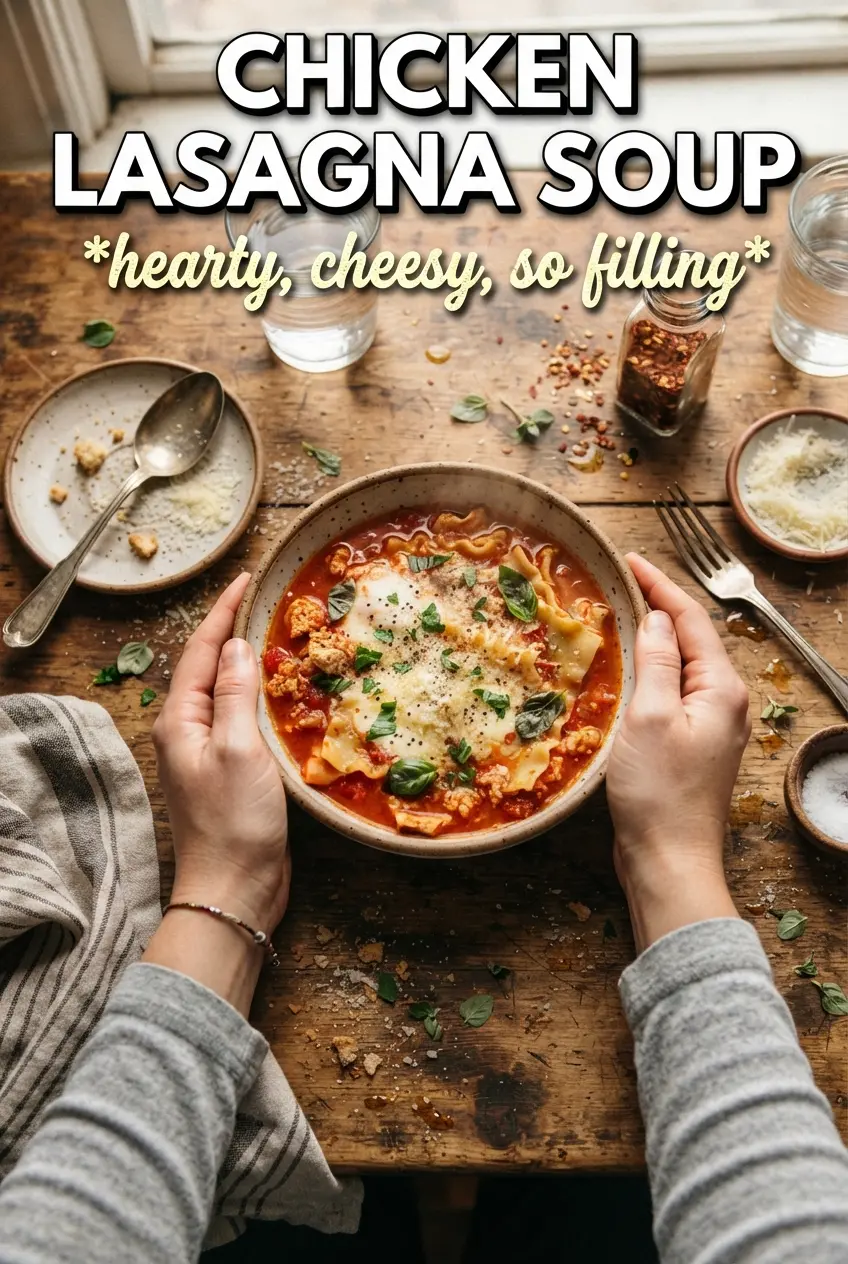
Chicken Lasagna Soup
Ingredients
Equipment
Method
- Heat a large pot (Dutch oven) over medium-high heat and add olive oil, then cook the diced chicken until browned. This should take about 5-7 minutes, and you should see deep golden-brown edges before removing it to a plate.
- In the same pot, sauté the diced onion for 4 minutes. Stir until the onion turns translucent, then add the minced garlic and tomato paste and cook for 2 more minutes, until fragrant and slightly darkened.
- Add crushed tomatoes, diced tomatoes, chicken broth, Italian seasoning, dried basil, dried oregano, and red pepper flakes, then bring to a boil. You should see active bubbling across the surface before continuing.
- Return the browned chicken to the pot and add the broken lasagna noodles. Simmer for 10-12 minutes until the noodles are tender and the chicken is cooked through, with steady gentle bubbles throughout.
- Season with salt and pepper to taste. Taste near the end and adjust so the broth is clearly seasoned without being overly salty.
- Mix the cheese dollop ingredients by combining ricotta, shredded mozzarella, parmesan, and fresh basil. Serve in each bowl with a generous spoonful so it melts into the hot soup.