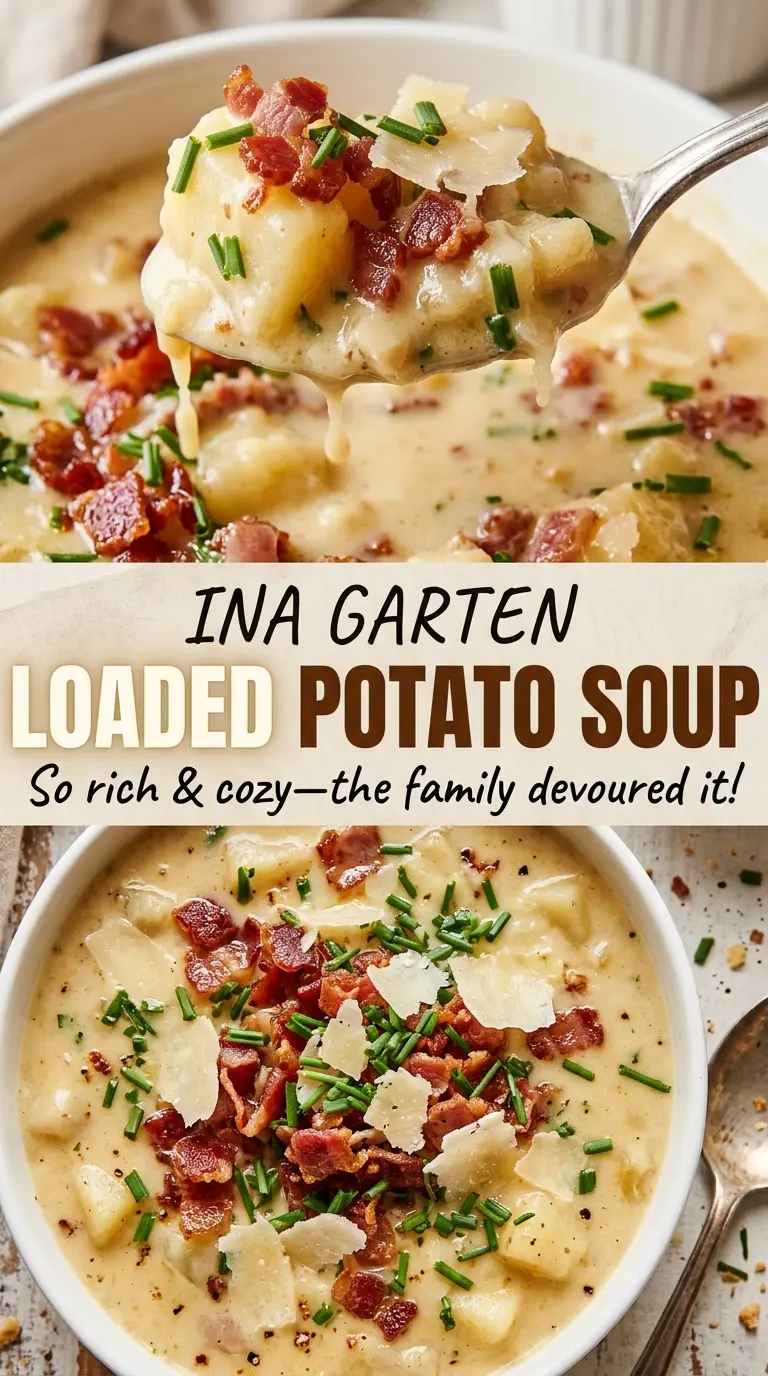
Loaded potato soup hits hardest when it lands with both comfort and texture: a silky, thick broth, soft potato chunks, and enough savory topping to keep every spoonful interesting. This version gets that balance right. It doesn’t eat like mashed potatoes loosened with cream. It eats like a proper soup with body, built from Yukon golds that break down just enough to thicken the pot without turning gluey.
The key is cooking the bacon or pancetta first and using the same pot for everything else. Those browned bits carry the base, and the onions soften in the fat instead of steaming in it. A quick flour roux gives the broth structure, then sour cream and parmesan go in at the end so the soup stays smooth instead of turning grainy. Mash only part of the potatoes and you get that restaurant-style mix of creamy broth and tender pieces in the same bowl.
Below, you’ll find the one detail that keeps the soup from getting pasty, plus a couple of smart ways to adjust the thickness without losing that loaded-potato feel.
The soup turned out thick and silky, and the mashed potatoes gave it the perfect texture without making it heavy. My husband kept going back for seconds because the pancetta stayed crisp on top even after serving.
Creamy loaded potato soup with crispy pancetta is the kind of bowl worth saving for a cold night.
The Step That Keeps Potato Soup Thick, Not Gluey
Potato soup gets heavy when all the potatoes break down and the starch takes over the pot. Yukon golds help because they’re creamy and naturally buttery, but they still need a little restraint. Mashing only half the potatoes gives you body without turning the whole pot into paste.
The other place people run into trouble is the dairy. If the soup boils after the half-and-half and sour cream go in, the texture can get grainy or separate. Keep the simmer gentle, and pull the pot off the heat before stirring in the parmesan and sour cream. That keeps the finish smooth and keeps the cheese from clumping.
- Yukon gold potatoes — These hold their shape better than russets while still breaking down into a creamy base. Russets will work, but the soup will be starchier and looser in texture.
- Pancetta or bacon — This is your savory backbone. Pancetta tastes a little rounder and less smoky; bacon gives a sharper, more familiar loaded-potato flavor.
- Half-and-half — It adds richness without the weight of heavy cream. You can swap in whole milk, but the soup will be thinner and need a little more time to thicken.
- Parmesan — Use finely grated parmesan so it melts smoothly into the soup. Pre-shredded cheese often has anti-caking starch that can leave the broth slightly gritty.
- Sour cream — This gives the soup its tang and that loaded-baked-potato finish. Stir it in off the heat so it stays silky.
Building the Soup in the Right Order
The order matters here because each stage builds on the last. Start with the pancetta in a cold pot so the fat renders out slowly and the pieces crisp instead of burning. Leave the browned bits behind when you remove it; those are what give the onions and flour something to grab onto.
Once the onions are soft and golden, the flour needs a full minute or two to cook so the soup doesn’t taste raw or pasty. When you whisk in the broth and half-and-half, add them gradually and keep whisking until the mixture looks smooth before it ever reaches a simmer. That keeps lumps from forming at the bottom of the pot.
Crisping the Pancetta
Cook the pancetta over medium heat until the fat has rendered and the edges are crisp. If you rush this on high heat, the outside browns before the fat has had time to melt out. Lift it out with a slotted spoon and leave the drippings in the pot.
Softening the Onions
Add the butter and onions to the same pot and cook them until they turn soft, translucent, and lightly golden at the edges. This is where the soup starts tasting layered instead of flat. If the onions start sticking, lower the heat and keep stirring; burned onion bits will show up in the final bowl.
Thickening the Broth
Stir in the garlic, then whisk in the flour and cook it for two minutes. Slowly add the chicken broth and half-and-half, whisking as you go so the mixture stays smooth. The pot should move from cloudy to glossy as it thickens.
Finishing with Potatoes and Dairy
Add the potatoes and simmer until they’re very tender and starting to fall apart at the edges. Mash about half of them right in the pot so the soup thickens naturally. Remove the pot from the heat before stirring in the parmesan and sour cream; that’s what keeps the finish creamy instead of grainy.
What to Change When You Want a Different Bowl
Make It Bacon-Forward
Use regular bacon instead of pancetta if you want a smokier, more familiar loaded-potato flavor. Bacon renders a little more fat and leaves a stronger footprint in the broth, so drain off some of the excess if the pot looks greasy before you add the butter.
Dairy-Free Version
Use a plain unsweetened oat or cashew cream in place of the half-and-half, then swap the sour cream for a dairy-free sour cream with a neutral flavor. The soup will still thicken from the potatoes, but the finish will be a little less tangy and less rich, so add a squeeze of lemon if it needs brightness.
Gluten-Free Adjustment
Replace the all-purpose flour with a 1:1 gluten-free flour blend. Whisk it into the butter and onions the same way you would regular flour, then cook it for a full minute so the raw starch taste disappears. The texture stays close to the original if you keep the simmer gentle.
Storage and Reheating
- Refrigerator: Store in an airtight container for up to 4 days. It will thicken as it chills, and the potatoes will soak up some of the broth.
- Freezer: It freezes, but the dairy can separate a little on thawing. If you plan to freeze it, stop before adding the sour cream and parmesan, then stir those in after reheating.
- Reheating: Warm it slowly over low heat and add a splash of broth or milk to loosen it. A hard boil is what breaks the dairy and makes the potatoes grainy.
Answers to the Questions Worth Asking

Ina Garten Loaded Potato Soup
Ingredients
Equipment
Method
- Cook the pancetta in a large Dutch oven until crispy, then remove and set aside.
- Leave the rendered fat in the pot for sautéing the onions.
- Melt the butter in the same Dutch oven over medium heat, then sauté the onions for 8 minutes until soft and golden.
- Add the garlic and cook for 1 minute, then whisk in the flour and cook for 2 minutes.
- Gradually add the chicken broth and half-and-half, whisking constantly, then bring the mixture to a simmer.
- Add the cubed potatoes and simmer for 20 minutes until very tender.
- Mash about half the potatoes, then stir in the parmesan and sour cream until smooth.
- Season with kosher salt and black pepper, then serve topped with crispy pancetta, fresh chives, and extra parmesan.