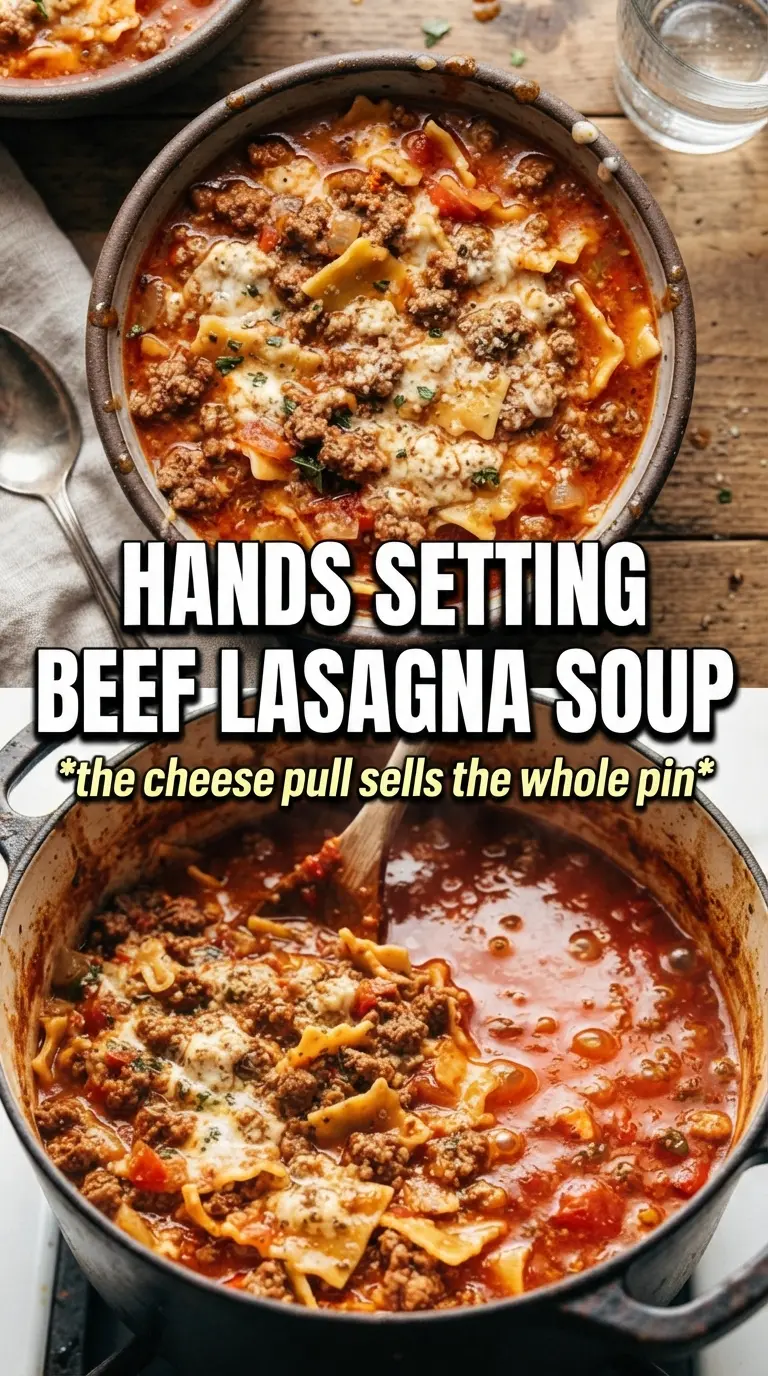
Beef lasagna soup delivers all the things people love about a baked pan of lasagna, but in a bowl that comes together fast enough for a weeknight. The broth is rich and tomato-forward, the noodles soften just enough to feel like lasagna without turning heavy, and the cheese dollop melts into the top in the best possible way. It eats like comfort food, but you’re not waiting on a casserole to bake.
The trick here is building the base in layers. Browning the beef first gives the broth depth, and cooking the tomato paste with the onion and garlic takes away that raw, sharp edge you sometimes get in quick soups. Broken lasagna noodles are the right move because they catch the broth and cheese in a way that makes every spoonful taste complete.
Below, I’ve included the little details that matter most: how to keep the noodles from getting sticky, when to add the cheese so it stays creamy, and a few swaps that still keep the soup tasting like lasagna instead of just tomato soup with pasta in it.
The broth had that deep lasagna flavor, and the noodles stayed perfectly tender without going mushy. My husband kept going back for seconds and asked if I could make it again next week.
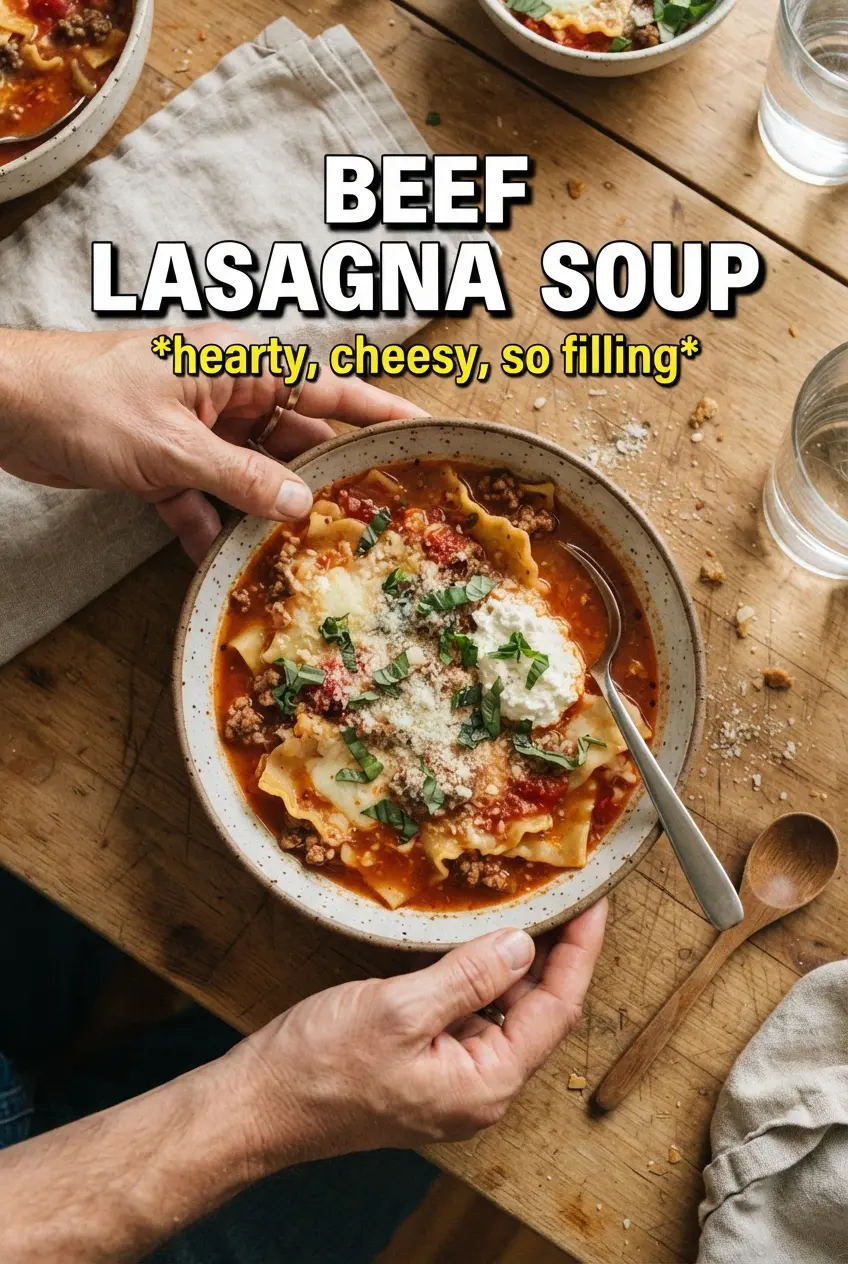
Creamy, cozy beef lasagna soup with melty ricotta on top — pin this for the kind of dinner that tastes like a full lasagna without the extra work.
The Secret to Soup That Tastes Like Lasagna, Not Spaghetti Sauce
The biggest mistake with lasagna soup is treating it like a quick tomato soup and dumping everything in at once. That gives you flat broth and noodles that either stay stubborn or go past their point while you’re waiting for the flavor to catch up. This version works because the beef, tomato paste, and aromatics build a base first, so the broth already tastes like something before the noodles ever go in.
The noodles are another place people go wrong. They need enough time to soften and absorb flavor, but not so much time that they break down and thicken the soup into a stew. Broken lasagna noodles are sturdier than most pasta shapes here, and they give you that familiar lasagna texture without needing a separate baking step.
- Lean ground beef — Enough fat stays in the pot to flavor the onions, but not so much that the soup turns greasy. If yours is fattier, drain it well after browning.
- Tomato paste — This is the depth-builder. Cooking it with the onion and garlic for a minute or two takes away the tinny edge and makes the broth taste slow-cooked.
- Broken lasagna noodles — These hold their shape better than thin pasta and give the soup its signature feel. Break them into rough pieces so some are smaller and some are larger; that uneven texture is part of the charm.
- Ricotta, mozzarella, and parmesan — The cheese mix matters. Ricotta gives you the classic lasagna dollop, mozzarella adds melt, and parmesan sharpens the whole bowl. If you only have ricotta, the soup still works, but it won’t have the same finish.
What Each Ingredient Is Actually Doing in This Recipe
- Primary ingredient (the star) — Quality matters most. Choose the best you can find.
- Cooking medium (oil, butter, or broth) — This carries flavors and prevents dryness.
- Seasonings (salt, pepper, spices, herbs) — Layer flavors so nothing overpowers. Build depth gradually.
- Aromatics (garlic, onion, herbs) — Cook with fat to bloom flavors. Become the foundation.
- Supporting ingredients — Complement the main ingredient without overpowering it.
- Sauce or liquid (if applicable) — Brings flavors together. Balance richness with acid.
- Acid (lemon, vinegar, wine, or other) — Brightens and prevents flat-tasting results.
- Final finish (garnish, glaze, or sauce) — Prevents one-dimensional taste and adds visual appeal.
Building the Broth Before the Noodles Go In
Browning the Beef and Starting the Base
Cook the beef in a large pot until it’s no longer pink and you’ve got some browned bits stuck to the bottom. Those bits matter; they dissolve into the broth once the onion goes in. If there’s a lot of fat, drain it off, but leave the browned coating behind. That’s where the first layer of flavor lives.
Softening the Onion and Cooking Out the Tomato Paste
Add the diced onion to the same pot and cook it until it turns translucent and starts to smell sweet, about four minutes. Then stir in the garlic and tomato paste and cook them together for a couple of minutes. If the garlic goes in too early, it can burn. If the tomato paste stays raw, the soup tastes sharper and less rounded.
Simmering the Noodles Without Overcooking Them
Once the tomatoes, broth, and seasonings are in, bring the pot to a boil, then drop the heat before adding the broken noodles. A gentle simmer is what you want; a hard boil will split the pasta and make the broth cloudy. Stir occasionally so the noodles don’t settle and glue themselves together at the bottom of the pot. They’re done when they’re tender with a little bite left in the center.
Finishing Each Bowl With the Cheese Dollop
Mix the ricotta, mozzarella, parmesan, and basil in a small bowl, then add a generous spoonful to each serving. Don’t stir it all into the pot unless that’s the texture you want, because the dollop is what gives this soup its lasagna feel. The heat from the soup softens the cheese just enough that it turns creamy without disappearing.
How to Adapt This for Different Eaters and Different Leftovers
Gluten-Free Swap
Use a sturdy gluten-free lasagna noodle or another short gluten-free pasta with some structure. Cook it just until tender, because GF pasta can go from firm to fragile fast. If you know you’ll have leftovers, keep the pasta separate and add it to each bowl when reheating.
Dairy-Free Version
Skip the cheese dollop and finish the soup with a spoonful of dairy-free ricotta or a little olive oil and chopped basil. You lose the creamy lasagna topping, but the broth still carries the same beefy, tomato-rich character. A good dairy-free parmesan-style topping can help replace some of the sharpness.
Making It Ahead
The best way to make this ahead is to cook the soup base without the noodles, then boil the noodles separately when you’re ready to serve. Pasta keeps soaking up broth as it sits, so storing them together makes the whole pot thicker and softer by the next day. Keep the cheese mixture chilled and add it at serving time.
Storage and Reheating
- Refrigerator: 3 to 4 days. The noodles will keep absorbing broth, so expect the soup to thicken.
- Freezer: Freeze the soup base without noodles for up to 3 months. Add fresh noodles after thawing for the best texture.
- Reheating: Warm it gently on the stove over medium-low heat, adding a splash of broth if needed. High heat can make the pasta break apart and can push the broth from cozy to overly reduced.
Answers to the Questions Worth Asking
Beef Lasagna Soup
Ingredients
Equipment
Method
- Brown the lean ground beef in a large Dutch oven, then drain excess fat to keep the soup from getting greasy. Cook until no longer pink, around medium-high heat.
- Sauté the diced onion in the same Dutch oven for 4 minutes until softened, then add the minced garlic and cook 2 minutes. Stir so the garlic doesn’t brown.
- Add the crushed tomatoes, diced tomatoes, beef broth, Italian seasoning, dried basil, dried oregano, red pepper flakes, and black pepper, then bring the mixture to a boil. Watch for steady bubbling before moving to the next step.
- Add the broken lasagna noodles to the boiling broth, then reduce heat and simmer for 10-12 minutes until tender. Stir occasionally to prevent sticking and clumping.
- Season with salt to taste after the noodles are tender, then stir and keep warm briefly so the flavors meld. Taste and adjust before serving.
- Mix the ricotta, shredded mozzarella, and parmesan into a thick, scoopable dollop with fresh basil. Add a very generous spoonful into each bowl.