Golden broth, tender chicken, and soft egg noodles make this soup the bowl people want when they’re run down and need something that tastes like it actually did some work. The ginger and garlic stay present without turning sharp, the turmeric gives the broth a warm color and a gentle earthy note, and the lemon at the end keeps everything from tasting flat. It’s the kind of soup that feels restorative without leaning heavy.
What makes this version worth keeping is the way the flavor builds in one pot. Bone-in chicken gives the broth more body than boneless pieces ever will, and simmering the chicken with the vegetables and aromatics gives the broth a deeper, rounder taste before the noodles go in. The vinegar and lemon are added at the end for a reason: they brighten the broth without making the vegetables taste acidic or the noodles taste sour.
If you’ve ever ended up with weak broth or mushy noodles, the sections below will help with both. I’ve also included the small timing choices that keep the chicken tender and the noodles from soaking up too much liquid before serving.
The broth turned out rich and golden, and the ginger-garlic-lemon combo tasted clean instead of heavy. I loved that the noodles stayed tender without getting mushy, even after I reheated a bowl the next day.
Save this cold fighting chicken noodle soup for the days when you need a deeply golden broth, bright lemon finish, and tender noodles in one bowl.
The Secret to Broth That Tastes Full-Bodied Instead of Watery
The biggest mistake with chicken noodle soup is rushing the simmer and calling it done before the broth has time to pick up flavor from the chicken and vegetables. Bone-in chicken changes that fast. It gives the pot both meat flavor and collagen, which is what makes the broth taste deeper and a little more satisfying instead of thin and flat.
Turmeric adds color and a mild earthy backbone, but it won’t carry the soup on its own. The real work comes from the combination of onion, celery, carrot, garlic, and ginger slowly softening in the broth while the chicken cooks. If the pot comes to a hard boil and stays there, the broth turns cloudy and the chicken tightens up. Keep it at a gentle simmer so the meat stays tender and the broth stays clean-tasting.
- Bone-in chicken pieces — These are worth using here. They flavor the broth as they cook, and they shred more cleanly once the meat has loosened from the bone. Boneless chicken works in a pinch, but the soup will taste lighter and less developed.
- Fresh ginger and garlic — This is the part that gives the soup its cold-fighting edge. Fresh is important because dried ginger and garlic powder won’t give you the same bright, sharp warmth in the broth.
- Chicken broth — Use a broth you’d drink on its own. If yours is weak, the soup will be too. A splash of extra broth or water is fine if the pot gets too full, but don’t dilute it more than you have to.
- Lemon juice and apple cider vinegar — These don’t make the soup sour. They wake up the whole pot at the end. Add them after the noodles are tender so the acid stays bright and doesn’t get lost in the simmer.
What Each Ingredient Is Actually Doing in This Recipe

- Primary ingredient (the star) — Quality matters most. Choose the best you can find.
- Cooking medium (oil, butter, or broth) — This carries flavors and prevents dryness.
- Seasonings (salt, pepper, spices, herbs) — Layer flavors so nothing overpowers. Build depth gradually.
- Aromatics (garlic, onion, herbs) — Cook with fat to bloom flavors. Become the foundation.
- Supporting ingredients — Complement the main ingredient without overpowering it.
- Sauce or liquid (if applicable) — Brings flavors together. Balance richness with acid.
- Acid (lemon, vinegar, wine, or other) — Brightens and prevents flat-tasting results.
- Final finish (garnish, glaze, or sauce) — Prevents one-dimensional taste and adds visual appeal.
How to Keep the Chicken Tender and the Noodles from Going Soft
Build the broth before the noodles go in
Combine the chicken, vegetables, garlic, ginger, broth, turmeric, and thyme in the pot and bring it to a boil just once. Then drop the heat to a steady simmer. You want small bubbles breaking the surface, not a rolling boil. That gentler heat keeps the chicken from tightening up and gives the aromatics time to infuse the broth instead of just floating around in it.
Shred the chicken while it’s still warm
After about 25 minutes, the chicken should be falling apart at the bone or close to it. Pull it out, let it cool just enough to handle, then shred it and discard the skin and bones. If it still feels stubborn, give it a few more minutes in the broth instead of forcing it. Tough shredding usually means the meat needs another short simmer, not more heat.
Add the noodles near the end
Egg noodles cook fast, and they keep cooking in the hot broth after you turn off the heat. Add them only after the chicken is back in the pot and the soup is ready for the final finish. Cook until they’re just tender, not fully soft, or they’ll keep absorbing broth and turn bloated in the bowl.
Finish with acid and seasoning
Stir in the lemon juice and apple cider vinegar after the noodles are done. This is the point where the soup goes from good to lively. Taste it after the acid goes in, then season with salt and pepper. If the soup tastes flat, it usually needs salt more than more lemon.
Three Ways to Adjust This Soup Without Losing What Makes It Good
Gluten-Free Version
Swap the egg noodles for a certified gluten-free noodle that holds up in soup, or use rice noodles if that’s what you have. Add them near the end and watch them closely, since gluten-free noodles can go from tender to swollen faster than wheat noodles.
Dairy-Free and Naturally Cream-Free
This soup already fits dairy-free cooking as written. If you want a richer feel without dairy, simmer a little longer before adding the noodles so the broth reduces slightly, or add an extra chicken thigh or two for more body.
Vegetable-Forward Shortcut
If you don’t have bone-in chicken, use shredded rotisserie chicken and simmer the vegetables, broth, turmeric, ginger, and garlic for 20 minutes first. The soup will be lighter and faster, but it won’t have the same broth depth that the bones bring.
Storage and Reheating
- Refrigerator: Store in an airtight container for up to 4 days. The noodles will keep soaking up broth, so expect the soup to thicken as it sits.
- Freezer: Freeze the broth, chicken, and vegetables without the noodles for the best texture. Cook fresh noodles when you reheat it, because frozen noodles turn soft and grainy.
- Reheating: Warm it gently on the stove over medium-low heat until hot. If it’s been refrigerated with noodles in it, add a splash of broth or water before reheating so the noodles loosen instead of turning pasty.
Questions I Get Asked About This Recipe
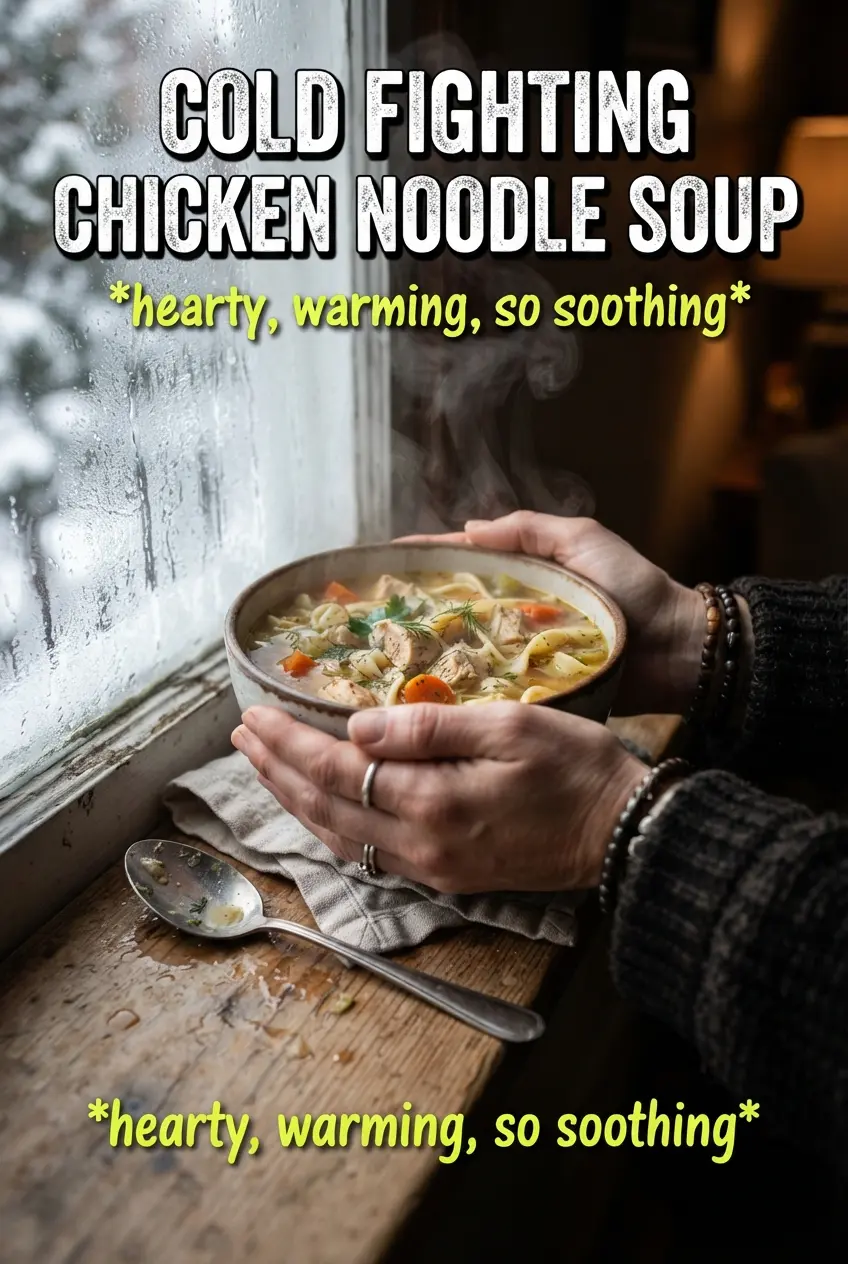
Cold Fighting Chicken Noodle Soup
Ingredients
Equipment
Method
- Combine bone-in chicken pieces, carrots, celery, onion, garlic, fresh ginger, chicken broth, turmeric, and dried thyme in a large pot.
- Bring to a boil over high heat, then reduce to a steady simmer and cook for 25 minutes until the chicken is falling off the bone.
- Remove the chicken from the pot, shred it, and return the meat to the broth, discarding skin and bones.
- Add egg noodles to the pot and simmer for 6–8 minutes until tender.
- Stir in lemon juice and apple cider vinegar, then season with salt and pepper to taste.
- Ladle the soup into bowls and serve with fresh parsley and lemon wedges.