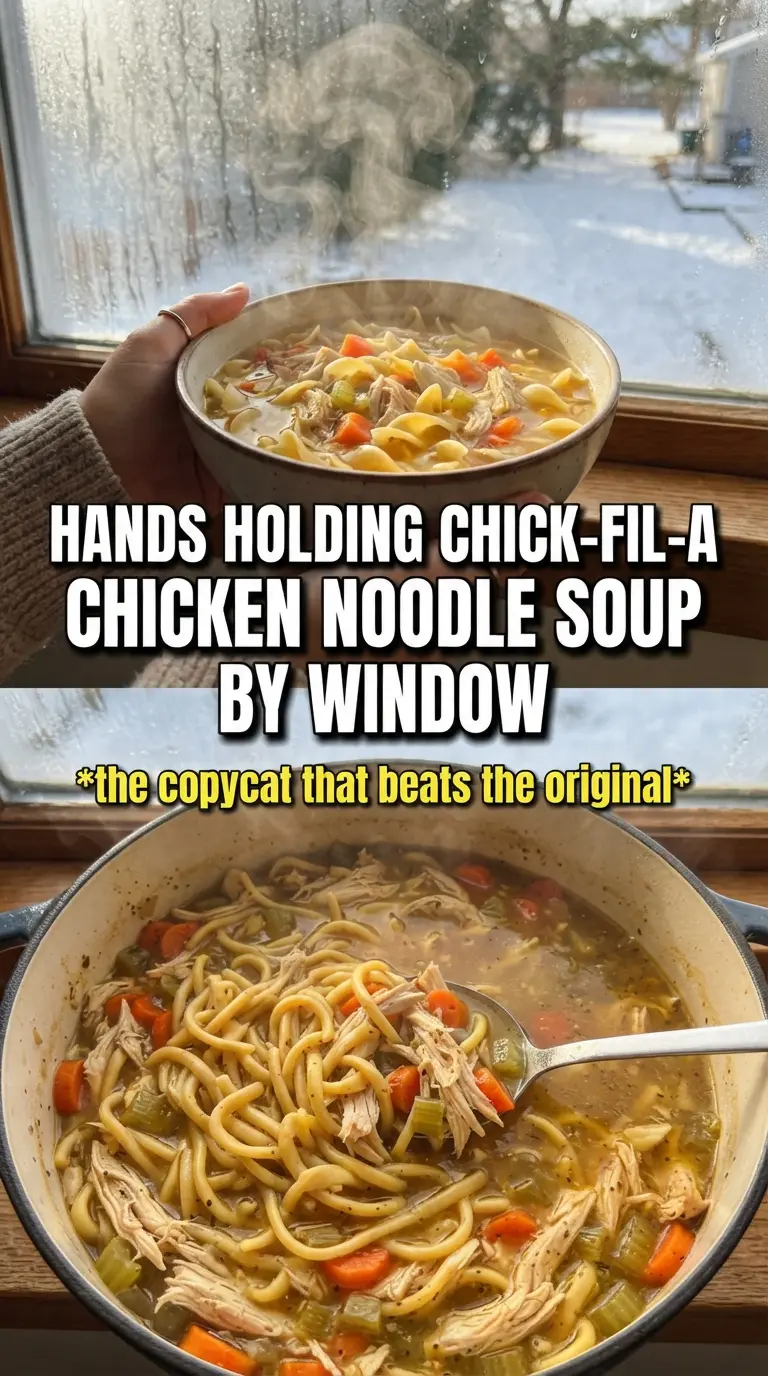
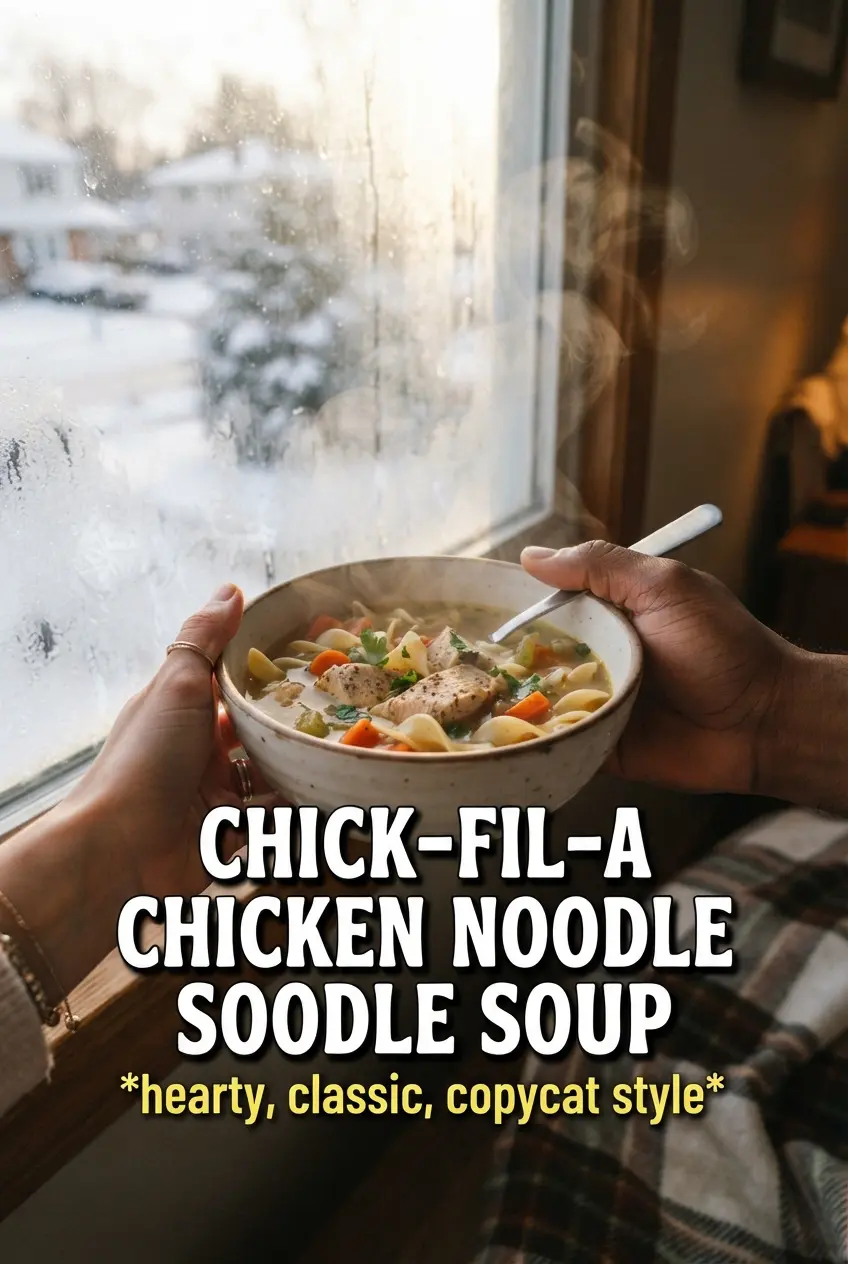
Clear broth, tender vegetables, and little bites of chicken make this Chick-Fil-A chicken noodle soup feel light without losing the comfort that a bowl of noodle soup should have. The broth stays clean and savory instead of turning heavy or cloudy, and the finely diced chicken gives you the same spoonable texture you get in the restaurant version. The corn is a small detail, but it matters. It adds a sweet pop that keeps each bite from tasting flat.
The part that makes this copycat version work is restraint. The vegetables simmer just until tender, the noodles cook at the end, and the chicken goes in already cooked so it stays moist instead of stringy. Using diced chicken breast instead of shredded chicken keeps the soup looking and eating like the original. A simple broth also does the job better than trying to load it up with extra seasonings.
Below, I’ve included the one texture choice that matters most, plus a few ways to adapt the soup if you want to change the pasta, make it ahead, or stretch it into another meal.
The broth stayed so clear and the noodles held up beautifully. I used diced chicken like suggested, and it tasted much closer to the restaurant soup than the shredded versions I’ve made before.
Save this Chick-fil-A chicken noodle soup for the nights when you want a clear, cozy bowl with tender noodles and that classic diced-chicken texture.
The Chicken Stays Tender When It Goes In Diced, Not Shredded
A lot of copycat chicken noodle soups miss the mark because the chicken falls apart into long shreds and muddies the look of the broth. Chick-fil-A’s version has small, neat pieces of chicken that spoon up with the noodles and vegetables without taking over the bowl. That’s why this recipe asks for cooked chicken breast that’s finely diced instead of pulled apart.
The broth matters just as much. A clean, mild chicken broth lets the parsley, thyme, and garlic read as background flavor instead of turning the soup heavy. If your soup tastes flat, the usual fix is not more seasoning at the beginning. It’s a final adjustment of salt and pepper after the noodles are cooked, when the broth has had a chance to settle into itself.
- Cooked chicken breast — Use chicken that’s already cooked and cooled enough to dice cleanly. Rotisserie chicken works if you remove the skin and dice the meat small, but breast meat gives you the closest texture to the restaurant soup.
- Chicken broth — This is where the base flavor comes from, so use a broth you’d drink on its own. If you only have low-sodium broth, that’s fine; just season at the end so the soup doesn’t land bland or too salty.
- Egg noodles — Small egg noodles give you that familiar soft, slippery bite. If you use a different small pasta, stop cooking when it’s just tender because it will keep softening in the hot broth.
- Carrots, celery, and onion — Dice these small so they soften at the same pace and blend into the soup instead of staying crunchy. Bigger pieces make the broth feel chunky in the wrong way for this style of soup.
What Each Ingredient Is Actually Doing in This Recipe
- Primary ingredient (the star) — Quality matters most. Choose the best you can find.
- Cooking medium (oil, butter, or broth) — This carries flavors and prevents dryness.
- Seasonings (salt, pepper, spices, herbs) — Layer flavors so nothing overpowers. Build depth gradually.
- Aromatics (garlic, onion, herbs) — Cook with fat to bloom flavors. Become the foundation.
- Supporting ingredients — Complement the main ingredient without overpowering it.
- Sauce or liquid (if applicable) — Brings flavors together. Balance richness with acid.
- Acid (lemon, vinegar, wine, or other) — Brightens and prevents flat-tasting results.
- Final finish (garnish, glaze, or sauce) — Prevents one-dimensional taste and adds visual appeal.
Why the Last 10 Minutes Matter More Than the First Simmer
Start with the Broth and Aromatics
Bring the broth and water to a boil first, then add the carrots, celery, onion, garlic, parsley, thyme, and garlic powder. The pot should settle into a lively simmer, not a hard rolling boil, because aggressive heat can make the vegetables break down before they’re tender. After about 10 minutes, the carrots should be just yielding at the edges while still holding their shape.
Add the Chicken and Corn Before the Noodles
Stir in the diced chicken and corn and let them simmer for about 5 minutes. This is enough time to warm the chicken through and let the corn sweeten the broth without turning the chicken stringy. If you use shredded chicken here, it will spread through the soup and lose the tidy, clean look that makes this copycat version work.
Cook the Noodles at the End
Add the egg noodles last and cook until they’re tender, usually 6 to 8 minutes depending on the shape. If you boil them too early, they’ll soak up broth and turn soft before the soup even hits the table. Pull the pot from the heat as soon as the noodles are done, then taste and season with salt and pepper so the broth stays bright and balanced.
How to Adapt This Soup Without Losing the Chick-fil-A Feel
Gluten-Free With the Same Cozy Bowl
Swap the egg noodles for a gluten-free small pasta and cook it just until tender. Gluten-free noodles can go mushy fast, so it helps to undercook them by a minute or two and let the hot broth finish the job. The broth and vegetable base stay the same, so you still get the same clean, comforting flavor.
Use Rotisserie Chicken for a Shortcut
Rotisserie chicken works well if you dice it small and keep the seasoning simple. It brings a little more roasted flavor than plain cooked breast, which is fine as long as you don’t overdo the salt in the broth. This is the easiest way to get dinner on the table fast without losing the right texture.
Make It Dairy-Free Without Changing Anything
This soup is naturally dairy-free as written, which makes it one of the easier comfort soups to serve to a crowd. Just check your broth if you’re using store-bought stock, since some brands sneak in dairy or extra seasonings. Keep the rest of the recipe exactly the same and the result stays light and clean.
Storage and Reheating
- Refrigerator: Store for up to 4 days. The noodles will keep absorbing broth, so expect the soup to thicken a little.
- Freezer: It freezes best without the noodles. Freeze the broth, vegetables, chicken, and corn, then cook fresh noodles when you reheat it.
- Reheating: Warm it gently on the stove over medium-low heat. If the soup has thickened, add a splash of broth or water before heating so the noodles don’t overcook and turn soft.
Questions I Get Asked About This Recipe
Chick-Fil-A Chicken Noodle Soup (Copycat)
Ingredients
Equipment
Method
- Bring the chicken broth and water to a boil in a large pot. Keep it at a steady boil so you can add vegetables next.
- Add carrots, celery, onion, garlic, dried parsley, dried thyme, and garlic powder. Simmer for 10 minutes until the vegetables are just tender, with small bubbles throughout.
- Add the finely diced cooked chicken breast and corn kernels to the pot. Simmer for 5 minutes so the chicken heats through and the broth turns golden and flavorful.
- Add egg noodles and cook for 6 to 8 minutes until tender. Stir occasionally and look for noodles that are soft in the center.
- Season with salt and pepper to taste. Taste last, because the broth reduces slightly during simmering and the flavor should stay clean.