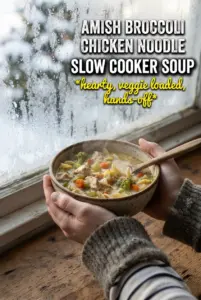
Broccoli chicken noodle soup gets a lot heartier when the broth turns creamy and the noodles soak up all that slow-cooked chicken flavor. This Amish-style version lands somewhere between a cozy chicken soup and a proper casserole in a bowl: tender shredded chicken, soft vegetables, egg noodles, and cheddar melted into a rich, farmhouse-style broth that eats like a full meal.
The trick is building the soup in layers that can handle six hours in the slow cooker without turning dull or watery. Raw chicken goes in first with the broth and aromatics, then the broccoli and noodles join near the end so they stay bright and don’t collapse. The sour cream and cheddar go in off the heat at the end, which keeps the soup smooth instead of grainy or separated.
Below, I’ll walk through the timing that matters most, the ingredient swaps that actually work, and the little detail that keeps the noodles from stealing too much broth. Once you’ve made it this way, it’s hard to go back to plain chicken noodle soup.
The broth turned creamy without getting gluey, and the noodles were still tender after the broccoli went in at the end. My husband went back for seconds before I’d even sat down.
Save this Amish Broccoli Chicken Noodle Slow Cooker Soup for a creamy, cheesy crockpot dinner with tender noodles and no last-minute fuss.
The Broccoli and Noodles Can’t Go In Early
The biggest mistake in slow cooker chicken noodle soup is treating every ingredient like it has the same patience. Chicken and aromatics can spend hours in the pot and improve with time. Broccoli and egg noodles can’t. If they go in at the start, the broccoli goes army-green and soft, and the noodles drink up so much broth that the soup turns thick in the wrong way.
That’s why the final 25 to 30 minutes matter more than the first several hours. Add the broccoli and noodles only after the chicken is tender and shredded. The broth should be bubbling gently, not roaring. A hard boil breaks the texture of the dairy you’ll add later and can make the noodles slack and swollen before they’re done.
- Raw chicken breasts — They cook right in the broth, which gives the soup a fuller base than using pre-cooked chicken. Thighs also work if you want a richer result, but breasts stay classic here and shred cleanly after the long cook.
- Cream of chicken soup and cream of celery soup — These are the shortcut that give the broth body without needing a roux. If you swap in all cream of chicken, the soup will still work, but the celery soup adds a quiet savory note that keeps the broth from tasting flat.
- Egg noodles — Use standard dried egg noodles, not extra-thick pasta. They hold their shape for the final cook time and give you that old-school chicken noodle texture. If you use a different noodle, shorten the timing and watch closely so they don’t overcook.
- Sour cream — This goes in at the end for tang and a smooth, creamy finish. Full-fat sour cream is safest because it resists curdling better than low-fat versions. If you need a substitute, use plain full-fat Greek yogurt, but stir it in off the heat.
- Cheddar cheese — Shredded cheese melts into the broth and gives the soup its farmhouse richness. Buy a block and shred it yourself if you can; pre-shredded cheese is coated to prevent clumping, and that coating can keep the soup from turning as smooth.
What Each Ingredient Is Actually Doing in This Recipe
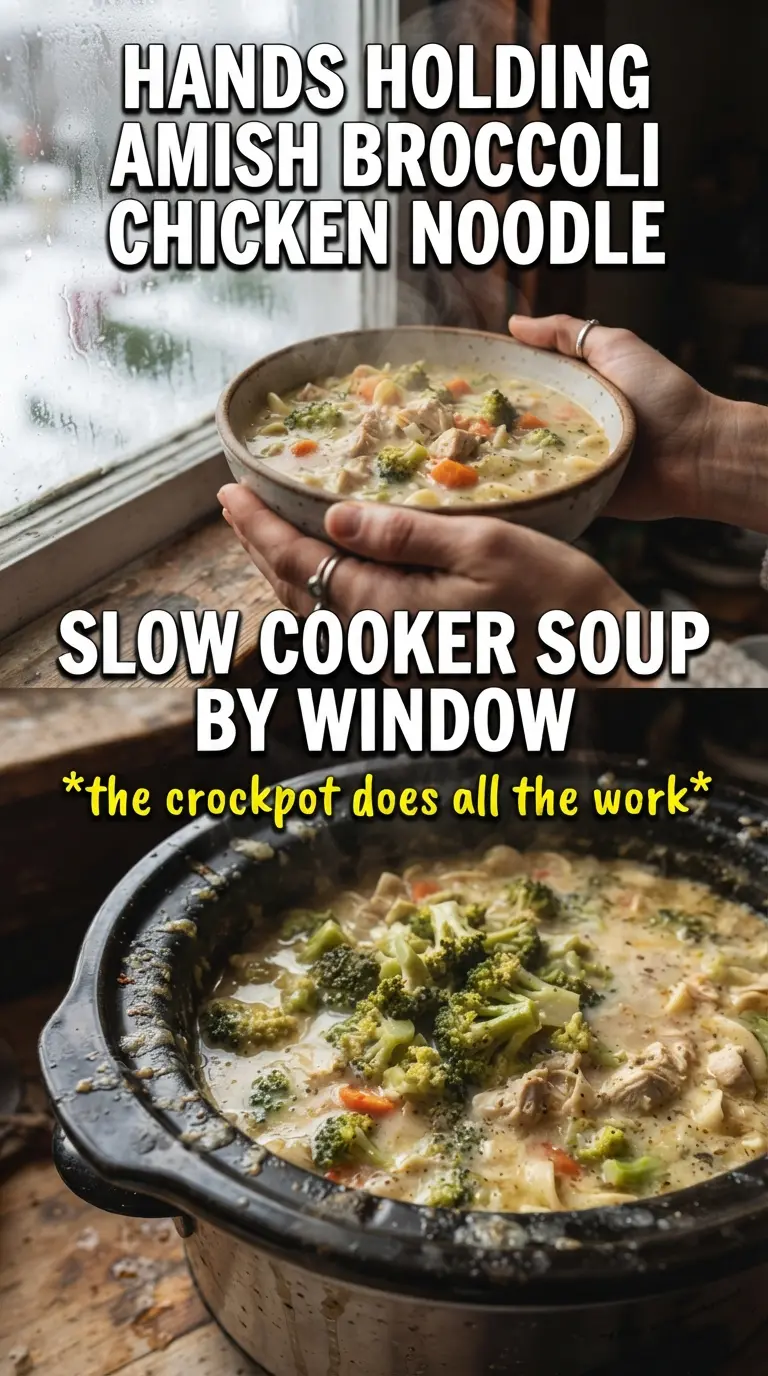
- Primary ingredient (the star) — Quality matters most. Choose the best you can find.
- Cooking medium (oil, butter, or broth) — This carries flavors and prevents dryness.
- Seasonings (salt, pepper, spices, herbs) — Layer flavors so nothing overpowers. Build depth gradually.
- Aromatics (garlic, onion, herbs) — Cook with fat to bloom flavors. Become the foundation.
- Supporting ingredients — Complement the main ingredient without overpowering it.
- Sauce or liquid (if applicable) — Brings flavors together. Balance richness with acid.
- Acid (lemon, vinegar, wine, or other) — Brightens and prevents flat-tasting results.
- Final finish (garnish, glaze, or sauce) — Prevents one-dimensional taste and adds visual appeal.
The Timing That Keeps the Soup Creamy Instead of Heavy
Start with the Chicken and Aromatics
Layer the raw chicken, carrots, celery, onion, garlic, broth, both cans of soup, and the seasonings into the slow cooker. Don’t brown anything first unless you want extra work; this soup is built for the slow cooker and gets enough depth from the long simmer. The mixture should look loose and broth-heavy at this point. That’s exactly right, because the noodles and dairy will thicken it later.
Let the Chicken Cook Until It Shreds Easily
Cook on Low for 5 to 6 hours until the chicken is tender enough to pull apart with two forks. If the chicken is still springy, it will shred in long tough pieces instead of falling apart in soft strands. Remove it, shred it, and return it to the pot. This is also the moment to taste the broth before the noodles go in; it should already taste seasoned, because the noodles will soften the edge of the salt a little.
Add the Broccoli and Noodles at the End
Stir in the broccoli and egg noodles, then cook on High for 25 to 30 minutes. The broccoli should turn bright green and the noodles should be tender but still intact. If you wait until the noodles are fully bloomed and oversized, they’ll keep soaking up broth after the heat is off. That’s how a creamy soup turns into a casserole by the next day.
Finish with the Cheese and Sour Cream
Turn the heat to low or off before adding the cheddar and sour cream. Stir until the cheese melts and the broth turns silky. If your soup looks grainy, the heat was too high when the dairy went in. Pull it off the burner for a minute and stir gently; the texture usually comes back once the temperature drops a little.
How to Adapt This for Different Kitchens and Leftovers
Dairy-Free Version With a Lighter Finish
Skip the sour cream and cheddar, then stir in a dairy-free cream soup substitute and a splash of unsweetened plain oat milk or cashew cream at the end. You’ll lose the sharp cheddar finish, but you’ll still get a creamy broth with plenty of body. A little extra salt helps the flavor read as complete once the dairy is gone.
Gluten-Free Swap That Still Holds Together
Use certified gluten-free cream soups and swap the egg noodles for a gluten-free noodle that holds up in simmering liquid. Add the noodles carefully and check them a few minutes early, because gluten-free pasta can go from tender to mushy fast. The broth itself still comes out creamy and satisfying.
Make It More Vegetable-Forward
Add extra broccoli, or fold in chopped cauliflower with the broccoli at the end. Both bring more texture without changing the comfort-food feel of the soup. If you add too many sturdy vegetables at the start, they soften too much and lose their shape, so keep the extra veg for the last stretch.
Storage and Reheating
- Refrigerator: Store for up to 4 days. The noodles will keep absorbing broth, so expect the soup to thicken as it sits.
- Freezer: It freezes, but the noodles soften after thawing. For the best texture, freeze the soup before adding the noodles, then cook fresh noodles into the reheated base.
- Reheating: Warm gently on the stove over low heat with a splash of broth or milk. A hard boil can make the dairy separate and can turn the noodles gummy.
Questions I Get Asked About This Recipe
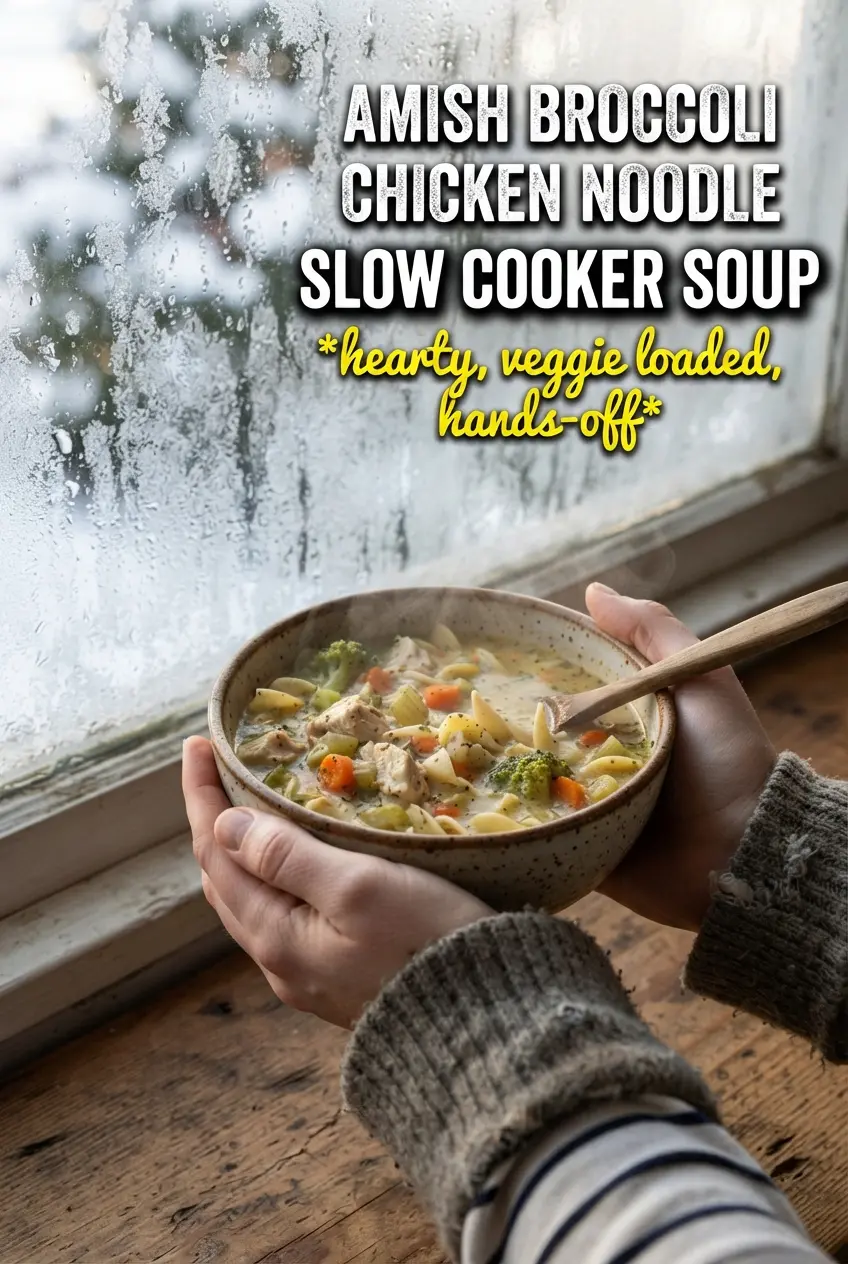
Amish Broccoli Chicken Noodle Slow Cooker Soup
Ingredients
Equipment
Method
- Place the raw chicken breasts in the crock pot. Add carrots, celery, onion, garlic, chicken broth, cream of chicken soup, cream of celery soup, garlic powder, and onion powder.
- Cook on Low for 5-6 hours (or High for 3 hours) until the chicken is tender. Visual cue: the chicken should easily pull apart with a fork.
- Remove the chicken and shred it, then return the shredded chicken to the pot. Visual cue: the soup base should look thick and creamy with vegetables distributed.
- Add the broccoli florets and the egg noodles to the crock pot. Make sure the noodles are mostly submerged in the liquid.
- Cook on High for 25-30 minutes until the noodles are tender and the broccoli is bright green. Visual cue: broccoli should stay vivid green and the noodles should be fully cooked.
- Stir in the shredded cheddar and sour cream until melted and smooth. Visual cue: the broth should turn uniformly creamy without cheese streaks.
- Season with salt and pepper to taste. Visual cue: taste and adjust until the flavor pops while still tasting creamy.