Rotisserie chicken noodle soup earns its place in the rotation because it tastes like it simmered all afternoon, but it lands on the table in under 40 minutes. The broth turns savory and golden, the vegetables soften just enough to stay lively, and the shredded chicken gives every spoonful that classic, comforting bite without any extra work from the cook.
The shortcut here is smart, not lazy. A rotisserie chicken brings built-in seasoning and tender meat, so the pot only has to build flavor around it instead of cooking the chicken from scratch. Sautéing the onion, carrots, and celery first gives the broth a deeper base, and adding the noodles near the end keeps them from turning bloated and dull. If you’ve ever had chicken noodle soup taste flat or the noodles collapse into mush, this version fixes both problems.
Below, I’ve included the small timing details that matter most, plus a few swaps for when you need to work with what’s in the pantry.
The broth had great depth from the rotisserie chicken, and the noodles stayed tender without getting soggy. I made it on a weeknight and it tasted like something I’d simmered all day.
Save this rotisserie chicken noodle soup for the nights when you want homemade comfort fast, with golden broth, tender chicken, and noodles that stay just right.
The Reason the Noodles Wait Until the Broth Is Ready
The fastest way to ruin chicken noodle soup is to dump the noodles in too early and let them sit while the pot comes up to a boil. Egg noodles are thirsty. If they spend too long in hot liquid, they keep drinking and the broth turns cloudy, thick, and underseasoned at the same time. That’s why the chicken goes in first, the soup simmers briefly to build flavor, and the noodles are added only when the broth is already hot and seasoned.
The second trap is watery soup. Rotisserie chicken helps here because the meat is already cooked and seasoned, but the broth still needs a minute with the vegetables and herbs to taste complete. Don’t rush the onion, carrot, and celery. Those five minutes of sweating soften their edges and give the soup a sweeter, fuller base.
What Each Ingredient Is Doing in This Pot
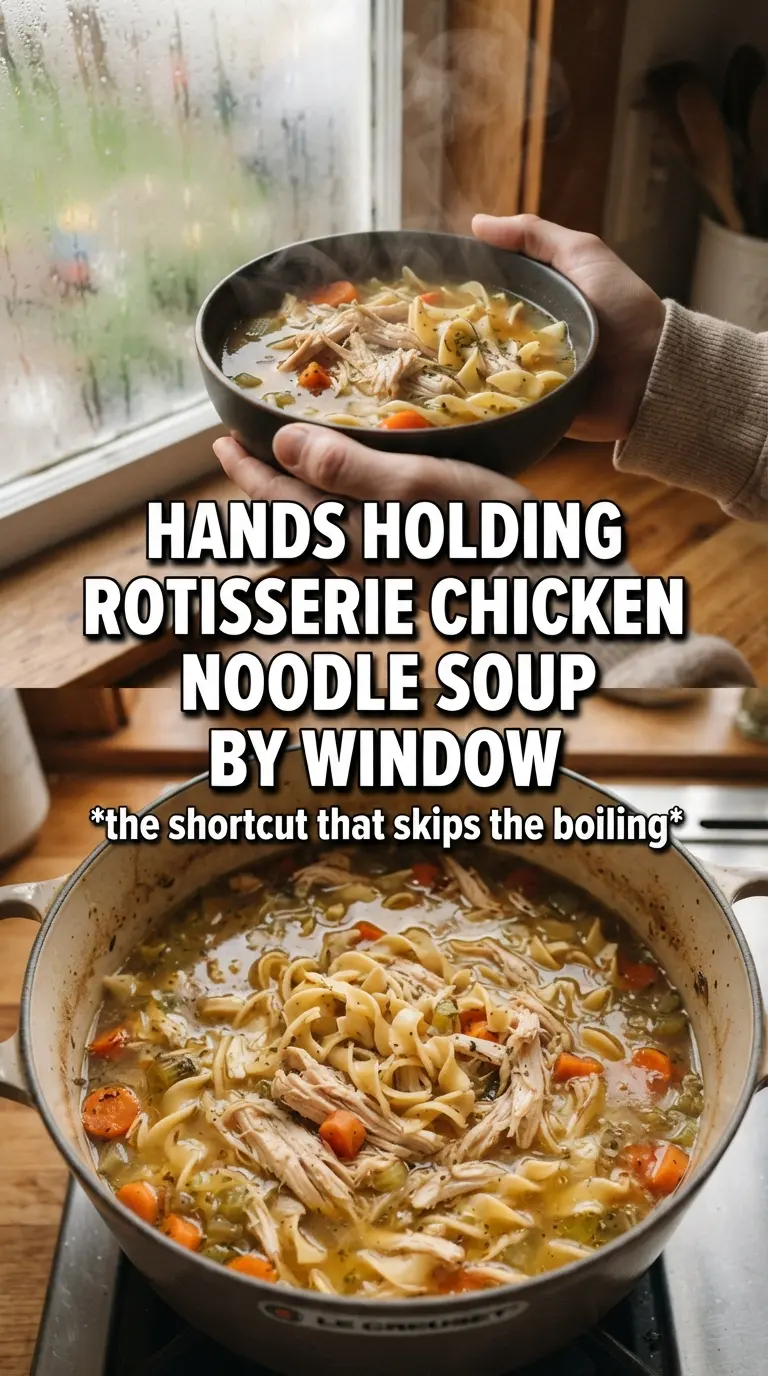
- Rotisserie chicken — This is the shortcut that makes the soup taste like it had hours on the stove. Pull the meat into bite-size pieces after removing the skin; the skin adds richness you don’t need here, and the soup stays cleaner and less greasy without it.
- Chicken broth — Use the best broth you’ve got because it carries the whole pot. A low-sodium broth is the safest choice since the rotisserie chicken already brings salt; that way you can season at the end instead of fighting a salty soup.
- Carrots, celery, and onion — This is the classic base for a reason. The onion sweetens as it cooks, the celery brings savory depth, and the carrots soften into little pockets of sweetness. Dice the onion small so it disappears into the broth instead of staying crunchy.
- Egg noodles — These give the soup its familiar texture, but they’re also the ingredient most likely to overcook. Add them near the end and cook just until tender, because they’ll keep softening in the hot broth even after the heat is off.
- Dried thyme and parsley — Thyme gives the broth that old-fashioned chicken soup taste, while dried parsley adds background freshness. Fresh parsley at the end brightens the bowl, but the dried herbs do the real building during the simmer.
Building the Soup Without Overcooking the Noodles
Softening the Vegetables First
Warm the olive oil or butter in a large pot over medium heat, then add the onion, carrots, and celery. Cook them until the onion is translucent and the carrots just start to lose their raw edge, about 5 minutes. If the heat is too high, the vegetables brown before they soften, and the broth ends up tasting sharper instead of round and savory.
Turning the Broth into Dinner
Stir in the garlic for just 1 minute, then pour in the broth and add the thyme, dried parsley, and garlic powder. Bring it to a boil, then lower the heat as soon as the surface is moving steadily. This is the point where the soup starts tasting like something, so don’t keep it at a hard boil or the vegetables will fall apart before the noodles even go in.
Finishing with Chicken and Noodles
Add the shredded chicken and let it simmer for about 10 minutes so the meat picks up the broth flavor. Add the egg noodles last and cook until they’re tender, usually 6 to 8 minutes depending on the brand. If the pot looks dry before the noodles are done, add a splash more broth or water; noodles need enough liquid to move freely or they’ll clump and turn gluey.
Seasoning at the End
Salt and pepper should go in after the noodles are cooked, not before. The broth concentrates as it simmers and the rotisserie chicken already brings salt, so seasoning early can push the soup too far. Taste, then adjust until the broth tastes clear and full, not flat or overly salty, and finish with fresh parsley.
How to Adapt This for What’s in Your Kitchen
Gluten-Free Swap for the Noodles
Use gluten-free egg-style noodles or a sturdy rice noodle if that’s what you have. Rice noodles soften faster and can get fragile in hot broth, so add them at the very end and stop cooking the moment they’re tender. The soup still tastes like classic chicken noodle soup, just with a slightly lighter texture.
Dairy-Free Version That Still Tastes Rich
Use olive oil instead of butter and keep everything else the same. You won’t lose much, because the rotisserie chicken and broth carry the savory flavor. Butter adds a little roundness, but this soup doesn’t depend on dairy to taste complete.
What to Use If You Don’t Have Rotisserie Chicken
Use cooked shredded chicken breast or thighs, or poach raw chicken directly in the broth if you have extra time. The rotisserie version is faster and more flavorful right away, but any cooked chicken will work as long as it’s already tender and shredded before it goes into the pot.
Storage and Reheating
- Refrigerator: 3 to 4 days. The noodles will continue to soften, so expect a thicker soup by the next day.
- Freezer: It freezes best without the noodles. If you plan to freeze it, cool the soup, freeze the broth, chicken, and vegetables together, then cook fresh noodles when reheating.
- Reheating: Warm it gently over medium-low heat until just steaming. A hard boil will break down the noodles and make the chicken stringy, so keep it at a quiet simmer and add a splash of broth if it’s thickened too much.
Answers to the Questions Worth Asking

Rotisserie Chicken Noodle Soup
Ingredients
Equipment
Method
- Heat the olive oil or butter in a large pot over medium heat, then sauté onion, carrots, and celery for 5 minutes until softened. Keep stirring so the vegetables don’t brown too much.
- Add garlic and cook for 1 minute, stirring, until fragrant. Then add chicken broth, dried thyme, dried parsley, and garlic powder.
- Bring the soup to a boil. You should see steady bubbling across the surface.
- Add the shredded rotisserie chicken. Stir so the chicken disperses throughout the broth.
- Simmer the soup for 10 minutes. Maintain a gentle simmer with small bubbles, not a hard boil.
- Add egg noodles and cook for 6-8 minutes until tender. Watch for the noodles to soften but still hold their shape.
- Season generously with salt and pepper to taste. Finish by garnishing with fresh parsley for garnish.