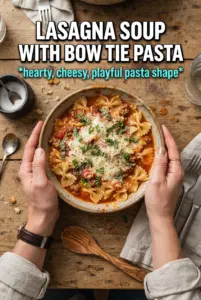
All the best parts of lasagna show up here in one bowl: rich tomato broth, browned Italian sausage, tender bow tie pasta, and that cold, creamy cheese dollop melting into the heat. It eats like a proper dinner, but it comes together fast enough for a weeknight and doesn’t ask you to layer noodles or babysit a casserole dish.
The trick is building the flavor in the pot before the broth goes in. Browning the sausage gives you the savory base, then the tomato paste gets a minute with the onion and garlic so it loses that raw edge and turns deeper and sweeter. Bow tie pasta is a smart stand-in for lasagna noodles because it catches the broth and cheese in every fold, though it does drink up more liquid than you might expect.
Below, I’ve included the part that matters most: how to keep the soup brothy instead of stewy, plus a few easy swaps if you want to adjust the heat, the sausage, or the cheese topping.
The broth had such a rich lasagna flavor, and the bow ties held up better than I expected. I added a splash of extra broth before serving and it stayed perfectly soupy instead of thickening into a pasta pot.
Save this lasagna soup with bow ties for the nights when you want cozy, sausagey comfort without the work of layering a full pan.
The Reason Bow Tie Pasta Needs Extra Broth in This Soup
Farfalle works beautifully here because the ridges and folds trap broth, sausage, and little bits of tomato in every bite. The catch is that it behaves more like a thirsty pasta than a soup noodle. If you let it simmer too long, it keeps absorbing liquid and the pot can slide from brothy to thick fast.
That’s why the broth goes in generous and the pasta gets cooked only until al dente. Once the farfalle is tender, the soup should still look loose in the pot. If it seems a little thin at first, that’s a good sign. It will thicken slightly as it sits, and you can always add a splash of broth when reheating.
What Each Ingredient Is Doing in This Bowl
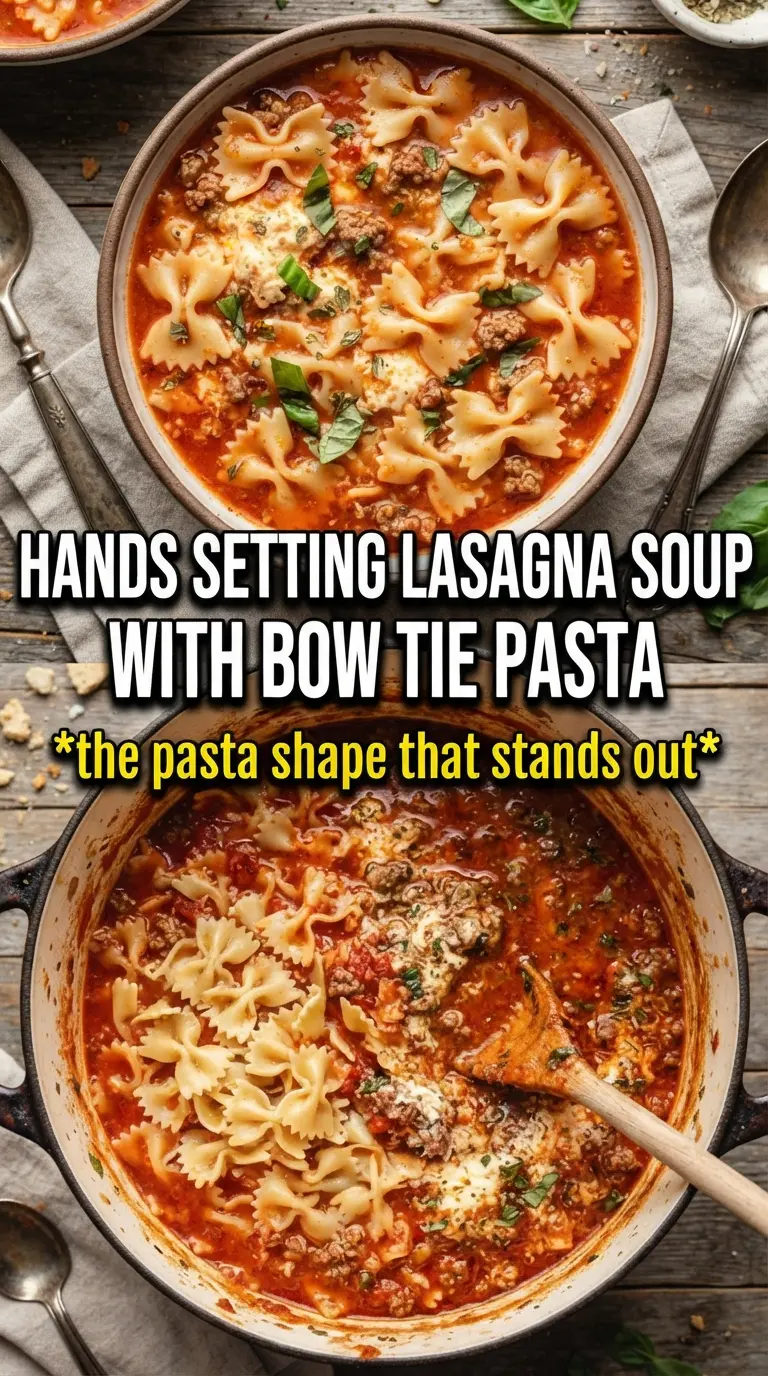
- Italian sausage — This is the backbone of the soup. It seasons the broth as it browns, and that rendered fat carries the onion, garlic, and tomato flavor. Mild or hot both work; use hot if you want a sharper finish.
- Tomato paste — This gives the broth depth and a slow-cooked taste in a short amount of time. Cooking it with the onions and garlic for a couple of minutes removes the raw edge and pushes the flavor toward something richer and sweeter.
- Crushed tomatoes and diced tomatoes — The crushed tomatoes build the body of the broth, while the diced tomatoes give you little bursts of texture. If you only have one or the other, the soup still works, but the combination gives it that lasagna-like texture.
- Farfalle — Bow ties hold sauce in the center and don’t collapse the way some smaller pastas can. If you swap pasta shapes, choose one with some structure. Thin pasta will overcook faster and can turn mushy in leftover soup.
- Ricotta, mozzarella, and parmesan — This topping is what makes the bowl taste like lasagna instead of plain tomato soup. Ricotta softens into the hot broth, mozzarella stretches, and parmesan adds salt and a little sharpness. Fresh basil on top wakes everything up at the end.
Building the Broth Before the Pasta Goes In
Browning the Sausage Until It Leaves a Fond
Cook the sausage in a large pot until it’s deeply browned and no pink remains. You want some caramelized bits stuck to the bottom, because that’s where the flavor lives. If there’s an excessive amount of fat after browning, drain off most of it, but leave a thin coating in the pot so the onion has something to cook in.
Softening the Onion and Toasting the Tomato Paste
Add the diced onion and cook it until it turns translucent and starts to smell sweet, about 3 minutes. Then stir in the garlic and tomato paste and cook for another 2 minutes. This is the point people rush, and it shows in the final soup; raw tomato paste tastes flat, while properly cooked paste gives the broth a deeper red color and fuller taste.
Simmering the Soup Base
Pour in both cans of tomatoes, the broth, Italian seasoning, basil, and red pepper flakes, then bring everything to a boil before lowering to a steady simmer. The pot should smell tomato-rich and savory, not sharp. Give the soup a taste before the pasta goes in and adjust with a little salt and pepper if needed, because the sausage and broth vary in saltiness.
Cooking the Pasta to the Right Point
Add the farfalle and cook it until just al dente, usually 8 to 10 minutes. Stop when the pasta still has a slight bite, since it will keep softening in the hot soup. If you overcook it here, the bow ties go heavy and the soup loses that fresh, spoonable feel.
Finishing With the Cheese Dollop
Mix the ricotta, mozzarella, parmesan, and basil in a bowl while the soup finishes. Spoon a generous mound into each serving bowl, then ladle the hot soup around it so the cheese softens without disappearing completely. If you stir the cheese directly into the pot, the ricotta melts unevenly and you lose the layered lasagna effect.
Three Useful Ways to Make This Soup Your Own
Make It Lighter With Ground Turkey
Swap the Italian sausage for ground turkey if you want a lighter bowl. You’ll lose some richness, so add an extra pinch of Italian seasoning and a small drizzle of olive oil when sautéing the onion to keep the base from tasting lean.
Go Gluten-Free With a Pasta Swap
Use your favorite gluten-free short pasta, but cook it carefully and watch the pot closely. Gluten-free pasta can break down faster and it often thickens the broth more than wheat pasta, so add extra broth as needed and stop cooking as soon as it’s tender.
Make the Cheese Topping Dairy-Free
For a dairy-free version, skip the ricotta-mozzarella dollop and top each bowl with a spoonful of dairy-free ricotta or a swirl of pesto if that fits your pantry. The soup still tastes complete because the sausage and tomato broth carry most of the flavor, but you lose the creamy lasagna finish.
Stretch It for a Bigger Crowd
Add another cup of broth and a bit more pasta if you need to feed more people, but increase the broth first. Pasta keeps absorbing liquid as it sits, and the extra broth keeps the pot from turning into a thick stew before everyone gets seconds.
Storage and Reheating
- Refrigerator: Store leftovers for up to 4 days. The pasta will keep soaking up broth, so expect the soup to thicken.
- Freezer: Freeze the soup without the pasta if you can. Pasta turns soft after freezing, so for the best texture, freeze the broth and sausage base, then cook fresh pasta when you reheat.
- Reheating: Warm it gently over medium-low heat with a splash of broth or water. The common mistake is boiling it hard, which pushes the pasta from tender to mushy and can make the soup look dry before it’s hot through.
Questions I Get Asked About This Recipe
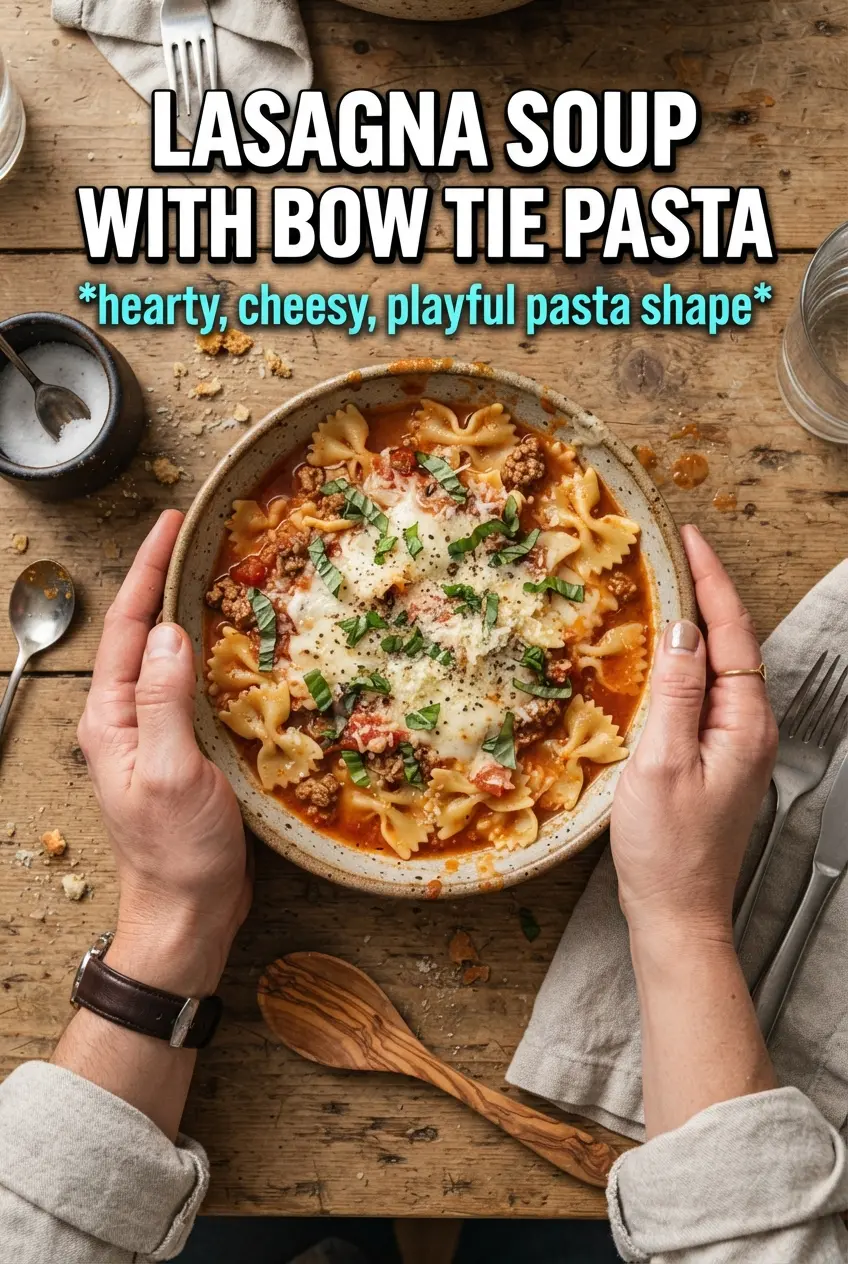
Lasagna Soup With Bow Tie Pasta
Ingredients
Equipment
Method
- Brown the Italian sausage in a large Dutch oven, then drain off the fat.
- Sauté the onion over medium heat for 3 minutes.
- Add the garlic and tomato paste and cook for 2 minutes.
- Add the crushed tomatoes, diced tomatoes, chicken broth, Italian seasoning, dried basil, and red pepper flakes, then bring to a boil.
- Add the farfalle (bow tie) pasta and cook for 8-10 minutes until al dente.
- Season with salt and pepper to taste.
- Mix the ricotta, shredded mozzarella, and parmesan together to form a thick dollop.
- Serve the soup in bowls with a generous spoonful of the cheese dollop and top with fresh basil.
- If the soup thickens too much, add extra chicken broth since bow tie pasta absorbs more liquid than lasagna noodles.