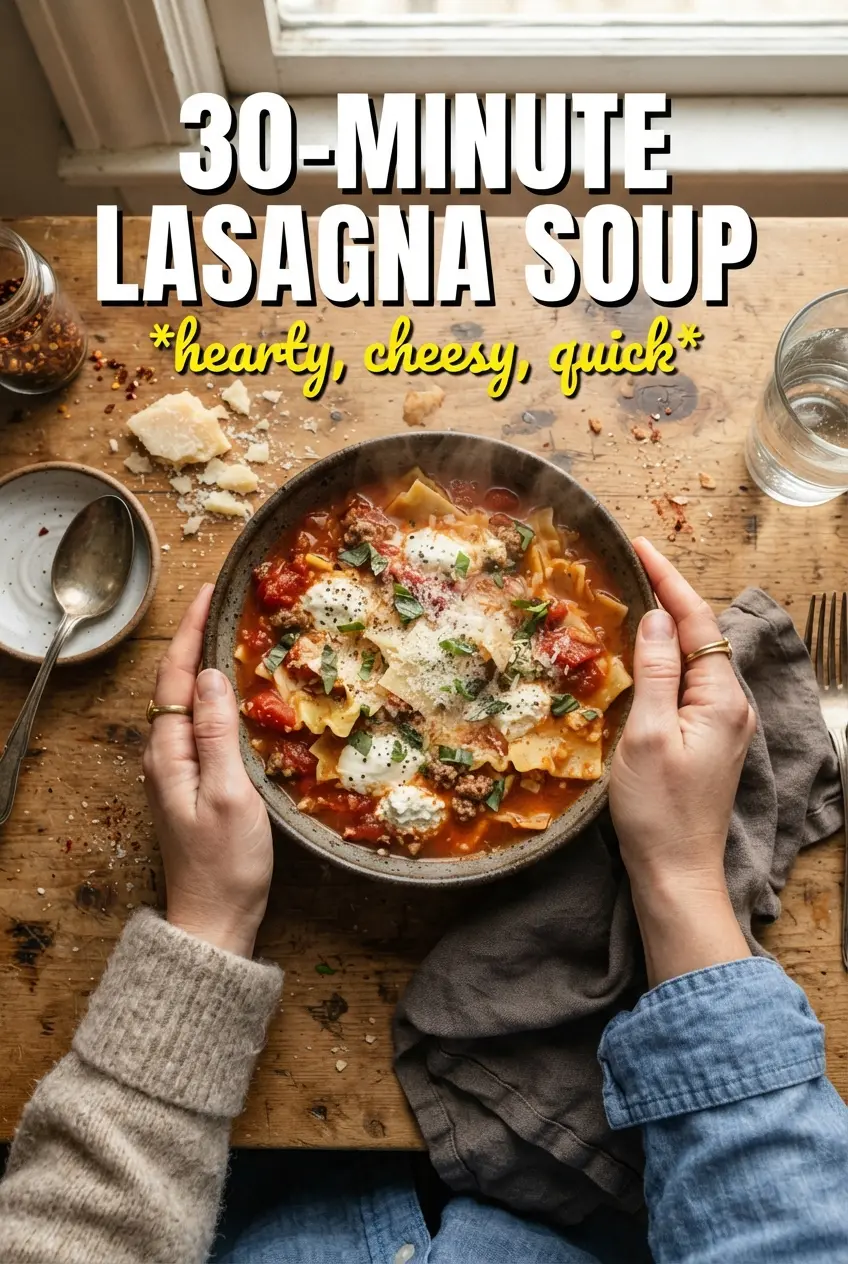
30-Minute Lasagna Soup gives you everything people love about lasagna without the layering, baking, or waiting around for a casserole to set. The broth turns rich and tomato-forward, the sausage seasons the whole pot, and the broken noodles cook right in the soup so they pick up flavor instead of tasting like a separate add-in. The result lands somewhere between a hearty pasta bowl and a Sunday-supper comfort dish, but it’s on the table fast enough for a weeknight.
The key is building the flavor in one pot. Browning the sausage first gives you that savory base, and the onion goes into the same pan so it can soften in the drippings instead of starting from scratch. Marinara does the heavy lifting here, which is why this version works so well in 30 minutes; you’re not simmering tomatoes for an hour, just boosting a good jarred sauce with broth, seasoning, and a little heat.
What makes this worth making again is the cheese dollop. It melts into the bowl like a shortcut ricotta filling, and it gives you the creamy, lasagna-like finish that turns a soup into dinner. Below, I’ve included the small timing details that keep the noodles tender instead of mushy, plus the swaps that still give you a satisfying bowl.
The broth had that real lasagna flavor, and the noodles were perfect at 11 minutes — not mushy at all. I loved the ricotta-mozzarella topping because it melted just enough without disappearing into the soup.
Save this 30-Minute Lasagna Soup for the nights when you want the comfort of lasagna, the speed of a skillet dinner, and that creamy ricotta finish in one bowl.
The Trick Is Keeping the Noodles in the Soup, Not in the Sink
The biggest mistake with lasagna soup is letting the noodles go too long. Broken lasagna sheets keep cooking in the hot broth even after the pot comes off the heat, so pulling them when they’re just tender matters more than waiting for them to look fully soft in the pot. If you cook them until they seem perfect there, they’ll be bloated and pasty by the time you ladle the soup.
The other trap is thin, watery broth. The sausage, marinara, and a little starchy pasta water from the noodles all help thicken the soup as it simmers. If your broth tastes flat, it usually means the sausage was under-browned or the soup didn’t simmer long enough for the flavors to come together.
What Each Ingredient Is Actually Doing in This Bowl

- Italian sausage — This is the backbone of the soup. Mild or hot both work, but sausage with enough fat gives you a richer base than lean ground meat. If you swap in ground turkey, add a little olive oil and extra Italian seasoning because turkey won’t season the pot on its own.
- Marinara sauce — Use a jarred sauce you actually like eating straight from the jar, because it defines the flavor of the whole soup. A chunky sauce works fine, and a smoother one gives you a more classic broth. If the sauce is already heavily garlicky or sweet, cut back a little on extra seasoning until you taste the finished pot.
- Broken lasagna noodles — They give you the lasagna feel without the bake time. Break them into rough pieces, not tiny shards, so they hold their shape in the spoon. If you use another short pasta, you’ll still get a good soup, but it won’t read as lasagna in the same way.
- Ricotta, mozzarella, and parmesan — This quick cheese mixture is what makes the bowl taste like lasagna instead of tomato pasta soup. Ricotta brings the creamy center, mozzarella melts into stretchy pockets, and parmesan adds sharpness. Stir them together just before serving so the mixture stays thick and spoonable.
- Fresh basil — It adds a bright finish that keeps the soup from tasting heavy. Dried basil won’t give you the same fresh lift, so use the real thing if you can.
Building the Pot in the Right Order
Browning the Sausage First
Start with a hot pot and let the sausage brown before anything else goes in. You want real color on the meat, not just gray cooked-through crumbles, because those browned bits become part of the broth. If the pot looks crowded, break the sausage up less at first so it can sear before you stir it apart.
Softening the Onion in the Drippings
After draining the fat, add the onion to the same pot and cook it until it turns translucent and sweet at the edges. This step picks up the flavor left behind by the sausage, which is why the soup tastes layered instead of one-note. Garlic goes in at the end of this stage so it perfumes the pot without scorching.
Letting the Broth and Sauce Come Together
Pour in the marinara and broth, then season the pot before the noodles go in. Bring it up to a boil so the soup has enough heat to cook the pasta evenly, then lower the heat just enough to keep things moving. If the simmer is too aggressive, the noodles will break apart before they’re tender.
Finishing the Noodles and Serving Fast
Add the broken noodles and stir often so they don’t stick to the bottom or clump together. Start checking a minute or two before the package says they should be done, since they finish quickly in soup and keep softening in the bowl. Ladle the soup right away and top each serving with a big spoonful of the cheese mixture so the heat melts it just enough.
How to Adapt This for a Lighter Bowl or a Bigger Crowd
Make It Lighter Without Losing the Lasagna Feel
Use ground turkey or chicken instead of sausage and add an extra teaspoon of Italian seasoning plus a pinch of fennel if you want that sausage-like flavor back. The soup will be a little less rich, but the cheese topping still gives it enough body to feel satisfying.
Gluten-Free Without Changing the Broth
Swap in a sturdy gluten-free lasagna noodle or another short gluten-free pasta with a similar cook time. Keep a close eye on texture, because gluten-free pasta can go from firm to soft fast once it’s in the hot broth.
Make It Vegetarian
Leave out the sausage and use vegetable broth, then add extra onion and a handful of chopped mushrooms for more depth. You’ll lose some savory richness, so taste the pot before serving and add more salt and parmesan to bring it back into balance.
Storage and Reheating
- Refrigerator: Store for up to 4 days. The noodles will continue to absorb broth, so expect the soup to thicken.
- Freezer: It freezes, but the noodles soften after thawing. For best texture, freeze the soup without the noodles if you know you’ll be saving leftovers.
- Reheating: Warm it gently on the stove over medium-low with a splash of broth or water. The most common mistake is boiling it hard, which turns the noodles mushy and can make the sauce taste flat.
Questions I Get Asked About This Recipe
30-Minute Lasagna Soup
Ingredients
Equipment
Method
- Brown the Italian sausage in a large pot over high heat until cooked through, then drain the fat. Keep it at a vigorous sizzle so the sausage browns rather than steams (visual cue: no pink and a deep caramel color).
- Add the diced onion to the same pot and cook for 3 minutes. Stir and scrape the browned bits (visual cue: onion softens and turns glossy).
- Add the minced garlic and cook for 1 minute. Stir constantly to avoid burning (visual cue: fragrant, lightly golden).
- Pour in the marinara sauce and chicken broth, then add Italian seasoning and red pepper flakes. Stir until the broth turns evenly red (visual cue: consistent tomato-red color).
- Bring the soup to a boil over high heat, then add the broken lasagna noodles. Make sure noodles are submerged so they cook evenly (visual cue: bubbling resumes right around the noodles).
- Boil for 10-12 minutes until the noodles are just tender, stirring occasionally to prevent sticking. Keep the boil steady (visual cue: noodles bend easily but still hold shape).
- Season with salt and pepper to taste. Adjust gradually and stir to distribute (visual cue: flavor looks balanced, with no need for additional tomato sharpness).
- Mix the ricotta, shredded mozzarella, and parmesan together quickly for the cheese dollop. Stir until thick and scoopable (visual cue: cohesive, cheesy mound texture).
- Ladle the soup into bowls and top with a large spoonful of the cheese mixture, then garnish with fresh basil. Serve immediately (visual cue: cheese dollop sits on top and begins to soften at the edges).