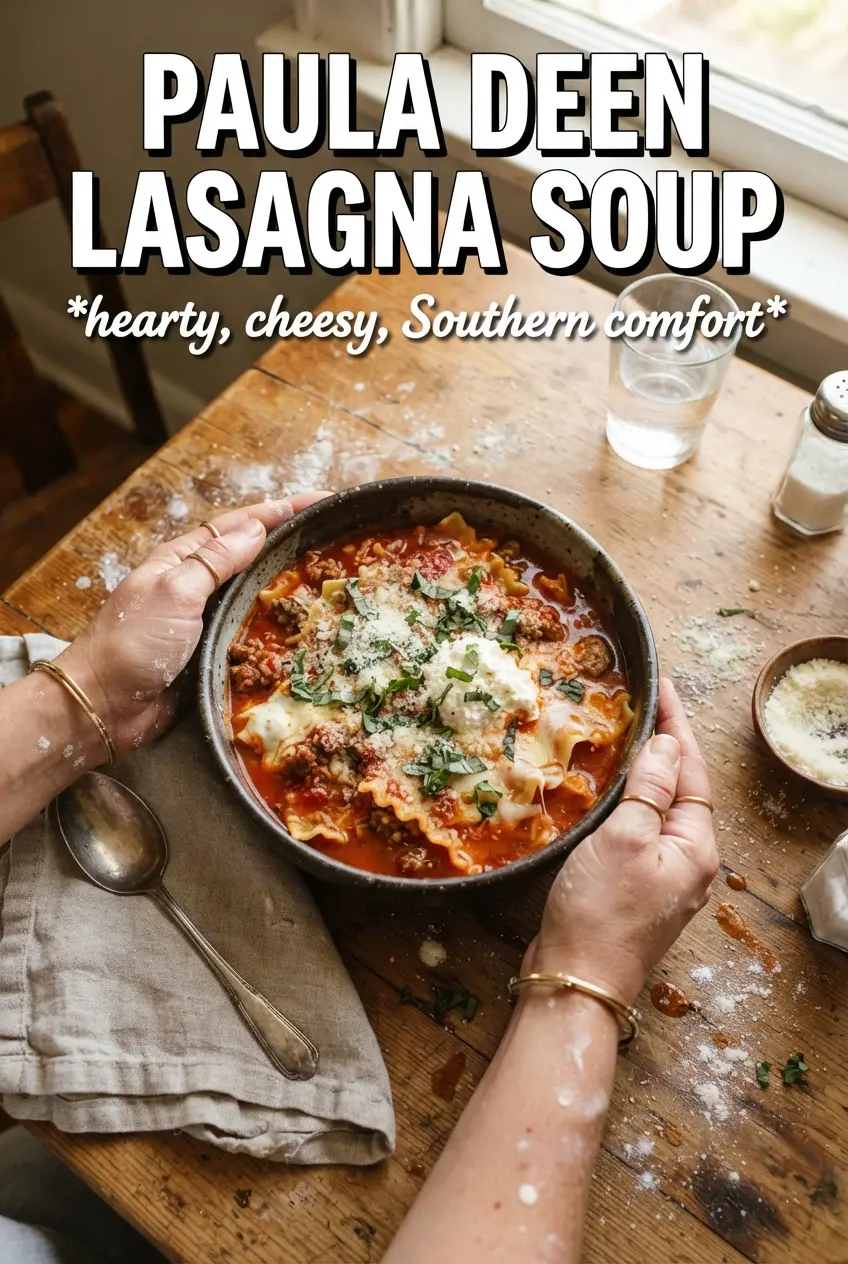
Paula Deen lasagna soup takes everything people love about a bubbling pan of lasagna and turns it into a spoonable bowl with a rich tomato broth, savory sausage, tender noodles, and a thick, creamy cheese topping that melts into the soup as soon as it hits the surface. It eats like comfort food with a little extra drama, especially when the broth is glossy from butter and the parmesan-thickened cheese mixture starts to swirl through the bowl.
What makes this version work is the order. The meats brown together in butter first, which gives the broth a deeper base before the tomatoes and stock go in. Tomato paste cooks with the onion and garlic long enough to lose that raw edge, and the noodles simmer right in the broth so they pick up flavor instead of tasting like they were cooked on the side and dropped in at the end. The cheese topping matters just as much as the soup itself; ricotta, mozzarella, and parmesan give you the same layered effect as a baked lasagna without having to turn on the oven.
Below you’ll find the timing that keeps the noodles from going mushy, plus a few smart swaps and storage notes for when you want to stretch the pot across a couple of meals.
The broth had so much flavor from the sausage and tomato paste, and the noodles were still perfectly tender after simmering. That cheese topping on top turned into the creamiest layer once it hit the hot soup.
Save this Paula Deen lasagna soup for nights when you want a rich broth, tender noodles, and that oversized ricotta-mozzarella topping in one bowl.
The Secret to Keeping Lasagna Soup Rich Instead of Greasy
The biggest mistake in lasagna soup is letting the fat float on top without giving the pot a chance to build flavor first. Butter helps here, but only if it’s used to carry the browning and soften the onion, not just dumped in at the end for richness. When the sausage and beef brown together, you get a deeper, rounder base that tastes cooked, not merely assembled.
The other trap is crowding the pot with noodles too early. Broken lasagna sheets keep soaking up liquid as they sit, so they need to go in once the broth is already seasoned and bubbling. If they simmer too long, the soup turns starchy and heavy in the wrong way. Stop at tender with a little bite left, because the noodles keep softening in the bowl.
What Each Ingredient Is Actually Doing in This Bowl

- Italian sausage — This gives the soup its built-in seasoning and a little fennel-backed depth. Hot sausage adds heat, mild sausage keeps it more classic. If you swap in all beef, the broth tastes flatter and needs extra seasoning.
- Ground beef — Beef rounds out the sausage and makes the soup taste like a true meat sauce. Use 80/20 if you can, then drain the excess fat after browning so the finished bowl stays rich instead of oily.
- Butter — This is part of the Paula Deen-style richness, and it also helps carry the garlic and tomato paste through the pot. If you cut it back, you’ll lose some body in the broth. You can reduce it slightly, but don’t replace it with oil and expect the same taste.
- Tomato paste — Cooking it with the onion and garlic for a couple of minutes deepens the tomato flavor and removes the tinny edge. That short cook time matters. Skip it and the soup tastes thinner.
- Ricotta, mozzarella, and parmesan — This is the lasagna part of lasagna soup. Ricotta gives creaminess, mozzarella melts into strings, and parmesan adds salt and sharpness. Use whole milk ricotta if you want the topping to stay lush.
- Lasagna noodles — Break them into uneven pieces so the bowl feels rustic and spoonable. Don’t cook them separately unless you’re planning for leftovers, because noodles simmered in the broth pick up more flavor than noodles added later.
How to Build the Soup So the Noodles Stay Tender and the Broth Stays Silky
Brown the Meat in Butter First
Start with the sausage and beef in a large pot and let them actually brown, not just lose their pink color. You want caramelized spots at the bottom and enough rendered fat to coat the onions. If the pot looks dry before the meat has color, the heat is too low. Once the meat is browned, drain off the excess fat but leave a little behind for flavor.
Cook the Onion, Garlic, and Tomato Paste Together
Add the onion to the same pot and cook it in the flavored fat until it softens and turns translucent at the edges. Garlic goes in only after that, because it burns fast and turns bitter. Stir in the tomato paste and cook it until it darkens slightly and smells sweet rather than raw. That short minute or two is where the broth gets its deeper tomato backbone.
Simmer the Broth Before the Noodles Go In
Once the crushed tomatoes, diced tomatoes, broth, Italian seasoning, and basil are in, bring the pot to a full boil and then settle it down to a steady simmer. This is when the soup develops its body. If the heat is too high, the tomatoes can taste sharp and the liquid can reduce too fast. Let it bubble gently before adding the noodles so the base tastes balanced first.
Finish With the Noodles and Cheese Topping
Add the broken lasagna noodles and simmer until they’re tender but not falling apart, usually 10 to 12 minutes. Season the soup generously with salt and pepper after the noodles are in, because they absorb seasoning as they cook. Mix the ricotta, mozzarella, parmesan, and basil just before serving, then pile it on top while the soup is steaming hot. The topping should soften and melt into the bowl instead of sitting there like a cold scoop.
How to Adapt This for a Lighter Bowl, a Bigger Batch, or Different Cheese
Make It a Little Lighter Without Losing the Comfort
Use all ground turkey or half turkey and half beef, then add an extra pinch of Italian seasoning and a little more tomato paste to replace the depth you lose from the sausage. The broth will be a touch leaner, but the cheese topping still gives you that lasagna feel.
Gluten-Free Version
Swap in a sturdy gluten-free lasagna noodle or a short pasta shape that holds up in soup, like gluten-free rotini. Cook it just until tender, because many gluten-free pastas soften fast and can turn mushy if they sit in the broth too long.
Ricotta Alternatives That Still Feel Like Lasagna
If you don’t have ricotta, use cottage cheese that’s been drained and lightly mashed for a similar creamy topping. It won’t be quite as rich, but it melts into the soup well when mixed with mozzarella and parmesan.
Storage and Reheating
- Refrigerator: Store the soup without the cheese topping for up to 4 days. The noodles will continue to soften, so expect a thicker, more spoon-coating texture on day two.
- Freezer: The broth freezes well for up to 3 months, but the noodles can go soft after thawing. For the best result, freeze the soup before adding noodles, then cook fresh noodles when you reheat it.
- Reheating: Warm it gently on the stove over medium-low heat until steaming, adding a splash of broth or water if it has thickened. Reheat slowly so the dairy topping doesn’t separate and the noodles don’t break down further.
Answers to the Questions Worth Asking
Paula Deen Lasagna Soup
Ingredients
Equipment
Method
- In a large pot over medium-high heat, melt the unsalted butter and brown the Italian sausage and ground beef together until no longer pink. Drain excess fat from the pot.
- Add the diced onion to the pot and sauté for 4 minutes, stirring until softened. Add the minced garlic and tomato paste and cook for 2 minutes, until fragrant.
- Stir in the crushed tomatoes, diced tomatoes, chicken broth, Italian seasoning, and dried basil. Bring the mixture to a boil over high heat.
- Add the broken lasagna noodles to the boiling soup. Reduce to a simmer and cook for 10–12 minutes, stirring occasionally, until tender.
- Season the soup generously with salt and pepper to taste. In a bowl, mix the whole milk ricotta, shredded mozzarella, parmesan, and fresh basil to form a cohesive, scoopable cheese topping.
- Ladle the soup into bowls. Top each bowl with a very large, heaping spoonful of the cheese mixture so it drips into the hot soup.