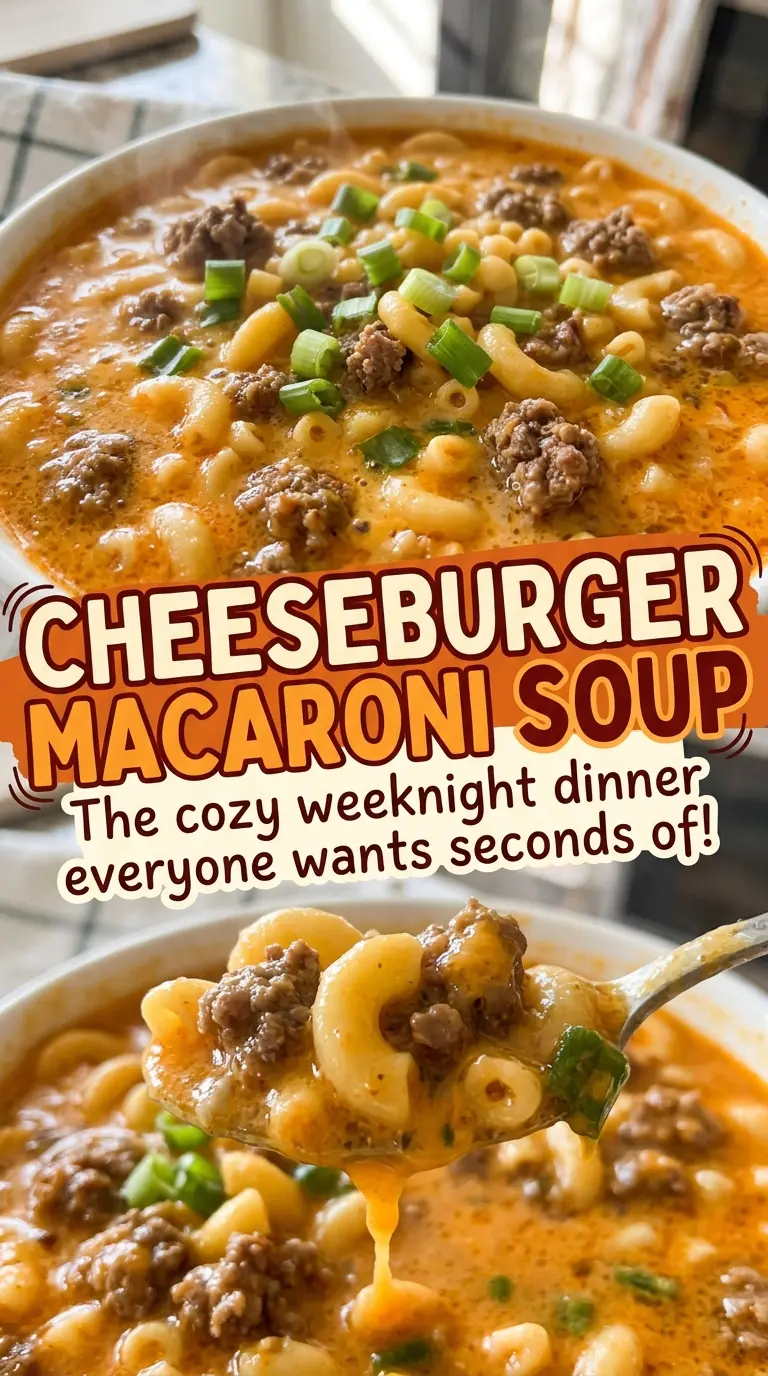
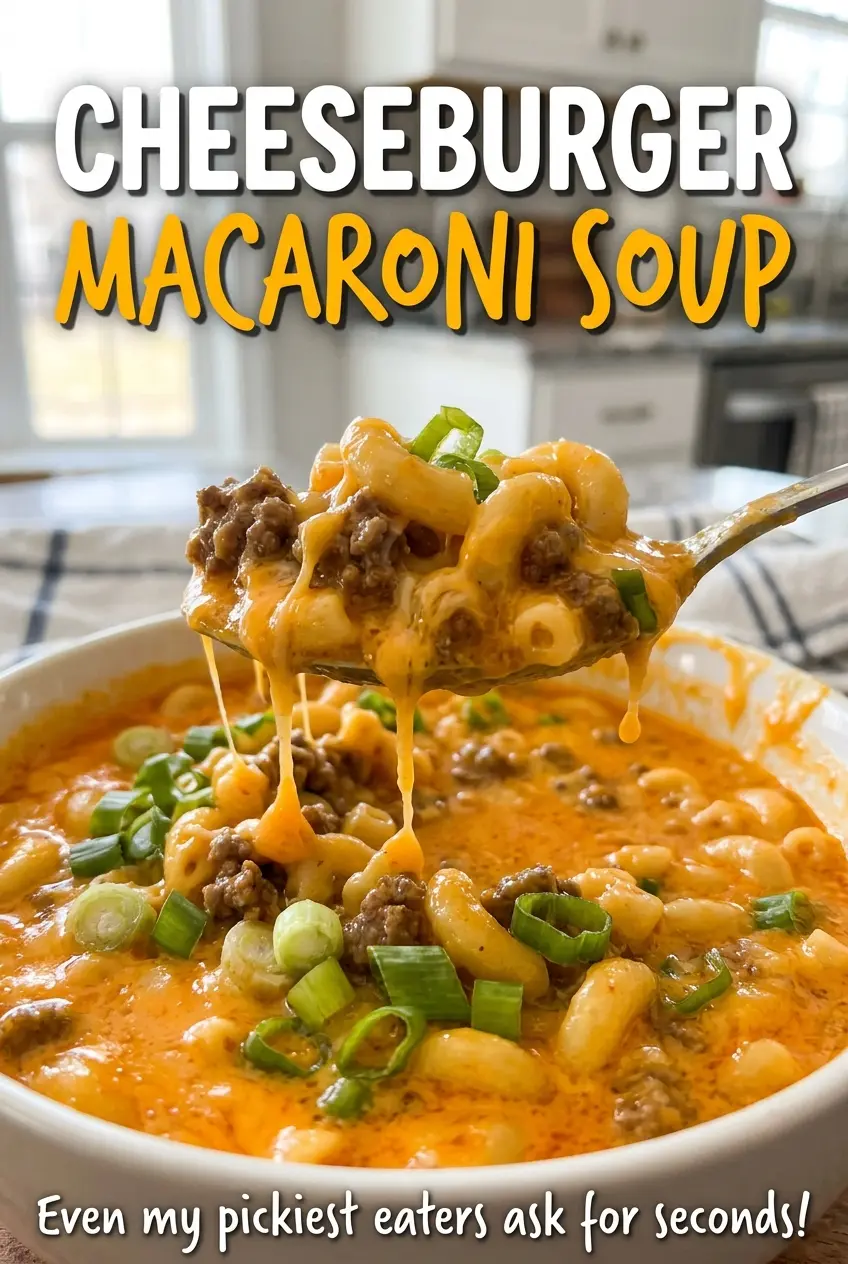
Cheeseburger macaroni soup lands in that sweet spot between nostalgic and practical: it tastes like a diner-style cheeseburger turned into a bowl you can eat with a spoon, and it comes together fast enough for a weeknight. The broth turns thick and savory, the macaroni holds onto the cheese, and the beef gives every bite enough heft to feel like dinner instead of a side dish.
What makes this version work is the balance. The condensed cheddar soup gives you a stable, seasoned base, while real shredded cheddar melts in at the end for deeper cheese flavor and a silkier finish. Worcestershire and mustard powder do the quiet work here; they don’t make the soup taste like mustard, they make it taste like a cheeseburger.
Below you’ll find the timing that keeps the pasta tender instead of mushy, plus the one garnish that pulls the whole bowl back toward burger territory. If you like a thicker soup, there’s an easy way to adjust that too.
The broth turned creamy without getting grainy, and the macaroni stayed tender even after we went back for seconds. The pickles on top were the best part — it tasted just like a cheeseburger in soup form.
Love the creamy, burger-style flavor of this Cheeseburger Macaroni Soup? Save it to Pinterest for the nights when you want a fast, hearty bowl with pickles and cheddar on top.
The Fastest Way to Lose the Burger Feeling Is to Overcook the Pasta
Once the macaroni goes in, the clock matters. If you boil it too long, the soup stops tasting like a bowl with texture and starts tasting like a thick, starchy mash. You want the pasta tender with a little bite left in the center, because it keeps softening as it sits in the hot broth.
The other place people lose the cheeseburger effect is in the cheese. If the pot is raging when the cheddar goes in, the dairy can turn grainy or greasy instead of smooth. This soup wants steady heat, not a hard boil, once the cheese and cream are added. That is what keeps the broth thick and velvety instead of broken.
- Drain the beef well — A little fat helps flavor, but too much turns the soup oily. Drain off the excess after browning so the broth stays creamy instead of slick.
- Add the macaroni at the right time — It cooks directly in the soup, which helps thicken the broth, but it also means it can go from perfect to soft fast. Start checking at the 8-minute mark.
- Finish with lower heat — The cream and shredded cheddar melt more cleanly when the pot is no longer at a boil. That last step is what gives you a smooth, cheesy soup instead of separated cheese.
What Each Ingredient Is Doing in This Bowl
- Ground beef — This is the backbone of the soup. Use 80/20 if you want the richest flavor, but leaner beef works too as long as you don’t skip draining the excess fat.
- Elbow macaroni — These little tubes catch the cheese sauce and give the soup its classic cheeseburger mac feel. Any small pasta shape will work in a pinch, but elbows are the most natural fit.
- Condensed cheddar cheese soup — This gives the broth body and a dependable cheese base that won’t thin out during cooking. It isn’t interchangeable with plain broth and shredded cheese alone unless you adjust the simmering and seasoning carefully.
- Shredded cheddar — Freshly shredded cheese melts more smoothly than pre-shredded, which is coated to prevent clumping. If you want the best texture, shred it yourself.
- Heavy cream — This softens the sharpness of the cheddar and rounds out the broth. Half-and-half will work, but the soup will be a little lighter and less silky.
- Worcestershire sauce and mustard powder — These are what make the soup taste like a cheeseburger instead of plain beef and cheese. The mustard powder doesn’t make the soup taste mustardy; it sharpens the cheese and beef in the background.
- Pickles and green onions — Don’t treat these as garnish only. The pickles add acidity that cuts through the richness, and the green onions give the bowl a fresh finish that keeps it from feeling heavy.
The Pot, the Stirring, and the Finish That Keeps It Creamy
Brown the Beef First
Cook the ground beef in a large pot over medium heat until it’s no longer pink and the browned bits are developing on the bottom. Break it up well so you don’t end up with large dense clumps in the finished soup. Drain off the excess fat before you move on; if you leave too much in the pot, the broth can feel greasy instead of rich.
Build the Flavor Base
Add the diced onion to the same pot and cook until it softens and starts to turn translucent, about 3 minutes. Stir in the garlic for the last minute so it smells fragrant but doesn’t burn. Burned garlic will turn the whole pot bitter, and there is no hiding that once the broth goes in.
Simmer the Broth and Cook the Pasta
Pour in the beef broth, cheddar soup, Worcestershire sauce, mustard powder, and garlic powder, then bring it to a boil. Add the macaroni and cook until tender, usually 8 to 10 minutes. Stir occasionally so the pasta doesn’t stick to the bottom, and start checking it early if you want a little more bite in the final bowl.
Finish with Cheese, Not Heat
Turn the heat down before adding the heavy cream and shredded cheddar. Stir until the cheese melts and the soup turns smooth and thick, then season with salt and pepper. If the soup looks a touch loose at this point, let it sit off the heat for a few minutes; it thickens as the pasta rests and the cheese settles in.
Three Ways to Adjust the Bowl Without Losing What Makes It Work
Make It Gluten-Free
Swap the elbow macaroni for a gluten-free small pasta and use a gluten-free cheddar soup if that’s available to you. Gluten-free pasta can soften faster than regular pasta, so start checking it a couple of minutes early and don’t let it sit on a hard boil once it turns tender.
Use Ground Turkey Instead of Beef
Ground turkey makes a lighter soup, but it needs the onion, Worcestershire, and cheddar to carry more of the flavor. If you use turkey, add a little extra salt and a small splash more Worcestershire so the broth still tastes full and savory.
Add Bacon or Keep It Vegetarian-Friendly
A handful of crisp bacon on top leans the soup even closer to burger territory and adds a smoky finish. For a vegetarian version, use plant-based ground, vegetable broth, and a vegetarian cheddar-style soup; the texture still works, but the final bowl will depend more on the cheese and seasonings for depth.
Storage and Reheating
- Refrigerator: Store in an airtight container for up to 4 days. The pasta will keep absorbing broth, so the soup thickens as it sits.
- Freezer: It can be frozen, but the pasta softens after thawing. For the best texture, freeze before adding the macaroni and cook fresh pasta into the reheated base.
- Reheating: Warm it gently on the stove over low heat with a splash of broth or milk to loosen it. The common mistake is blasting it over high heat, which can make the cheese turn grainy and the pasta fall apart.
Questions I Get Asked About This Recipe
Cheeseburger Macaroni Soup
Ingredients
Equipment
Method
- Brown the ground beef in a large pot until cooked through, then drain the fat. Continue until you see no pink remaining in the crumbles (visual cue: fully browned beef).
- Sauté the diced onion for 3 minutes, until softened. Add the minced garlic and cook 1 minute, stirring so it turns fragrant (visual cue: noticeable garlic aroma and slight softening).
- Add the beef broth, condensed cheddar cheese soup, Worcestershire sauce, mustard powder, and garlic powder, then bring the mixture to a boil. Keep at a steady boil until fully blended (visual cue: bubbling around the edges and throughout the pot).
- Add the uncooked elbow macaroni and cook 8–10 minutes, stirring occasionally, until tender. Watch for a soft bite with no firm center (visual cue: macaroni fully cooked and broth slightly thickened).
- Reduce heat and stir in the heavy cream and shredded cheddar until melted. Keep stirring until smooth and creamy with no cheese streaks (visual cue: glossy, thick yellow-orange cheese broth).
- Season with salt and pepper to taste, then serve hot with pickles, green onions, and extra cheddar. Use as much as you like for garnish (visual cue: toppings visible on top and beside the bowl).