Cowboy stew lands in the kind of meal rotation that solves a real problem: it feeds a crowd, it comes together in one pot, and it tastes even better once the smoky broth has had a few minutes to settle around the beef, sausage, beans, and potatoes. The broth gets rich without turning heavy, and every spoonful brings a little bit of everything — tender potato, sweet corn, tangy tomatoes, and enough seasoning to keep it from tasting flat.
What makes this version work is the order. The ground beef and sausage get browned first so the pot starts with real flavor instead of just simmering in liquid. Then the spices get cooked for a minute before the broth goes in, which wakes them up and keeps the stew from tasting dusty. The potatoes cook directly in the broth, where they soak up all that ranch-and-chili seasoning instead of turning bland on the outside and starchy in the middle.
Below, you’ll find the small timing details that keep the potatoes tender, plus a few smart ways to adapt the stew if you need it milder, dairy-free, or a little thicker.
The potatoes came out tender, the broth thickened just enough, and the smoked sausage gave it that campfire flavor my husband kept going back for. I topped ours with jalapeños and cheddar, and it tasted even better the next day.
Save this smoky Cowboy Stew for a one-pot dinner packed with beef, sausage, beans, and tender potatoes.
The Order That Keeps Cowboy Stew From Tasting Flat
Most stew problems start before the liquid even goes in. If you dump everything into the pot at once, you end up boiling meat and vegetables together instead of building flavor. Browning the beef and sausage first gives you caramelized bits on the bottom of the pot, and those browned edges are what turn the broth from ordinary to deep and savory.
The other place people go wrong is the spice step. Chili powder and smoked paprika need a short trip through hot fat before the broth hits the pot. That brief bloom pulls more flavor out of the spices and keeps them from tasting raw. The potatoes also deserve patience here — they need a steady simmer, not a hard boil, or the outsides break down before the centers are tender.
- Ground beef — Use a beef with enough fat to brown well, then drain the excess so the stew doesn’t turn greasy. Very lean beef works, but the final broth will taste a little less rich.
- Smoked sausage — This is where the smoky backbone comes from. Kielbasa or another fully cooked smoked sausage works best because it holds its shape and seasons the pot as it simmers.
- Baby potatoes — Halving them gives you even cooking and keeps them from disappearing into the broth. If you swap in russets, cut them into larger chunks so they don’t collapse.
- Rotel and diced tomatoes — The Rotel adds a little heat and acidity, while the diced tomatoes give the stew body. If you only have plain diced tomatoes, add a small pinch of cayenne or a splash of hot sauce for that same edge.
- Ranch seasoning — This adds the herb-and-onion note that makes cowboy stew taste like cowboy stew. Homemade ranch seasoning works here if it’s salt-balanced, but the packet is convenient and consistent.
What Each Ingredient Is Actually Doing in This Recipe

- Primary ingredient (the star) — Quality matters most. Choose the best you can find.
- Cooking medium (oil, butter, or broth) — This carries flavors and prevents dryness.
- Seasonings (salt, pepper, spices, herbs) — Layer flavors so nothing overpowers. Build depth gradually.
- Aromatics (garlic, onion, herbs) — Cook with fat to bloom flavors. Become the foundation.
- Supporting ingredients — Complement the main ingredient without overpowering it.
- Sauce or liquid (if applicable) — Brings flavors together. Balance richness with acid.
- Acid (lemon, vinegar, wine, or other) — Brightens and prevents flat-tasting results.
- Final finish (garnish, glaze, or sauce) — Prevents one-dimensional taste and adds visual appeal.
The Simmer That Makes the Potatoes Tender Without Falling Apart
Building the Meat Base
Start by browning the ground beef in a large pot until there’s no pink left and some of the bits on the bottom are taking on color. Drain off the excess fat, then cook the sausage just long enough to get a little browning on the edges. Don’t rush this part with high heat and constant stirring, because color is the flavor you’re building before the broth goes in.
Waking Up the Spices
Add the onion and cook until it softens and turns glossy, then stir in the garlic for a minute. Add the chili powder and smoked paprika next and stir them into the hot pot for about a minute before adding liquid. That short bloom keeps the spices from floating on top tasting sharp and dry.
Letting the Broth Do the Work
Pour in the tomatoes, broth, ranch seasoning, potatoes, and beans, then bring the pot up to a boil before dropping it to a steady simmer. The potatoes should cook at a gentle bubble, not a rolling boil, so they stay intact while the centers turn soft. After 15 to 18 minutes, pierce a potato piece with a fork; it should slide in cleanly but the potato should still hold its shape.
Finishing with Corn and Sausage
Stir in the corn and the browned sausage near the end, then simmer for five more minutes. Corn only needs enough time to heat through and pick up the broth, and the sausage doesn’t need long since it was already cooked. Taste at the end and add salt and pepper only after everything has had a chance to mingle, because the ranch seasoning and sausage already bring salt to the pot.
Three Ways to Bend Cowboy Stew to What You’ve Got
For a thicker, heartier stew
Let it simmer uncovered for the last 5 to 10 minutes so some of the broth evaporates. You can also mash a few potato pieces against the side of the pot, which gives the stew more body without changing the flavor. This version ends up spoonable and dense instead of brothy.
For a dairy-free bowl
The stew itself is already dairy-free as written, so the only change is the garnish. Skip the cheddar and top with jalapeños and green onions instead, or add a spoonful of avocado for creaminess. You won’t lose anything important in the base recipe.
For a milder pot
Use mild smoked sausage and swap the Rotel for plain diced tomatoes. That change keeps the stew savory and smoky but pulls back the heat enough for kids or anyone who wants the flavor without the kick. If you still want a little zip, serve hot sauce on the side instead of adding it to the pot.
Storage and Reheating
- Refrigerator: Store in an airtight container for up to 4 days. The broth thickens a little as it sits, and the potatoes soften slightly more overnight.
- Freezer: It freezes well for up to 3 months, though the potatoes will be softer after thawing. Cool completely, portion into freezer-safe containers, and leave a little space for expansion.
- Reheating: Reheat gently on the stovetop over medium-low heat with a splash of broth or water if needed. The common mistake is boiling it hard, which can break up the potatoes and make the sausage tough.
Answers to the Questions Worth Asking
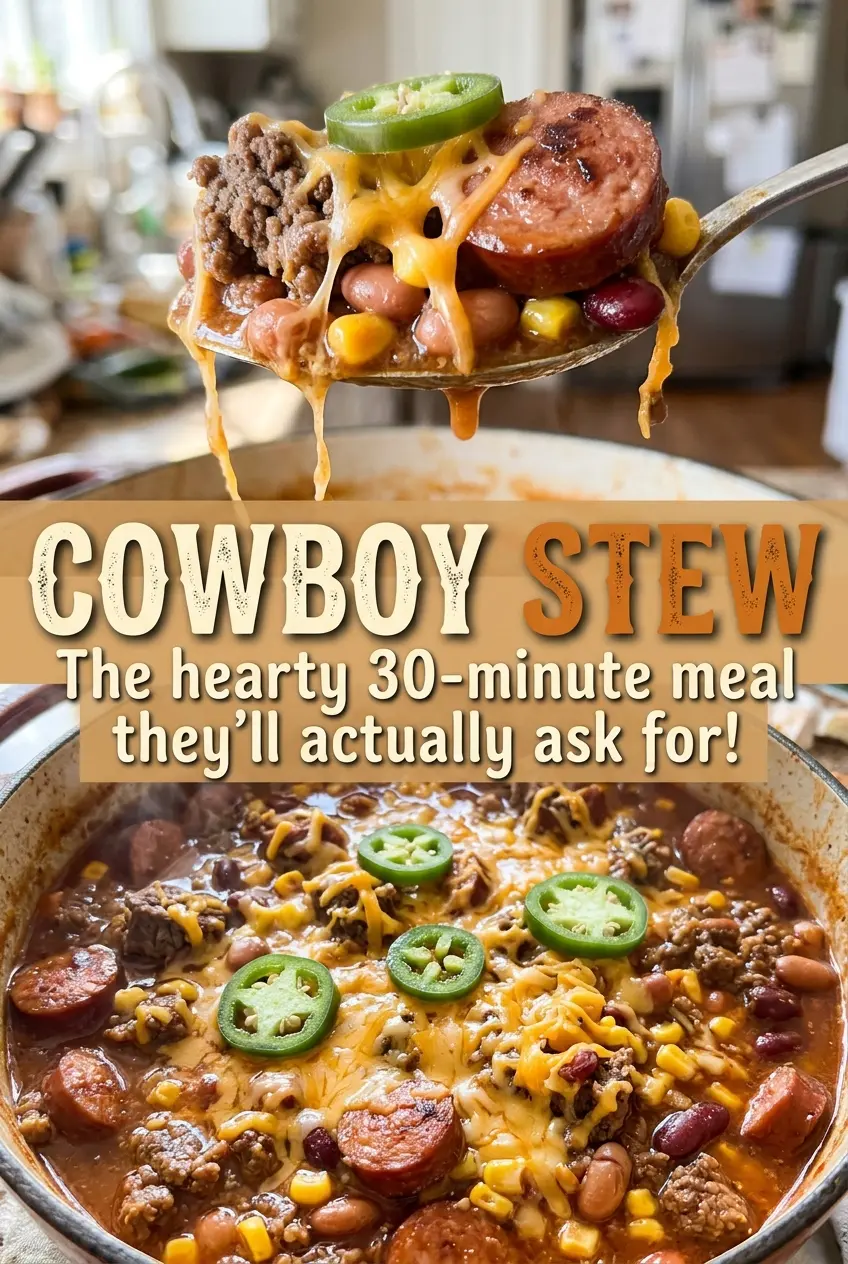
Cowboy Stew
Ingredients
Equipment
Method
- Heat a large pot over medium-high heat and brown the ground beef. Drain the fat once browned.
- Add the sliced smoked sausage and brown briefly to pick up color. Remove and set aside.
- Reduce heat to medium and sauté the diced onion for 3 minutes. Add the minced garlic and cook 1 minute.
- Stir in the chili powder and smoked paprika and cook 1 minute. Keep stirring so spices bloom without burning.
- Add the Rotel tomatoes, diced tomatoes, beef broth, ranch seasoning, baby potatoes, and pinto beans. Bring the mixture to a boil.
- Simmer at a steady boil for 15–18 minutes, stirring occasionally, until the potatoes are tender and the stew looks thickened. Add the corn and sausage after this stage.
- Simmer 5 more minutes until everything is heated through and the broth tastes seasoned. Season with salt and pepper to taste.
- Ladle the cowboy stew into bowls and top with shredded cheddar, jalapeños, and green onions. Serve hot.