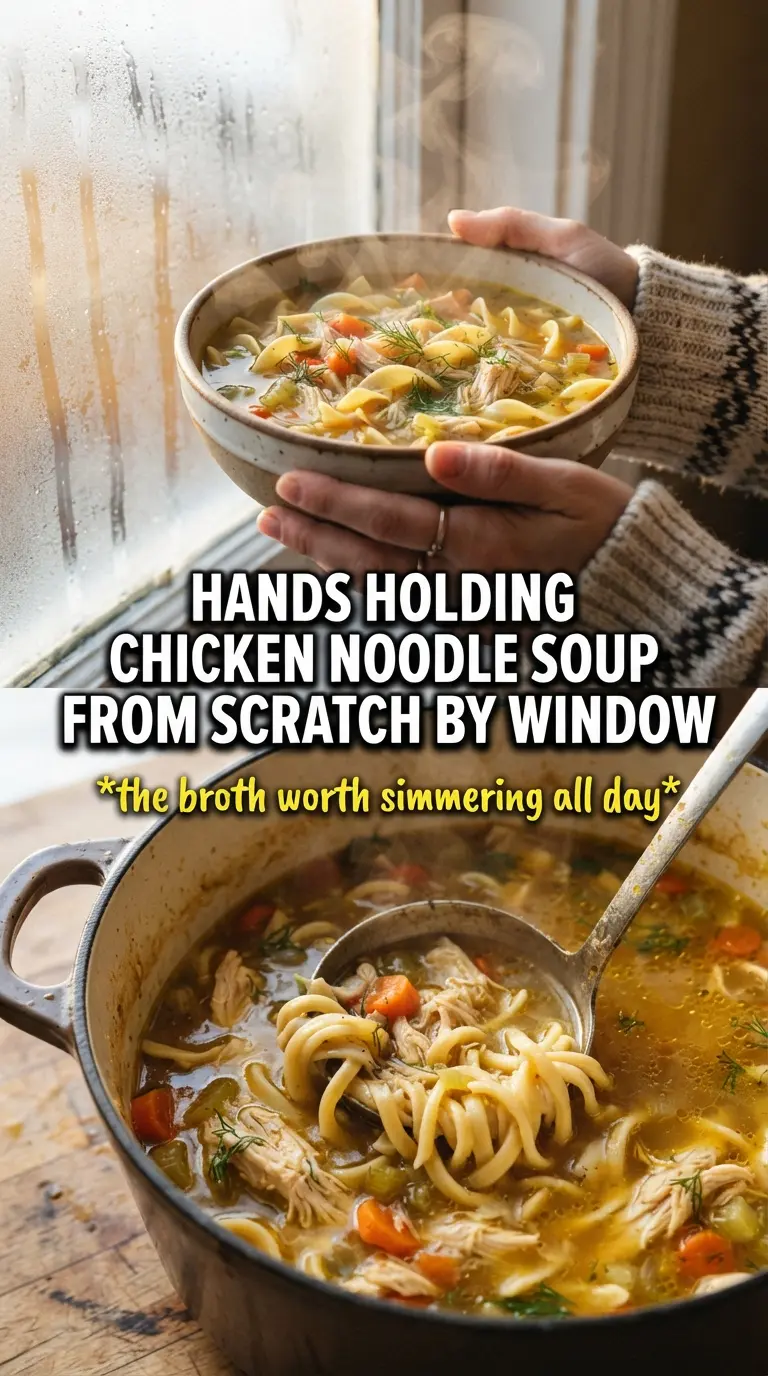
Chicken noodle soup from scratch earns its place because the broth tastes deep and clean instead of flat, and the noodles stay supported by real chicken flavor instead of disappearing into salted water. The difference starts with the whole chicken and the long simmer. That gives you a broth with body, not just broth-colored liquid, and it’s why the finished soup feels comforting without being heavy.
The trick is to build the broth first, strain it well, and only then add the fresh vegetables and noodles. If you cook the noodles from the start, they go soft and cloud the pot. If you season too early, the broth can tighten up as it reduces and throw off your final balance. This version keeps the parts in the right order so each one tastes like itself and the soup still comes together as one bowl.
You’ll also find a few practical notes below on keeping the noodles from getting bloated, what to swap if you don’t have a whole chicken, and how to store leftovers without losing that homemade texture.
The broth came out darker and richer than the boxed stuff I usually use, and the noodles held up great even the next day. My husband went back for a second bowl and said it tasted like the kind of soup you get when someone has actually simmered it all afternoon.
Save this chicken noodle soup from scratch for the kind of bowl that starts with a whole chicken broth and ends with tender noodles, shredded chicken, and fresh herbs.
The broth starts here, not the noodles
If the broth tastes thin, the whole soup tastes thin. That’s the mistake most people make when they rush to add vegetables and noodles too early. A whole chicken simmered with onion, carrot, celery, garlic, peppercorns, bay, and thyme gives you a broth with enough structure to stand up to the pasta later. Skimming the foam in the first part of the simmer helps keep the broth clear instead of muddy.
The other thing that matters is heat. A hard boil can make the broth cloudy and can tighten the chicken before it has time to give up flavor. A slow simmer pulls out more from the bones and meat and keeps the texture of the broth cleaner. When you strain it, you’re left with a base that tastes like work, in the best way.
- Whole chicken — This is what gives the broth depth and enough natural richness to taste homemade. Bone-in pieces will work in a pinch, but a whole bird gives you a fuller, rounder pot.
- Parsley stems — Stems hold up during the long simmer and add herbal flavor without turning the broth grassy. Save the leaves for the end.
- Wide egg noodles — They’re sturdy enough to sit in hot broth without breaking apart right away. Thin noodles cook faster and soften more quickly, so shorten the final cooking time if you use them.
- Fresh parsley — Stir it in at the end for a clean, bright finish. Dried parsley won’t give the same lift, so skip it if fresh is available.
What Each Ingredient Is Actually Doing in This Recipe
- Primary ingredient (the star) — Quality matters most. Choose the best you can find.
- Cooking medium (oil, butter, or broth) — This carries flavors and prevents dryness.
- Seasonings (salt, pepper, spices, herbs) — Layer flavors so nothing overpowers. Build depth gradually.
- Aromatics (garlic, onion, herbs) — Cook with fat to bloom flavors. Become the foundation.
- Supporting ingredients — Complement the main ingredient without overpowering it.
- Sauce or liquid (if applicable) — Brings flavors together. Balance richness with acid.
- Acid (lemon, vinegar, wine, or other) — Brightens and prevents flat-tasting results.
- Final finish (garnish, glaze, or sauce) — Prevents one-dimensional taste and adds visual appeal.
The 20 minutes that keep the noodles from going soft
First, put the whole chicken and broth ingredients in cold water and bring everything up together. Starting with cold water helps the flavor move out of the chicken slowly, which gives you a cleaner broth. Once it boils, lower the heat until the liquid is barely moving. If the pot is bubbling hard, the broth will turn cloudy and the chicken can get stringy before it gets tender.
Building the broth
Let the chicken simmer until it’s very tender and the meat pulls away easily from the bones. Don’t chase an exact minute count if your chicken is a little larger or smaller; the real test is how easily the meat shreds. Skim foam early, then leave the pot alone. Constant stirring can break up the vegetables and muddy the broth.
Straining and shredding
Strain the broth and discard the used vegetables. They’ve done their job by then and won’t add much more. Remove the chicken meat while it’s still warm enough to handle, shred it into bite-size pieces, and discard any dry bits of skin or cartilage. If you return undercooked meat to the soup too soon, it won’t have the same tender texture as the long-simmered broth.
Cooking the vegetables and noodles
Bring the strained broth back to a simmer before adding the fresh carrots, celery, and onion. They need that short head start so they’re tender by the time the noodles are done. Add the egg noodles only after the vegetables begin to soften, then cook until they’re just tender. If they cook past that point, they’ll swell and drink up too much broth.
Bringing it together
Stir the shredded chicken and parsley back in at the end and taste for salt and pepper. The broth should taste bright, savory, and a little deeper than you expect before the noodles go in, because the pasta will soften the flavor slightly. If the soup tastes flat, it usually needs salt, not more simmering. Let it sit off the heat for a few minutes before serving so the broth settles and the flavors come together.
How to adapt this soup when you’re missing an ingredient
Use chicken thighs instead of a whole chicken
Bone-in thighs give you a rich broth and tender meat, even though you’ll lose a little of the layered flavor that comes from a whole bird. Use enough to fill the pot in a single layer, then shred the meat after it’s cooked through. The broth may be slightly less complex, but it will still taste fuller than one made from boneless chicken alone.
Make it gluten-free
Swap in a gluten-free pasta that holds its shape in broth, or use cooked rice if you want something more forgiving. Gluten-free noodles can go from firm to mushy fast, so add them at the very end and serve the soup soon after. Rice changes the soup into something softer and more brothy, but it still works well.
Make it dairy-free and lighter
This soup is naturally dairy-free, so the main change is just keeping the broth clean and avoiding buttery noodles or add-ins. If you want a lighter bowl, use a little less pasta and a few more carrots and celery. You’ll get a soup that feels brothy and balanced instead of starchy.
Store it without losing the noodles
Chicken noodle soup keeps best when you store the broth, chicken, and noodles separately. If everything sits together overnight, the noodles keep pulling in liquid and can turn soft. Refrigerate the soup for up to 4 days, freeze the broth and chicken for up to 3 months, and cook fresh noodles when you reheat. Warm the broth first, then add the noodles just long enough to heat through so they stay springy.
Questions I Get Asked About This Recipe

Chicken Noodle Soup From Scratch
Ingredients
Equipment
Method
- Place the whole chicken and all broth ingredients in a very large pot with cold water. Bring to a boil over high heat, skim foam from the surface, and reduce to a simmer.
- Simmer the broth for 1.5 hours until the chicken is very tender. Skim occasionally to keep the broth clearer as it reduces.
- Strain the broth through a fine strainer and discard the used vegetables. Remove all meat from the chicken and shred it into bite-size pieces.
- Return the clear broth to the pot and taste. Season with salt to get the base flavor right.
- Bring the broth to a simmer, then add the sliced carrots, sliced celery, and diced onion. Stir so the vegetables are evenly distributed.
- Cook for 10 minutes at a steady simmer until the vegetables are tender. Keep the liquid gently bubbling, not rapidly rolling.
- Add the wide egg noodles and cook for 6 to 8 minutes. Stir occasionally to prevent sticking.
- Add the shredded chicken and chopped fresh parsley, then cook 1 to 2 minutes. Adjust seasoning with salt and pepper and serve hot.