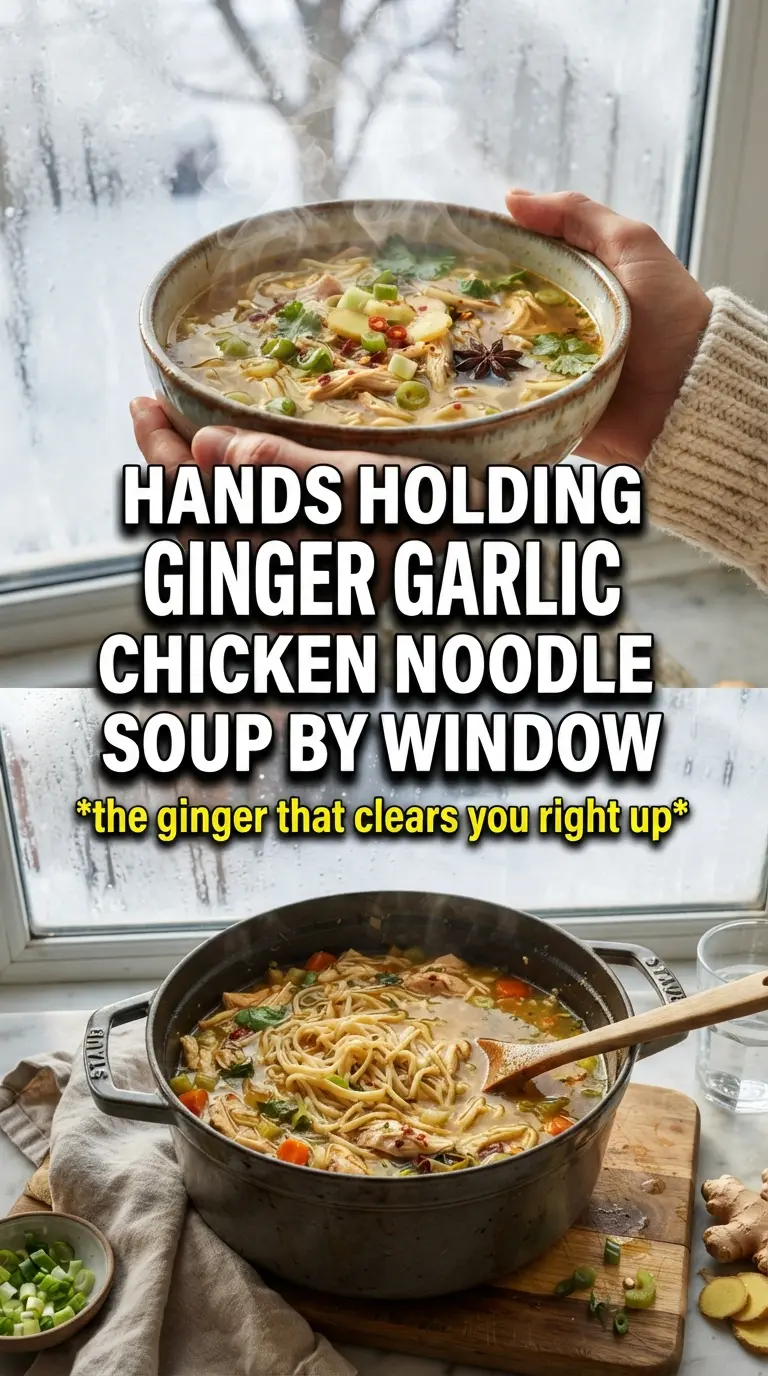
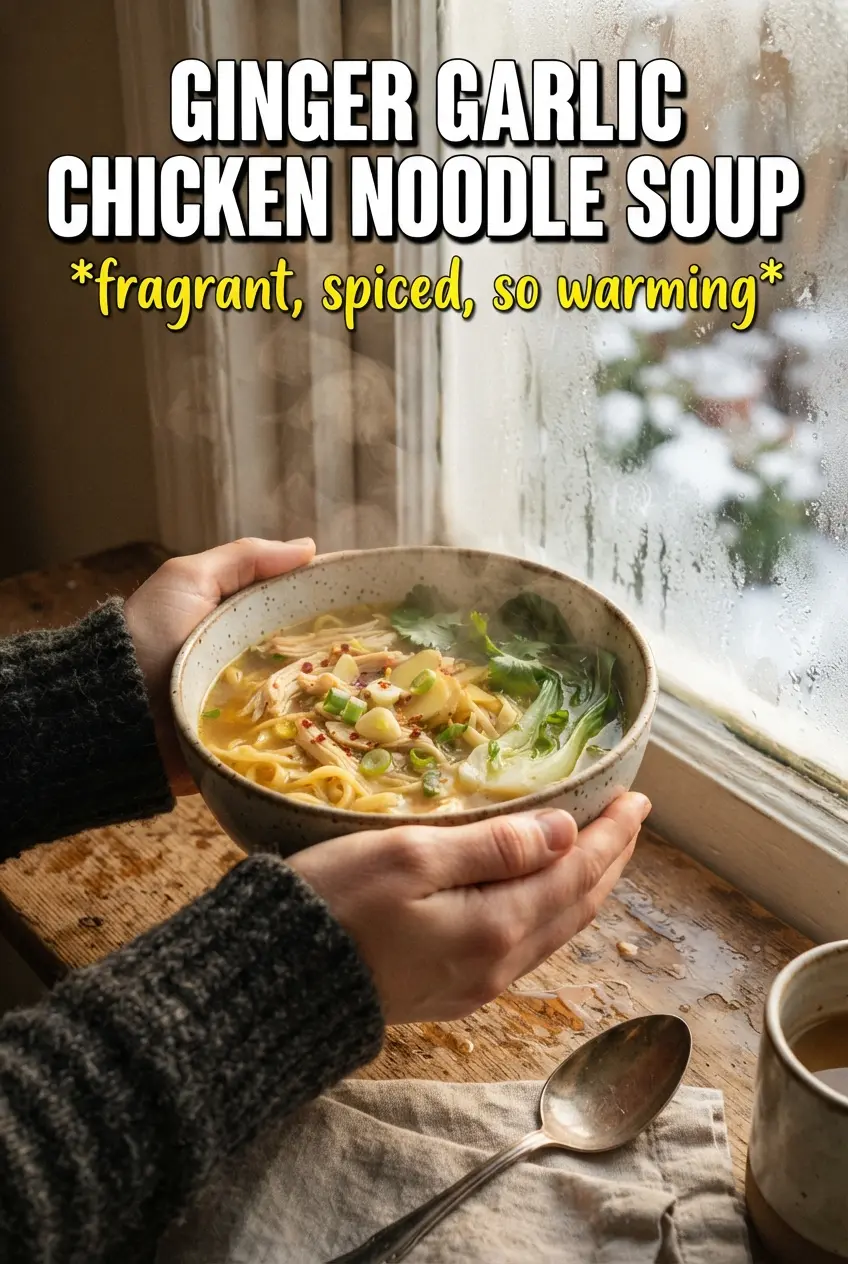
Clear, golden broth with shredded chicken, tender noodles, and the kind of ginger-garlic aroma that wakes up the whole pot — this is the bowl people end up going back to for seconds. The broth stays clean and bright instead of muddy, and the vegetables keep enough bite to give the soup some structure. It’s the kind of noodle soup that tastes like it simmered all day, even though it comes together fast.
The trick is building the base in stages. Onion, carrots, and celery soften first, then the garlic and ginger go in just long enough to turn fragrant without scorching. That short window matters because burned garlic will take over the broth, while undercooked ginger can taste sharp instead of warm. A little soy sauce deepens the broth, sesame oil goes in at the end for aroma, and rice vinegar gives the finished soup a lift so it doesn’t taste flat.
Below I’ve included the timing that keeps the chicken tender, the noodle step that prevents mush, and a few swaps that still keep the soup balanced if you’re working with what’s in the pantry.
The broth had such a clean ginger-garlic taste, and the noodles stayed perfect because I added them right at the end. My husband went back for a second bowl before I even sat down.
Save this ginger garlic chicken noodle soup for the nights when you want a clear, comforting broth with tender chicken and noodles that don’t turn soggy.
The Secret to Keeping the Broth Clear Instead of Cloudy
The biggest mistake with chicken noodle soup is boiling it hard from the start. That turns the broth cloudy and can make the chicken stringy before it’s fully cooked. A steady simmer is enough here. It pulls flavor from the chicken and vegetables without beating the broth into something dull and heavy.
The other thing that matters is when the noodles go in. If they cook in the pot for too long, they steal broth and turn soft fast. Add them only after the chicken is shredded and returned to the pot, then cook just until tender. That keeps the soup balanced from the first bowl to the last.
- Chicken thighs or breast — Thighs stay juicier and give the broth a little more body, while breast meat keeps the soup leaner. Either works, but if you use breast, pull it as soon as it’s cooked through so it doesn’t dry out.
- Fresh ginger and garlic — These are the backbone of the broth. Fresh matters here; powdered versions won’t give you the same bright heat or fragrance, and the soup will taste flatter.
- Soy sauce — This adds salt and depth in one move. Use regular soy sauce for the most balanced result; low-sodium is fine if you want more control over seasoning.
- Sesame oil — This goes in at the end because its job is aroma, not cooking. Heat will dull it, so stir it in after the noodles are tender and the pot is off the boil.
- Ramen or egg noodles — Either one works, but ramen cooks faster and softens more quickly. If you plan on leftovers, egg noodles usually hold their texture a little better.
What Each Ingredient Is Actually Doing in This Recipe
- Primary ingredient (the star) — Quality matters most. Choose the best you can find.
- Cooking medium (oil, butter, or broth) — This carries flavors and prevents dryness.
- Seasonings (salt, pepper, spices, herbs) — Layer flavors so nothing overpowers. Build depth gradually.
- Aromatics (garlic, onion, herbs) — Cook with fat to bloom flavors. Become the foundation.
- Supporting ingredients — Complement the main ingredient without overpowering it.
- Sauce or liquid (if applicable) — Brings flavors together. Balance richness with acid.
- Acid (lemon, vinegar, wine, or other) — Brightens and prevents flat-tasting results.
- Final finish (garnish, glaze, or sauce) — Prevents one-dimensional taste and adds visual appeal.
Building the Soup in the Right Order
Softening the Vegetables First
Start by cooking the onion, carrots, and celery in oil until the onion turns translucent and the carrots begin to lose their raw edge. This first step builds sweetness in the broth later. If you rush it, the soup will taste like broth with vegetables floating in it instead of a real base with depth.
Waking Up the Ginger and Garlic
Add the garlic and ginger next and cook just until fragrant, about 2 minutes. You want the kitchen to smell warm and sharp, not browned or bitter. If the garlic starts taking on color, lower the heat immediately; burned garlic will shadow the whole pot.
Simmering the Chicken Gently
Pour in the broth, soy sauce, and chicken, then bring it to a boil only once before lowering it to a steady simmer. The chicken should cook through in about 20 minutes, depending on thickness, and it’s ready when the center is no longer pink and it shreds without resistance. A hard boil will tighten the meat and cloud the broth, so keep the bubbles gentle.
Finishing With Noodles and Brightness
Pull the chicken out to shred it, return it to the pot, then add the noodles and cook only until tender. Stir in the sesame oil and rice vinegar at the very end so the aroma stays fresh and the broth gets a little lift. Taste before serving and adjust the salt; noodles always drink up more seasoning than you expect.
How to Adapt This for What’s in Your Kitchen
Make it dairy-free and naturally gluten-free
This soup already fits both of those goals if you use a gluten-free soy sauce or tamari and choose rice noodles or a certified gluten-free noodle. The broth stays just as comforting, and you don’t lose any of the ginger-garlic backbone.
Use rotisserie chicken for a faster weeknight version
Skip the raw chicken simmer and stir in shredded cooked chicken after the vegetables and broth have simmered together for about 15 minutes. The soup will taste a little lighter, but it cuts the cook time and still gives you a solid, homemade result.
Swap the noodles without changing the method
Egg noodles, ramen, rice noodles, or even thin udon can all work here. Just follow the package timing and pull them a minute early if you plan to keep leftovers, since they’ll continue softening in the hot broth.
Add more vegetables without muddying the broth
Mushrooms, baby spinach, or bok choy fit in well if you add them near the end. Denser vegetables like sliced mushrooms can simmer with the broth, but leafy greens should go in during the last minute so they stay bright and don’t disappear into the soup.
Storage and Reheating
- Refrigerator: 4 days. The noodles will soften as they sit, so the soup is best on day one or two.
- Freezer: Freeze the broth, chicken, and vegetables without the noodles for the best texture. Add fresh noodles after thawing and reheating.
- Reheating: Warm it gently on the stove over medium-low heat until steaming. If it was stored with noodles, add a splash of broth or water so they loosen up instead of clumping together.
Answers to the Questions Worth Asking
Ginger Garlic Chicken Noodle Soup
Ingredients
Equipment
Method
- Heat 1 tablespoon sesame oil in a large pot over medium heat, then sauté onion, carrots, and celery for 4 minutes, until slightly softened and glossy.
- Add garlic and grated ginger and cook for 2 minutes, stirring until very fragrant and aromatic.
- Add chicken broth, soy sauce, and chicken to the pot, bring to a boil, then simmer for 20 minutes until the chicken is cooked through.
- Remove the chicken to a plate and shred it, then return the shredded chicken to the pot.
- Add ramen noodles or egg noodles and cook for 3-5 minutes, stirring until tender and the broth looks lightly thickened.
- Stir in sesame oil and rice vinegar, then season with salt and pepper to taste until balanced.
- Ladle into bowls and top with green onions, cilantro, and sesame seeds for garnish.