Lasagna soup with spaghetti sauce gives you all the comfort of a baked pan of lasagna without the layering, the long bake time, or the heavy cleanup. The broth turns rich and tomato-forward, the noodles stay pleasantly slurpy, and the sausage gives every spoonful that savory, satisfying edge that makes people go back for another bowl. The ricotta and mozzarella on top finish it the same way a baked casserole does, with creamy pockets that melt into the hot soup.
The trick here is starting with a good jarred spaghetti sauce and building on it instead of trying to reinvent it. That sauce already carries garlic, herbs, and tomato depth, so the broth needs only a few supporting ingredients: broth for body, diced tomatoes for a little texture, and lasagna noodles broken into pieces so every bite feels like the real thing. If the soup tastes flat, it usually needs salt at the end more than another handful of seasoning, because the pasta and cheese will absorb a lot as the pot sits.
Below you’ll find the small details that keep the noodles from turning mushy and the cheese topping from disappearing into the bowl. Those are the two places this recipe can go sideways, and they’re both easy to control once you know what to watch for.
The broth was rich without tasting heavy, and the broken noodles stayed tender instead of falling apart. My husband said it tasted like lasagna night in a bowl, and the ricotta on top made it feel extra special.
Save this lasagna soup for the nights when you want all the comfort of lasagna in one easy pot.
The Broth Starts With the Jar, But It Shouldn’t Taste Like One
The jarred spaghetti sauce is doing half the work here, which is exactly why this soup gets on the table fast. The mistake is treating it like a finished sauce instead of a base. Once you add broth, tomatoes, and the browned meat, the flavor opens up and the soup tastes layered instead of canned.
Watch the simmer. A hard boil can break down the noodles too fast and make the broth cloudy in a heavy, mushy way. A steady simmer gives the pasta time to soften while the sauce and broth blend into one pot. If the soup tastes too thick, add a splash more broth at the end. If it tastes thin, let it sit uncovered for a few minutes before serving so the broth tightens up.
What Each Ingredient Is Actually Doing in This Dish
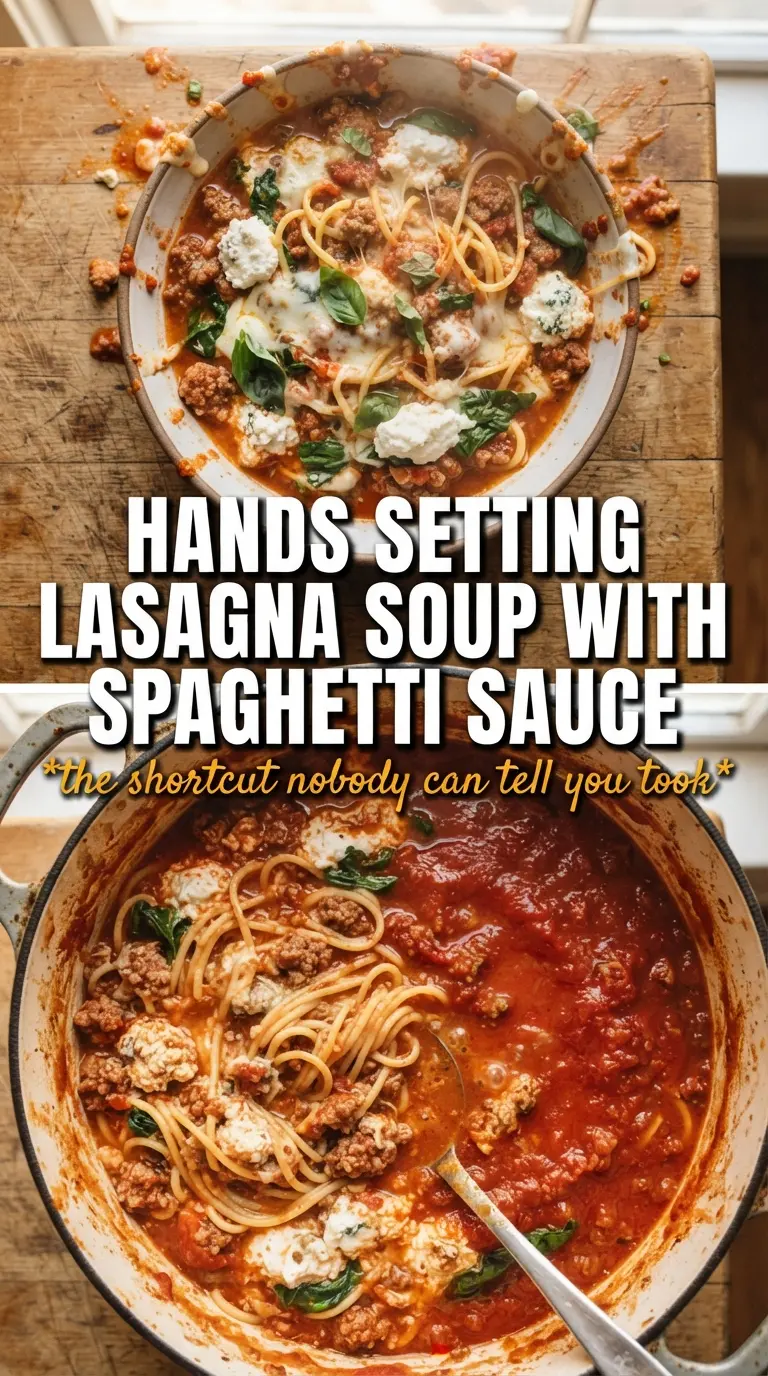
- Italian sausage or ground beef — Sausage gives the pot built-in seasoning and a little richness, while ground beef keeps the flavor more neutral. If you use beef, season the soup a little more boldly at the end because it doesn’t bring the same herb-and-fennel background.
- Spaghetti sauce — This is the shortcut that makes the recipe work. Use a brand you already like, because the soup will taste like that sauce once it’s loosened with broth. A sweeter sauce gives a softer, rounder bowl; a more acidic one tastes brighter and a little sharper.
- Diced tomatoes — These add texture and keep the soup from feeling like thin marinara. Don’t drain them. The juice helps carry the tomato flavor into the broth.
- Lasagna noodles — Break them into rough pieces, not tiny shards. You want a spoonful that feels like lasagna, not pasta rubble. If you only have regular pasta, mafaldine or broken wide noodles are the closest stand-in.
- Ricotta, mozzarella, and parmesan — This topping is what makes the bowl taste like lasagna instead of tomato soup with pasta. The ricotta stays creamy, the mozzarella melts into strings, and the parmesan sharpens the whole thing. Don’t skip the basil if you have it; it cuts through the richness.
The 20 Minutes That Actually Matter
Brown the Meat Until It Has Edges
Cook the sausage or beef in a large pot until it’s no longer pink and the browned bits stick to the bottom. That browning is flavor; if the meat stays pale, the soup tastes flat. Drain off excess fat if there’s a lot, but leave a little behind so the onion has something to cook in.
Build the Tomato Base
Add the onion and cook it until it turns translucent and soft, about 3 minutes, then stir in the garlic for just a minute. Garlic burns fast once the pot is hot, so don’t walk away here. Pour in the spaghetti sauce, diced tomatoes, broth, and seasonings, then bring everything to a boil before lowering it to a simmer.
Cook the Noodles in the Soup, Not Ahead of Time
Once the broth is simmering, add the broken lasagna noodles and cook until they turn tender, usually 10 to 12 minutes. Stir occasionally so they don’t stick together or sink into a clump at the bottom. If the pot gets too thick before the noodles are done, add a splash of broth rather than cranking the heat up.
Finish With the Cheese While the Soup Is Hot
Mix the ricotta, mozzarella, parmesan, and basil in a bowl, then spoon it over each serving right before eating. The heat from the soup softens the topping without melting it completely, which is the point. If you stir it into the whole pot, the cheese disappears and the texture gets heavy.
How to Adapt This for a Smaller Pot, a Lighter Bowl, or a Dairy-Free Version
Dairy-Free Finish
Skip the ricotta-mozzarella topping and use a spoonful of dairy-free cashew ricotta or a sprinkle of dairy-free parmesan if you have one you trust. The soup itself doesn’t need dairy to work, so you’re only changing the final finish. You lose the creamy lasagna feel, but the broth still carries the whole dish.
Gluten-Free Swap
Use gluten-free lasagna noodles and add them a minute or two later than the package suggests, since they can soften quickly in soup. Another option is gluten-free short pasta if you don’t care about the lasagna shape. The broth stays the same; the texture just needs a little closer attention.
Make It With Ground Beef
Ground beef gives you a milder, more classic red-sauce flavor. Since it doesn’t bring the seasoning that sausage does, add a little extra Italian seasoning or a pinch more red pepper flakes if the soup tastes too soft. This version is closer to a simple weeknight lasagna in soup form.
Storage and Reheating
- Refrigerator: Store leftovers in an airtight container for up to 4 days. The noodles will absorb more broth as it sits, so expect a thicker soup the next day.
- Freezer: Freeze the soup without the cheese topping for up to 2 months. The noodles soften a bit after thawing, but it still freezes well if you undercook them slightly before freezing.
- Reheating: Warm it gently on the stove over medium-low heat with a splash of broth to loosen it. The common mistake is boiling leftovers, which turns the noodles mushy and can make the sauce taste flat.
The Things That Trip People Up With This Dish
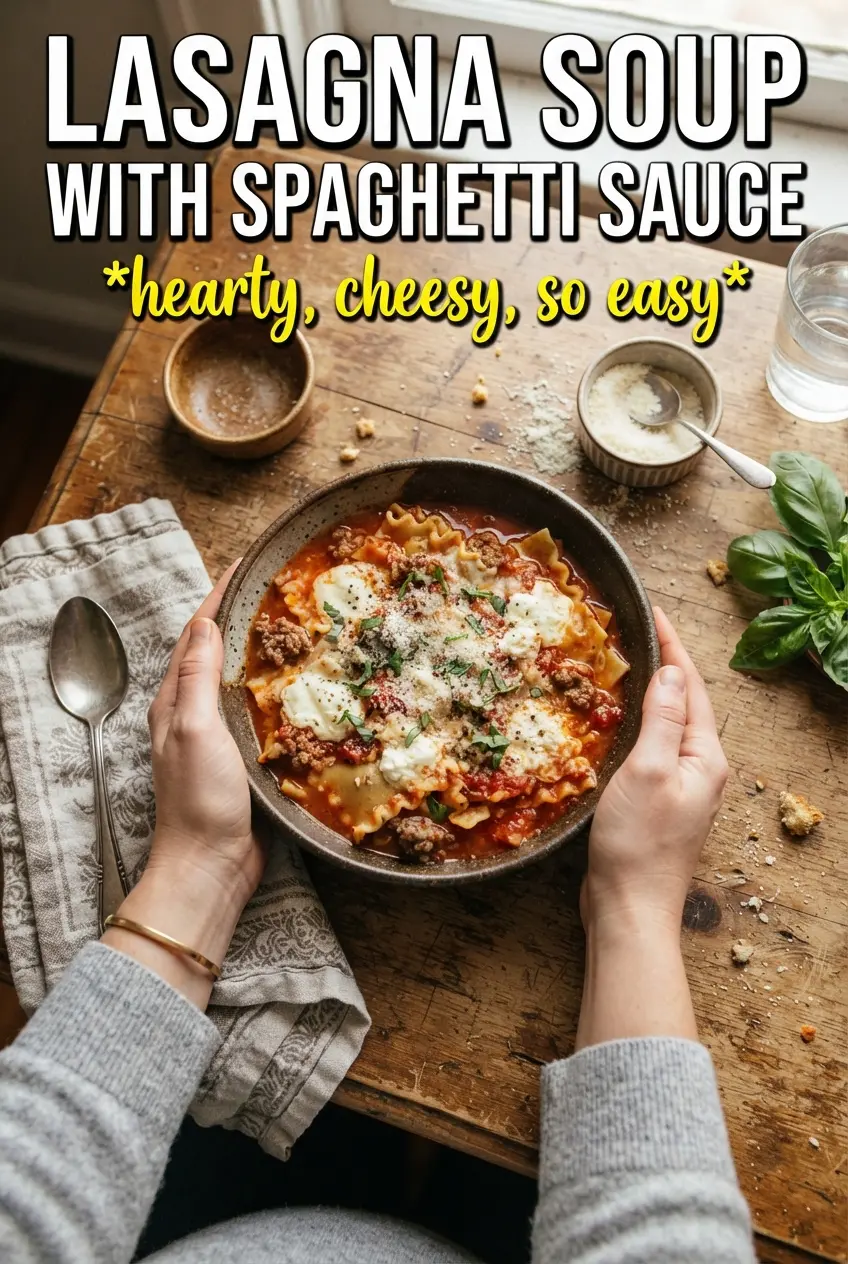
Lasagna Soup with Spaghetti Sauce
Ingredients
Equipment
Method
- Brown the Italian sausage (or ground beef) in a large pot over medium-high heat until cooked through, then drain the fat.
- Sauté the onion for 3 minutes to soften, stirring occasionally, then add the minced garlic and cook 1 minute.
- Pour in the spaghetti sauce, diced tomatoes, and broth, then stir in Italian seasoning, dried basil, and red pepper flakes.
- Bring the mixture to a boil over high heat, then add the broken lasagna noodles.
- Reduce to a simmer and cook 10-12 minutes until the noodles are tender, stirring occasionally so they don’t stick.
- Season with salt and pepper to taste.
- Mix the ricotta, shredded mozzarella, parmesan, and fresh basil until combined into a thick dollop mixture.
- Ladle the soup into bowls and top each serving with a generous spoonful of the cheese dollop.