Golden broth, tender shredded chicken, and egg noodles that stay slurpable instead of turning to mush — that’s what makes stovetop chicken noodle soup worth keeping in regular rotation. This version tastes like it simmered all afternoon, but it comes together fast enough for a weeknight and still has the kind of depth people usually expect from a much longer cook.
The trick is building the base before the broth goes in. Onion, carrot, and celery get a head start in olive oil, then garlic, thyme, garlic powder, and a little celery seed round out the broth so it tastes layered even though the ingredient list stays simple. Cooking the chicken breast whole in the broth keeps it juicy, and adding the noodles at the end keeps them from soaking up all the liquid while the soup sits.
Below you’ll find the small timing details that matter most, plus a few smart swaps if you need to work with what’s in the pantry. The soup is straightforward, but the order of each step is what keeps it clear, savory, and satisfying.
The broth was clear and rich, and the noodles stayed perfectly tender even after sitting on the stove a bit. I loved that the chicken shredded easily and the celery seed gave it that old-school soup taste without overpowering anything.
Love this clear, cozy stovetop chicken noodle soup? Save it to Pinterest for the nights when you want a fast broth, tender chicken, and noodles that stay just right.
The Reason This Soup Stays Clear Instead of Cloudy
Cloudy chicken noodle soup usually happens when the pot is boiling hard the whole time or when the noodles spend too long in the broth. This version stays cleaner because the chicken simmers gently until it’s cooked through, then the noodles go in after the chicken comes out. That keeps the broth from getting starchy and keeps the chicken from drying out while the noodles finish.
The other detail that matters is the vegetables. Letting the onion, carrot, and celery soften first gives the broth a savory base before any liquid goes in. If you rush that stage, the soup still works, but it tastes flatter and more like boiled ingredients than actual soup.
What Each Ingredient Is Actually Doing in This Bowl
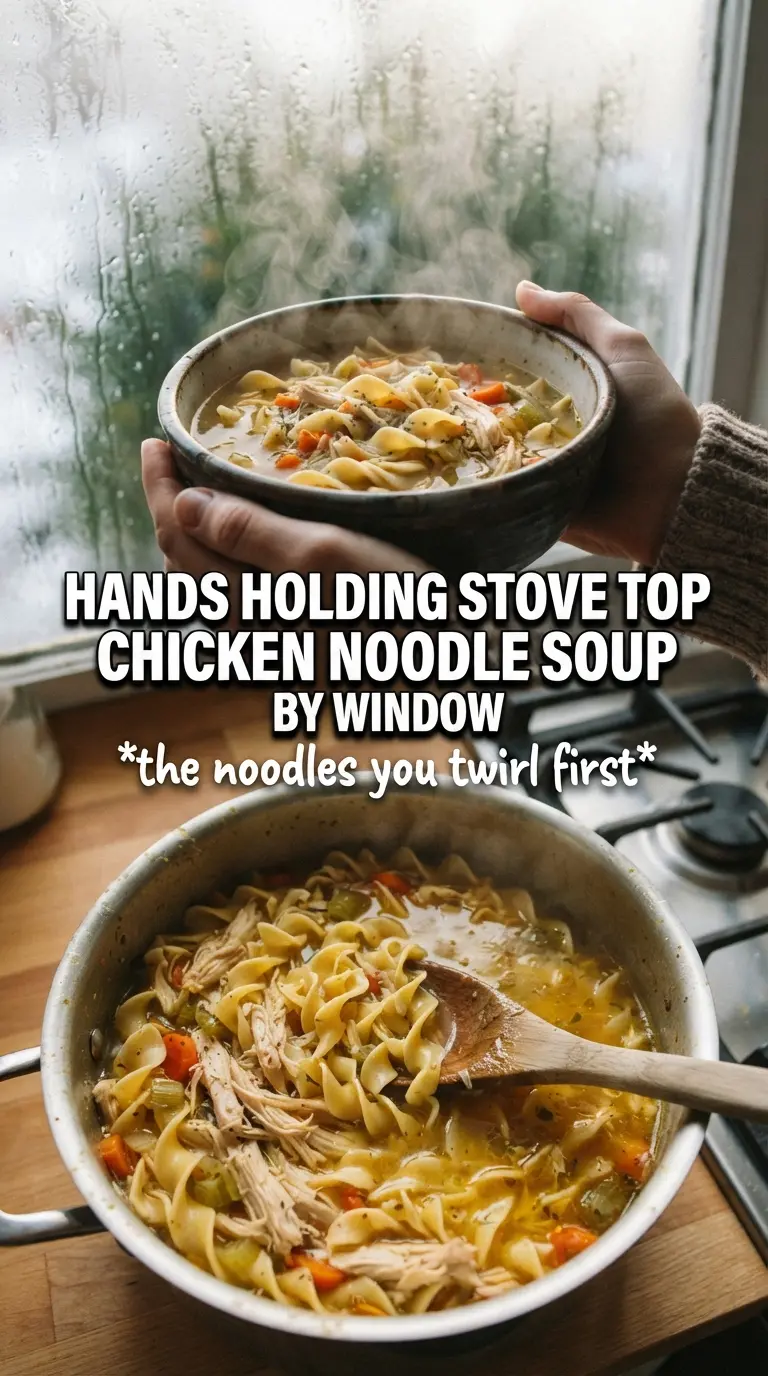
- Chicken breast — Cooking it whole in the broth keeps it tender and easy to shred. Thighs work too if you want a richer, slightly less lean soup; just simmer until they pull apart easily.
- Chicken broth — This is the backbone of the soup, so use one that tastes good on its own. If your broth is bland, the soup will be bland no matter how much seasoning you add later.
- Carrots, celery, and onion — These build the classic soup base and give the broth a little sweetness and depth. Dice the onion evenly and slice the vegetables thin so they soften at the same pace.
- Celery seed — Optional, but it gives the broth that familiar old-fashioned chicken soup flavor. If you don’t have it, the soup still works; it just tastes a little less layered.
- Egg noodles — These cook fast and turn the soup into a real meal. Add them at the end and cook just until tender, because they keep absorbing broth after the heat goes off.
- Fresh parsley — It doesn’t just look nice. It brightens the broth right before serving and keeps the soup from tasting heavy.
Building the Broth Before the Noodles Go In
Softening the Vegetables First
Warm the olive oil over medium heat, then add the onion, carrots, and celery. Cook them until the onion turns translucent and the carrots start to lose their raw edge, about 5 minutes. You’re not looking for browning here; you’re building sweetness and a little background flavor. If the pan gets too hot, the onion will take on color before the carrots soften, and the broth won’t taste as clean.
Adding the Seasoning to the Pot, Not the Bowl
Stir in the garlic and let it cook for about a minute, just until it smells fragrant. Then pour in the broth and add the thyme, garlic powder, onion powder, and celery seed. This step matters because the seasonings bloom in the heat and the broth picks up more depth than it would if everything went in at once.
Cooking the Chicken Gently
Slide the chicken breasts into the pot and bring the soup to a boil, then turn the heat down so it simmers steadily. A hard boil can toughen the chicken and break the broth into a more aggressive, cloudy look. After 18 to 20 minutes, the chicken should be fully cooked and easy to shred with two forks without any pink at the center.
Finishing With the Noodles
Pull the chicken out, shred it, and bring the soup back to a boil before adding the egg noodles. They need that hot liquid to cook quickly and evenly. Keep a close eye on them; once they’re tender, return the chicken to the pot and season generously with salt and pepper. If you add the noodles too early, they’ll keep drinking broth while the soup sits and the texture goes soft fast.
What to Change When You Need a Different Version
Dairy-Free and Naturally Gluten-Free Adjustments
The recipe already happens to be dairy-free, and it can be gluten-free if you use gluten-free egg noodles or another gluten-free pasta that holds up in broth. Cook the pasta just until tender and expect a little more breakage if you use a delicate noodle. If you want the cleanest broth, choose a noodle that doesn’t shed starch aggressively.
Using Rotisserie Chicken Instead of Raw Chicken Breast
If you already have cooked chicken, skip the simmering step and add the shredded meat after the noodles are done. That turns the soup into a faster meal, but the broth won’t have quite the same depth unless you simmer the vegetable base a little longer before adding the liquid. It’s a smart shortcut on busy nights.
Making It Heartier With More Vegetables
Add diced potatoes, peas, or extra carrots if you want a fuller soup. Potatoes should go in early so they cook through with the broth, while peas belong at the end so they stay bright. More vegetables make the soup feel heartier, but don’t crowd the pot so much that the broth loses its clean, brothy character.
Storage and Reheating
- Refrigerator: Store for up to 4 days. The noodles will keep absorbing broth, so the soup gets thicker by the next day.
- Freezer: Freezes well if you leave the noodles out and add fresh ones after thawing. If you freeze it with noodles already in the pot, they’ll turn soft and break apart when reheated.
- Reheating: Warm it gently over medium-low heat until steaming, not boiling. A hard boil will overcook the noodles and tighten the chicken, so add a splash of broth or water if the soup has thickened too much.
Answers to the Questions Worth Asking

Stovetop Chicken Noodle Soup
Ingredients
Equipment
Method
- Heat the olive oil in a large heavy-bottomed pot over medium heat, then sauté the onion, carrots, and celery for 5 minutes, stirring until fragrant and slightly softened.
- Add the garlic and cook for 1 minute, then add the chicken broth, dried thyme, garlic powder, onion powder, and celery seed and stir to combine.
- Add the whole chicken breasts and bring the soup to a boil, then reduce the heat to a gentle simmer and cook for 18–20 minutes until the chicken is fully cooked.
- Remove the chicken from the pot and shred it with two forks.
- Bring the soup back to a boil, add the egg noodles, and cook for 6–8 minutes until tender.
- Return the shredded chicken to the pot and stir to warm through.
- Season generously with salt and pepper, then garnish with fresh parsley before serving.