Golden broth, tender chicken, and soft noodles make this soup feel like a reset button in a bowl. The turmeric gives the broth a warm color and a gentle earthiness, while ginger, garlic, lemon, and a small splash of apple cider vinegar keep every spoonful bright instead of flat. It tastes clean and restorative, but still has the kind of depth that comes from simmering bone-in chicken thighs until the meat practically falls apart.
What makes this version work is balance. Bone-in thighs give the broth more body than boneless chicken breasts ever will, and the skin and bones add richness while the vegetables and herbs build the base. The lemon, vinegar, and honey go in at the end for a reason: if you add them too early, they fade during the simmer. Added after the noodles are tender, they wake everything up without making the soup sour.
Below, I walk through the small details that matter most, including when to add the kale, how to keep the noodles from turning mushy, and the easiest swaps if you want to use spinach instead.
The broth had such a nice golden color and the ginger came through without taking over. I added the lemon at the end like you said and it kept the soup bright even after reheating the next day.
Save this turmeric-ginger chicken noodle soup for the days you want a bright, brothy bowl with tender chicken and lemon at the finish.
The Broth Needs Time Before the Noodles Go In
Chicken noodle soup fails for one of two reasons: the broth tastes thin, or the noodles turn bloated and soft before you get to the table. This version avoids both by building the broth first and adding the noodles only after the chicken has fully tenderized. That order matters. The chicken needs the full simmer to give the broth body, but the noodles need just enough time to cook through without stealing the texture of the whole pot.
The other mistake people make is rushing the seasoning. Turmeric, thyme, pepper, and cayenne are all added early so they can infuse the broth, but lemon juice, apple cider vinegar, and honey go in at the end. Acid loses its brightness during a long simmer, and sweetness gets muted too. Finish the soup after the noodles and greens are done, then taste again. That last adjustment is what turns a decent soup into one that tastes alive.
What Each Ingredient Is Actually Doing in This Soup
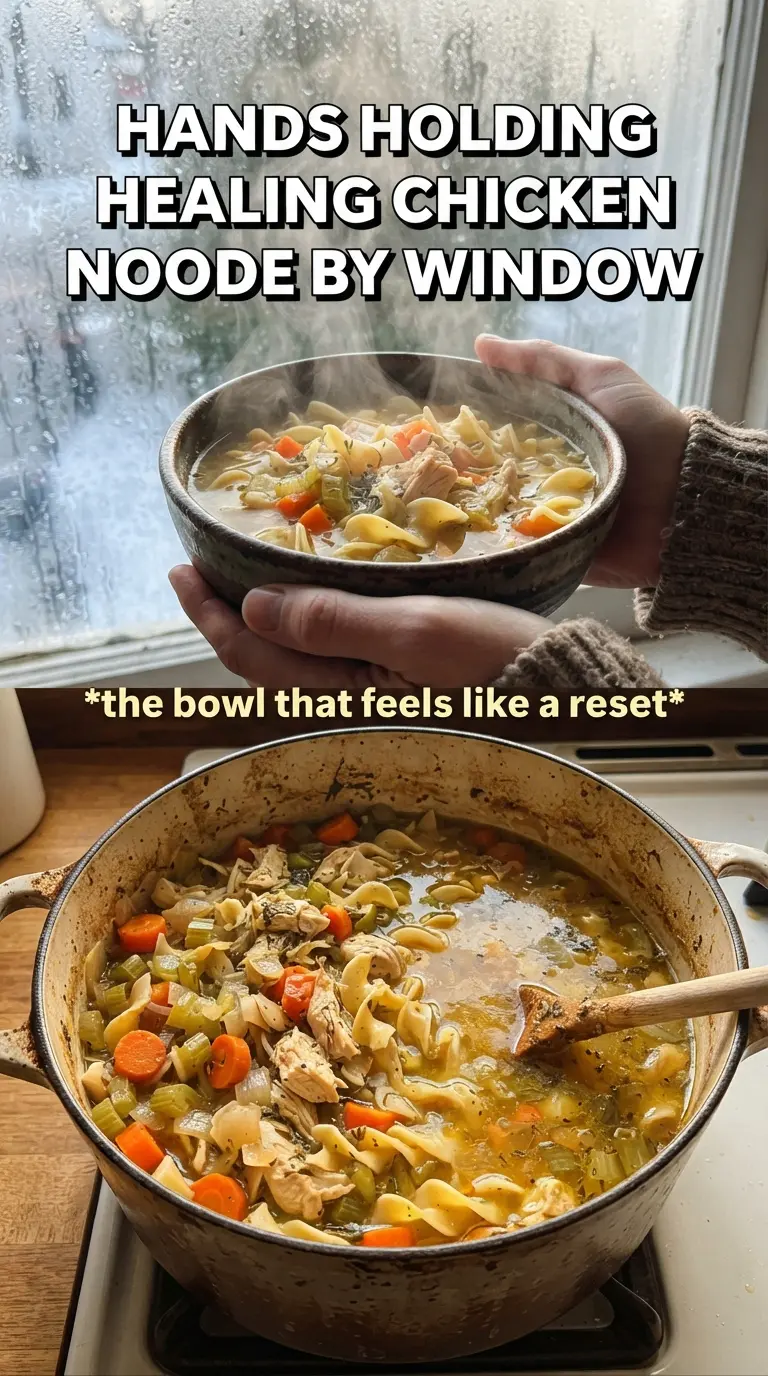
- Bone-in chicken thighs — These give you a deeper, silkier broth than boneless chicken ever will. The bones and connective tissue simmer into the liquid and the meat stays tender. If you only have boneless thighs, use them, but the broth will be a little lighter and you may want an extra pinch of salt at the end.
- Fresh ginger and garlic — This is the part that makes the soup taste restorative instead of bland. Fresh ginger brings warmth and a clean bite that dried ginger can’t match here, and garlic rounds it out. If your ginger is old and fibrous, grate it finely so it disappears into the broth instead of floating in strings.
- Turmeric — It adds that golden color and a subtle earthy note. You don’t need much. Too much turmeric turns the broth dusty and bitter, so keep it to the measured amount.
- Kale or spinach — Kale holds up better in leftovers and gives the soup a little chew. Spinach is softer and works fine if you’re serving the soup right away, but it will collapse much faster.
- Egg noodles — These soak up broth fast, which is great when the soup is fresh and not so great the next day. If you know you’ll have leftovers, cook the noodles separately and add them to each bowl.
How to Build the Soup So the Broth Stays Bright and the Chicken Stays Tender
Start with the Long Simmer
Combine the chicken, carrots, celery, onion, garlic, ginger, broth, turmeric, thyme, black pepper, and cayenne in a large pot, then bring it to a boil before lowering it to a steady simmer. You want the surface moving gently, not raging. A hard boil can make the chicken stringy and cloud the broth more than necessary. After about 30 minutes, the meat should pull apart easily at the bone and the vegetables should be tender but not collapsed.
Shred the Chicken While It’s Still Warm
Lift the chicken out, let it cool just enough to handle, then shred the meat and discard the bones and skin. Returning the shredded meat to the pot while it’s still warm helps it soak up the broth. If the chicken is stubborn and doesn’t pull apart cleanly, it needs a few more minutes. Undercooked thighs shred poorly and give you chewy pieces instead of soft, juicy ones.
Cook the Noodles at the End
Add the egg noodles only after the chicken is back in the pot. They usually need 6 to 8 minutes, but the real cue is texture: they should be tender with a little bite left, not floppy. If you let them go too long, they’ll keep softening in the hot broth even after the burner is off. That’s the fastest way to lose the texture of the soup.
Finish With Acid, Honey, and Greens
Stir in the kale and let it wilt for about 3 minutes, then add the lemon juice, apple cider vinegar, and honey. Taste after that and salt the soup at the end. The broth should taste rounded, bright, and lightly savory, with no single note taking over. If it tastes dull, it usually needs more salt before it needs more lemon.
How to Adapt This for What’s in Your Kitchen
Spinach Instead of Kale
Use spinach if you want a softer green and a shorter finish. Stir it in during the last minute of cooking, just until it wilts. It won’t give you the same hearty texture as kale, but it keeps the broth lighter and more delicate.
Make It Gluten-Free
Swap the egg noodles for gluten-free noodles that hold their shape well, or serve the soup over rice. Gluten-free pasta can go mushy faster than regular noodles, so cook it separately if you want the cleanest texture.
Use Chicken Breast Instead
Chicken breast works in a pinch, but it needs less time than thighs. Pull it out as soon as it’s cooked through and shred it before adding it back. Breast meat is leaner, so the broth will taste a little less rich unless you compensate with a bit more broth quality or a touch more salt at the end.
Storage and Reheating
- Refrigerator: Store for up to 4 days. The noodles will continue to absorb broth, so expect a thicker soup on day two.
- Freezer: Freeze well without the noodles for the best texture. If you freeze it as written, the noodles will soften a lot when reheated.
- Reheating: Warm gently on the stove over medium-low heat until steaming. If the soup has thickened, add a splash of broth or water before heating. High heat can make the chicken dry and push the noodles past their best texture.
Answers to the Questions Worth Asking
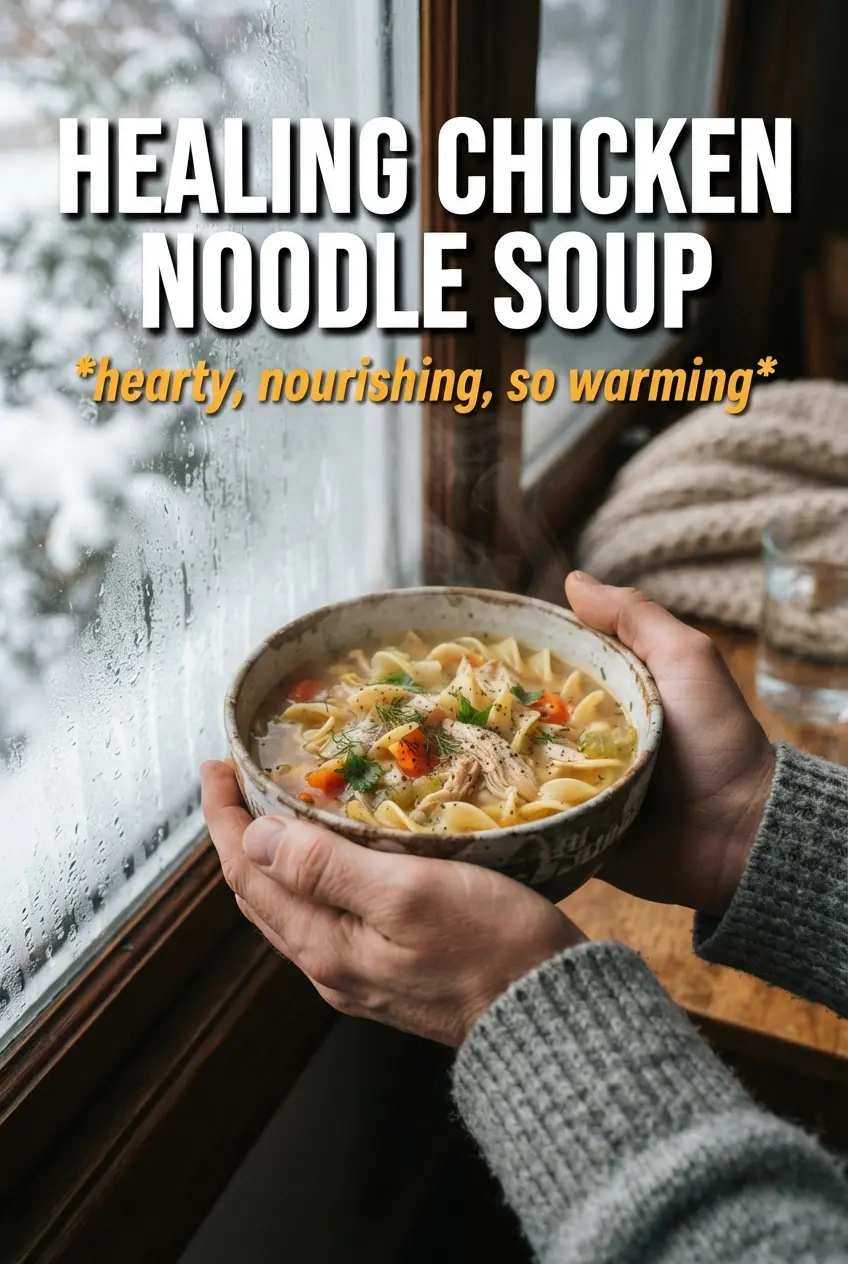
Healing Chicken Noodle Soup
Ingredients
Equipment
Method
- Add chicken thighs, carrots, celery, onion, garlic, ginger, chicken broth, turmeric, dried thyme, black pepper, and cayenne to a large pot. Bring to a boil over high heat, then reduce to a simmer.
- Simmer for 30 minutes, until the chicken is very tender. Skim any foam if you see it, and keep the broth at a gentle bubbling pace.
- Remove the chicken from the pot and let it cool slightly, then shred the meat. Discard bones and skin, and return the shredded chicken to the pot.
- Add egg noodles and cook for 6-8 minutes, until tender. Stir occasionally so noodles don’t stick to the bottom.
- Stir in kale or spinach and cook for 3 minutes, until wilted. Keep the heat at a steady simmer.
- Stir in lemon juice, apple cider vinegar, and honey, then season with salt to taste. Taste and adjust salt if needed.
- Serve hot with extra lemon wedges and fresh parsley. Keep the topping bright so it pops on the surface of the broth.