Juicy nectarine slices tucked under a buttery crumb topping bake into something that lands between a pie and a coffee cake, with crisp edges, soft fruit, and just enough cinnamon to make the whole tart smell like it belongs on a bakery counter. The refrigerated crust keeps the base simple, but the finished dessert still looks polished enough to bring to a dinner table without any fuss.
What makes this tart work is the balance between the fruit filling and the crumb topping. The cornstarch catches the nectarine juices before they run loose, and the lemon juice keeps the flavor bright instead of flat. Cold butter in the topping matters too; if it softens before baking, you lose those sandy little clusters and end up with a heavy layer instead of a crisp crumble.
Below, I’ve included the little details that keep the crust from turning soggy and the topping from melting into the fruit. If you’ve got ripe stone fruit on the counter, this is one of the best ways to use it.
The nectarines stayed tender without turning watery, and the crumb topping baked up with those little crisp bits my husband kept picking off the top.
Save this Nectarine Crumb Tart for the kind of dessert that turns ripe stone fruit into a buttery, cinnamon-strewn slice.
The Secret to Keeping Nectarine Juice in the Tart, Not the Pan
Nectarines release a lot of juice once they hit heat, and that’s where most fruit tarts go wrong. If the filling is under-thickened, the juices run into the crust and soften the bottom before the tart has time to set. Cornstarch fixes that, but only if it’s evenly coated on the fruit and the tart bakes long enough for the filling to bubble. Bubbling matters here. It tells you the starch has reached the temperature it needs to thicken properly.
The other mistake is slicing the tart too soon. Hot fruit filling looks set at the edge but still needs time to firm up as it cools. Give it at least 30 minutes on the counter so the slices hold together and the juices settle instead of flooding the plate.
What Each Ingredient Is Actually Doing in This Tart
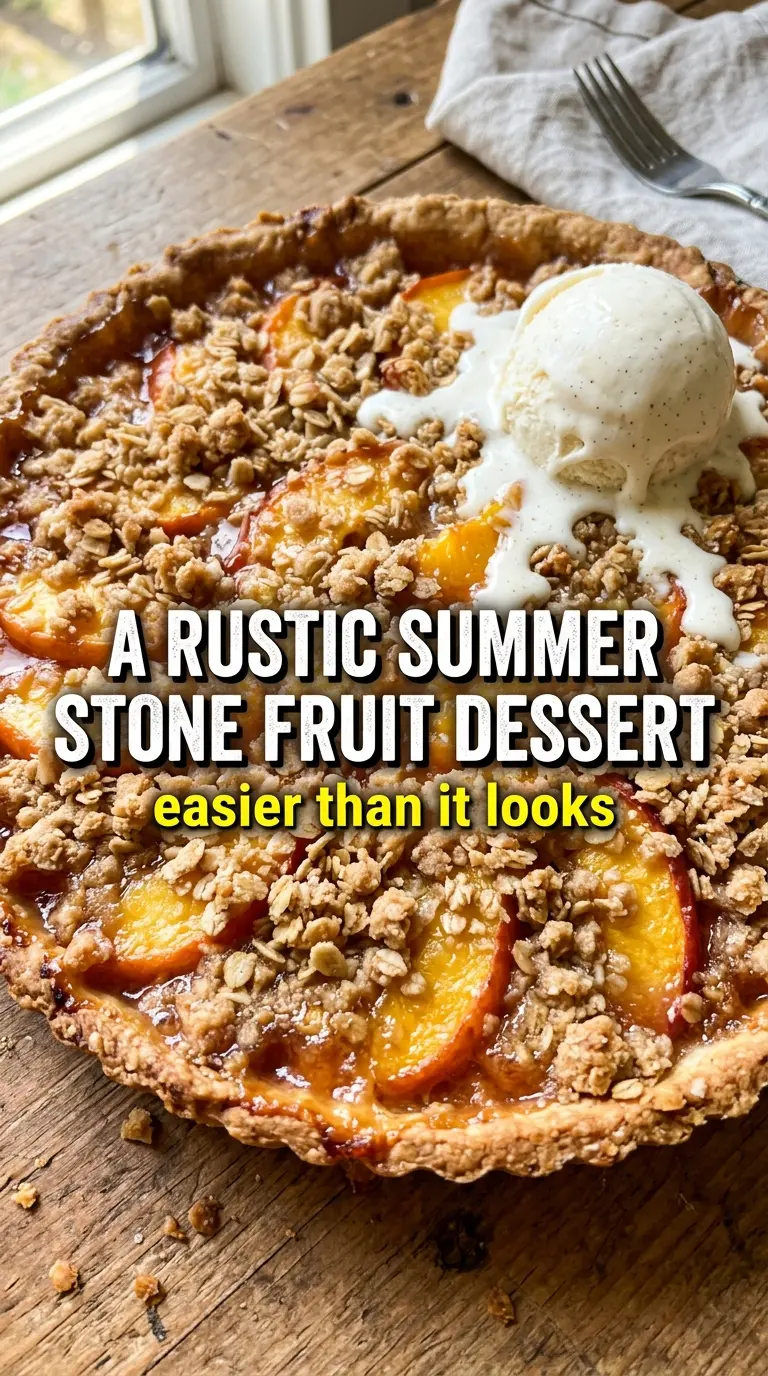
- Refrigerated pie crust — This keeps the recipe simple and gives you a sturdy base without making pastry from scratch. A store-bought crust works fine here because the topping and fruit are the real draw. Let it soften just enough to press into the tart pan without cracking.
- Nectarines — Use ripe fruit with some give, but not fruit that’s collapsing in your hand. Too firm and the tart tastes flat; too soft and the filling turns mushy. If your nectarines are very juicy, the cornstarch becomes even more important.
- Cornstarch — This is what turns the nectarine juices into a glossy filling instead of a puddle. Flour won’t thicken as cleanly here and can leave the fruit cloudy. Toss it thoroughly with the sugar before baking so it distributes evenly.
- Cold butter for the crumb — The butter should stay in small pieces as you cut it into the flour mixture. Those cold bits melt in the oven and create the crisp, sandy crumble on top. If the butter gets warm, the topping bakes up dense instead of crumbly.
Building the Filling and Topping Without Losing the Crust
Pressing and Prebaking the Shell
Press the pie crust evenly into the tart pan and prick the bottom with a fork so steam has somewhere to go. You do not need to fully blind-bake it for this tart, but the pricks help keep the center from puffing while the fruit bakes. If the crust tears, patch it with a small piece of extra dough and press it flat with your fingers.
Coating the Fruit Properly
Toss the nectarine slices with the sugar, cornstarch, lemon juice, and cinnamon until every piece looks lightly coated. You want the mixture to look a little glossy, not wet and sloshy. If you see dry pockets of cornstarch at the bottom of the bowl, keep tossing; those clumps can turn gummy in the finished tart.
Making the Crumb Topping
Combine the flour, brown sugar, cinnamon, and salt, then cut in the butter until the mixture looks like coarse crumbs with a few pea-sized pieces. Those larger bits are what give you texture after baking. If it turns pasty, the butter was too warm, and the topping will spread instead of staying craggy.
Baking Until the Filling Bubbles
Spread the fruit evenly in the crust and scatter the crumb topping over the top, letting some of the nectarines peek through. Bake until the crumb is deep golden and the filling is actively bubbling around the edges, which usually takes 40 to 45 minutes. If the topping browns too fast, lay a loose piece of foil over the tart for the last stretch so the fruit has time to finish.
Three Ways to Work With What You’ve Got
Peach Swap
Peaches work almost the same way as nectarines, so this is the easiest substitution if that’s what you have. Use the same amount, but keep an eye on the baking time if the peaches are extra juicy. The flavor turns a little softer and more floral, but the structure stays the same.
Gluten-Free Crumb Top
Swap the all-purpose flour in the crumb topping for a 1:1 gluten-free baking blend. You’ll still get a crumbly, buttery top, though it may brown a little faster than the original. Keep the texture coarse and cold before it goes into the oven.
Making It Less Sweet
If your nectarines are already very sweet, drop the filling sugar by 1 tablespoon. That keeps the fruit tasting bright instead of candy-like, especially if you plan to serve it with vanilla ice cream. Don’t cut the sugar much more than that or the cornstarch mixture won’t have enough help balancing the juices.
Storage and Reheating
- Refrigerator: Store covered for up to 4 days. The crust softens a bit after day one, but the flavor stays good.
- Freezer: Freeze slices tightly wrapped for up to 2 months. The texture of the fruit softens after thawing, so freezing works best if you plan to rewarm slices.
- Reheating: Warm slices in a 325°F oven for 10 to 15 minutes. The oven brings the crumb back to life; the microwave makes the topping soggy.
The Things That Trip People Up With This Dish
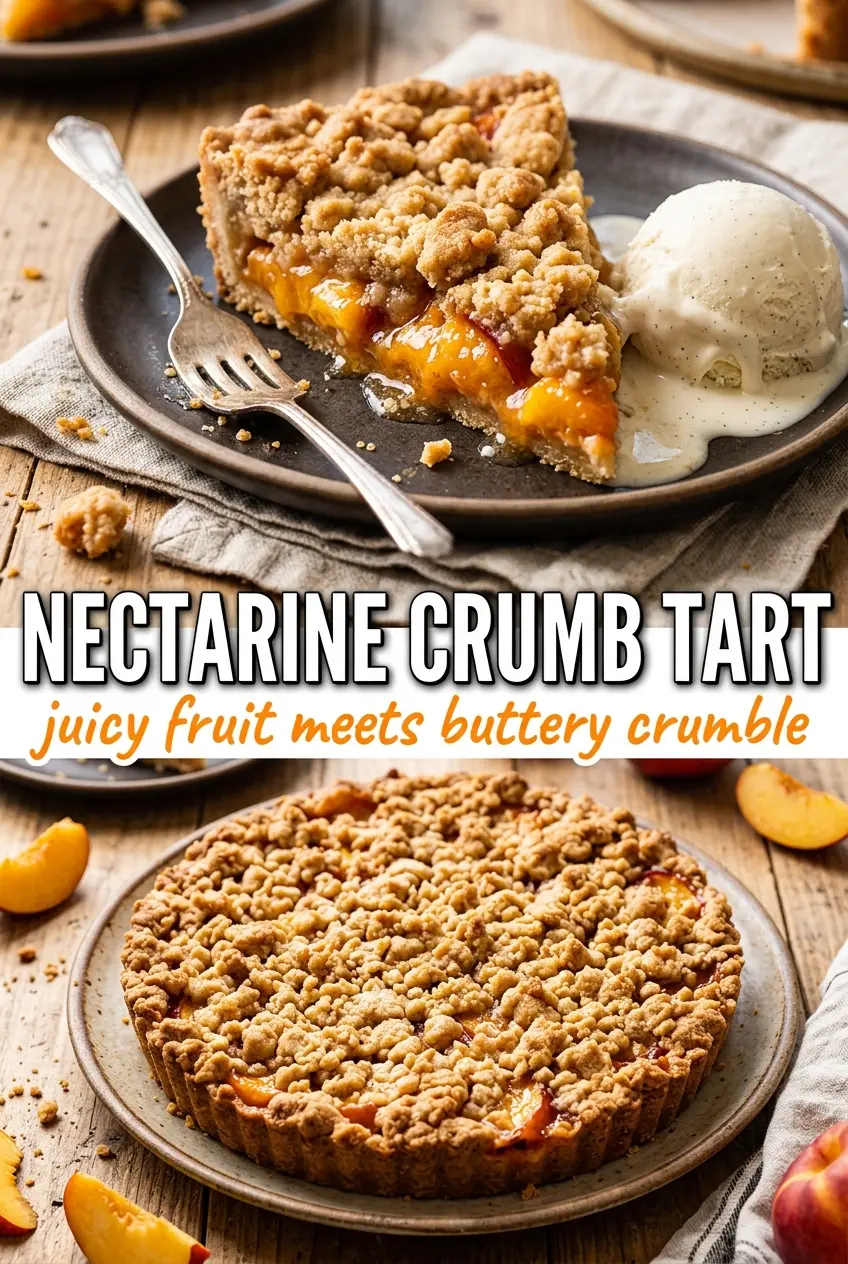
Nectarine Crumb Tart
Ingredients
Equipment
Method
- Preheat the oven to 375°F. Press the pie crust into a 9-inch tart pan and prick the bottom with a fork, then place the pan on a sheet pan for easier handling.
- Toss the nectarine slices with the granulated sugar, cornstarch, lemon juice, and cinnamon until evenly coated, then spread them in the tart crust in an even layer.
- Combine the flour, brown sugar, cinnamon, and salt, then cut in the cold butter until coarse, pea-sized crumbs form.
- Sprinkle the crumb topping generously over the fruit, covering it fully.
- Bake for 40–45 minutes at 375°F, until the topping is golden and the filling is bubbling. Cool for at least 30 minutes before slicing so the juices thicken.