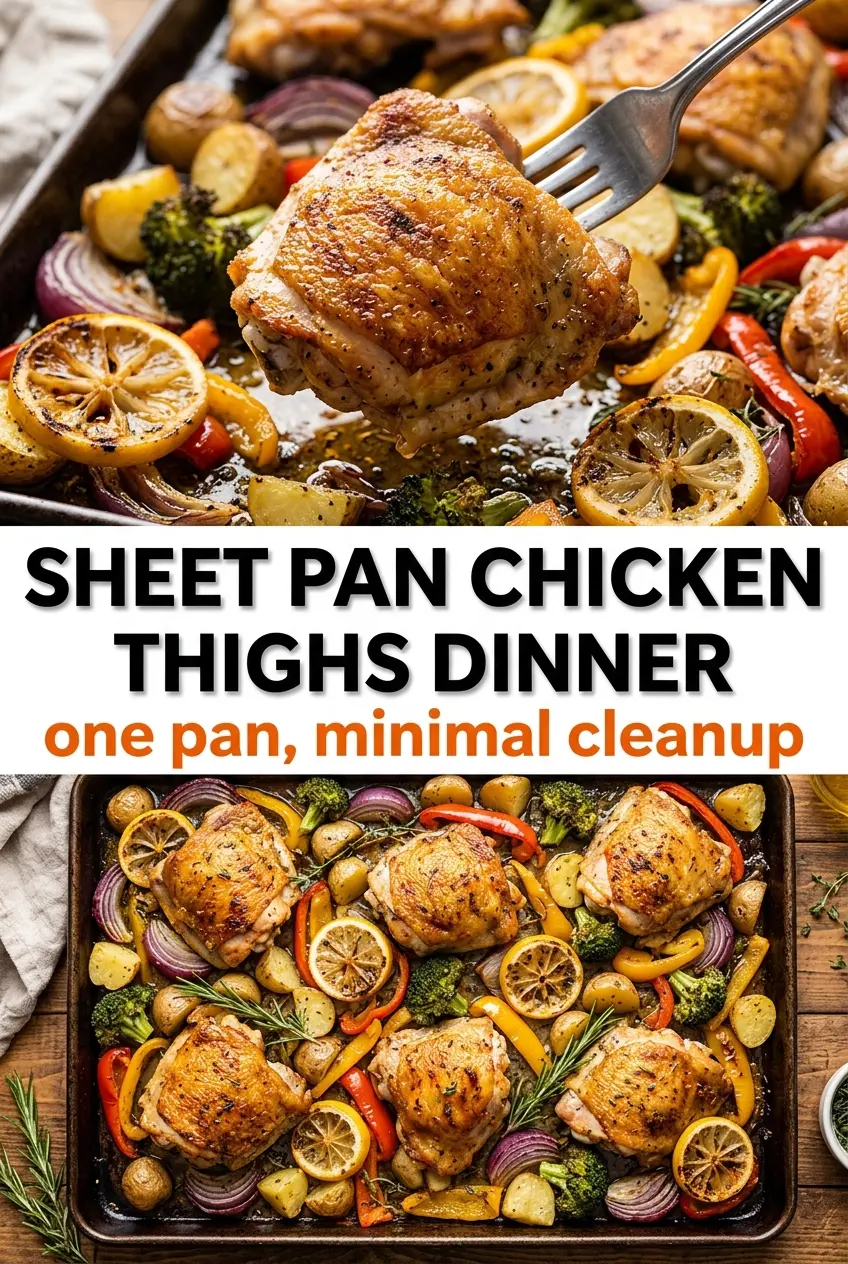
Juicy chicken thighs and caramelized vegetables on one pan give you the kind of dinner that tastes like you did more work than you actually did. The chicken stays tender under a deeply browned skin, the potatoes pick up crisp edges in the oven, and the broccoli and bell pepper roast just enough to sweeten without turning limp. The lemon slices tucked in at the end brighten everything and keep the pan from tasting heavy.
The trick here is giving the potatoes a head start so they’re done at the same time as the chicken. Bone-in, skin-on thighs are the other big reason this works: they stay forgiving in a hot oven, and the skin turns crisp instead of drying out. A sheet pan also gives the vegetables room to roast instead of steam, which is where a lot of one-pan dinners go wrong.
Below, I’ll walk through the order that matters, the small ingredient choices that change the final texture, and a few easy swaps if you need to work with what’s already in your kitchen.
The potatoes got those crisp little edges and the chicken skin stayed shatteringly crisp. I followed the timing exactly and the vegetables were done without getting mushy, which never seems to happen with sheet pan dinners in my oven.
Sheet Pan Chicken Thighs Dinner delivers crispy skin, roasted vegetables, and one-pan cleanup for the kind of weeknight meal you’ll actually repeat.
The Part That Keeps the Vegetables Roasting Instead of Going Soft
Sheet pan dinners fall apart when everything hits the pan at the same time. Potatoes need longer than chicken, and chicken needs more direct heat than quick-cooking vegetables. If you load the pan all at once, the potatoes stay firm, the vegetables overcook, and the whole thing starts steaming in its own moisture.
The head start on the potatoes solves that problem. They’re the densest ingredient here, so they go in first and get a 15-minute solo roast before the chicken and vegetables join the pan. That gives them a chance to start browning on the cut sides, which means they finish with actual texture instead of a soft center.
- Bone-in, skin-on chicken thighs — These hold up to the high oven heat and stay juicy while the skin crisps. Boneless thighs will work, but they cook faster and don’t give you the same browned skin.
- Baby potatoes — Their cut sides brown well and they’re sturdy enough to survive the longer roast. Larger potatoes work too; cut them into small, even chunks so they don’t lag behind.
- Broccoli florets — Broccoli gets good edges in a hot oven, but it doesn’t need the full roast time. Add it later so it stays tender with some bite.
- Lemon slices — They soften in the oven and release enough juice to cut through the richness of the chicken skin. If your lemons are very thin-skinned, use fewer slices so they don’t turn bitter.
How to Build a Pan Dinner That Finishes at the Same Time
Season the Chicken First
Toss the chicken with oil, smoked paprika, garlic powder, salt, and pepper until every thigh is coated. The oil helps the spices cling and promotes browning on the skin, while the paprika gives the chicken a deeper color in the oven. If the chicken looks patchy, it will roast patchy, so get the seasoning all the way under the skin where you can reach it and across the top where it crisps.
Give the Potatoes Their Own Head Start
Spread the potatoes in a single layer on one side of the pan and roast them before anything else goes in. You want the cut sides to start picking up color; that’s the difference between roasted potatoes and warm potato chunks. If they’re crowded, they’ll steam, so use a large sheet pan and leave space between pieces.
Add the Chicken and Vegetables for the Finish
Once the potatoes have started to brown, add the chicken thighs, broccoli, bell pepper, and lemon slices. Keep everything in a single layer so the hot air can move around each piece, and place the chicken skin side up so it can crisp properly. The chicken is done when the thickest part reaches 165°F and the skin is golden and tight, not pale and rubbery.
Rest Before You Serve
Let the pan sit for 5 minutes before serving. That short rest keeps the juices in the chicken instead of running straight onto the pan, and it gives the potatoes a chance to settle so they don’t fall apart when you move them. Serve it from the pan while the skin is still crisp and the vegetables are hot.
What to Change When You Need to Use What’s in the Fridge
Swap the Broccoli for Another Fast-Roasting Vegetable
Cauliflower florets, green beans, or zucchini all work here, but they need different timing. Cauliflower can go in with the broccoli, green beans can go in for the last 15 minutes, and zucchini should be added near the end so it stays tender instead of collapsing.
Make It Dairy-Free and Naturally Gluten-Free
As written, this dinner is already dairy-free and gluten-free, which is one reason it’s such a useful weeknight meal. The only thing to watch is seasoning blends with hidden additives; use plain spices and a good kosher salt so you know exactly what’s going into the pan.
Use Boneless Chicken Thighs or Breasts
Boneless thighs cook faster and stay juicy, but they won’t crisp the same way. Chicken breasts can work if that’s what you have, though they need a shorter roast and a close eye so they don’t dry out before the vegetables are done.
Storage and Reheating
- Refrigerator: Store leftovers in an airtight container for up to 4 days. The skin softens in the fridge, but the flavor holds up well.
- Freezer: The chicken and potatoes freeze better than the broccoli. Freeze in portions for up to 2 months, but expect the vegetables to soften after thawing.
- Reheating: Reheat on a sheet pan in a 375°F oven until hot, about 15 to 20 minutes. The oven brings back more texture than the microwave, which tends to make the skin rubbery and the potatoes damp.
Answers to the Questions Worth Asking
Sheet Pan Chicken Thighs Dinner
Ingredients
Equipment
Method
- Preheat the oven to 425°F and line a large sheet pan with parchment paper.
- Toss the chicken thighs with 2 tablespoons olive oil, smoked paprika, garlic powder, salt, and pepper until evenly coated.
- Toss the potatoes with the remaining olive oil and arrange them on one side of the sheet pan.
- Roast the potatoes for 15 minutes to give them a head start, watching for lightly browning edges.
- Add the chicken thighs, broccoli, and bell pepper to the pan in a single layer, spacing pieces apart so they roast rather than steam.
- Tuck the lemon slices between the pieces so they warm and release juice during roasting.
- Roast for 25–30 minutes at 425°F, until the chicken reaches 165°F and the skin is golden and crispy, rotating the pan once if your oven has hot spots.
- Let the sheet pan rest for 5 minutes before serving to help the juices set and keep the skin crisp.